Outdoor Umbrella Types Compared: Round, Square and Rectangular Canopies for Commercial Terraces
Choosing the right outdoor umbrella type is not a matter of taste. The silhouette you pick decides how much floor stays usable, how much wind it can carry, what it costs to run and how long it lasts. This guide compares the four commercial umbrella types by shape, footprint and structure, so you can specify the right one for each zone instead of running one model across a whole property.
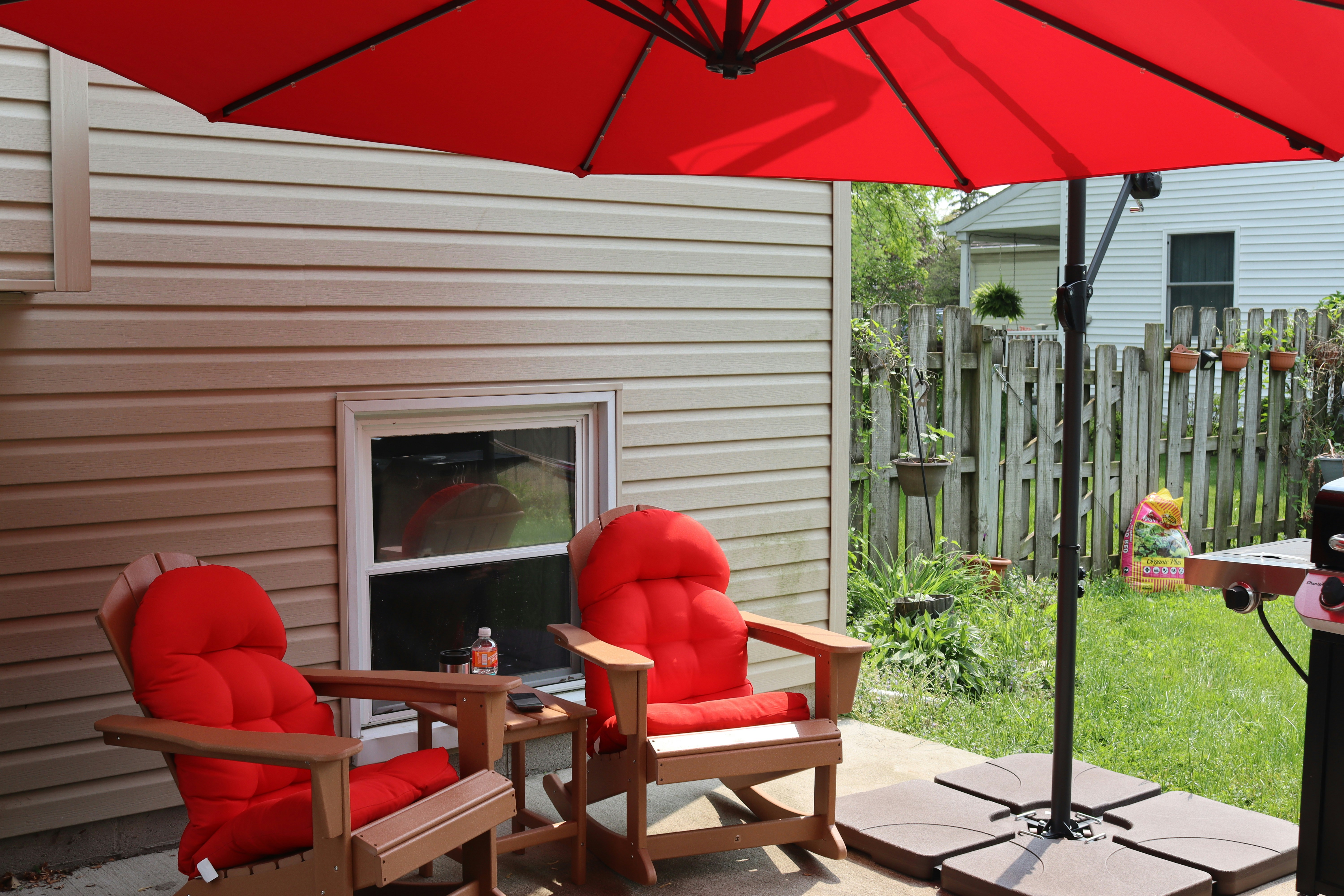
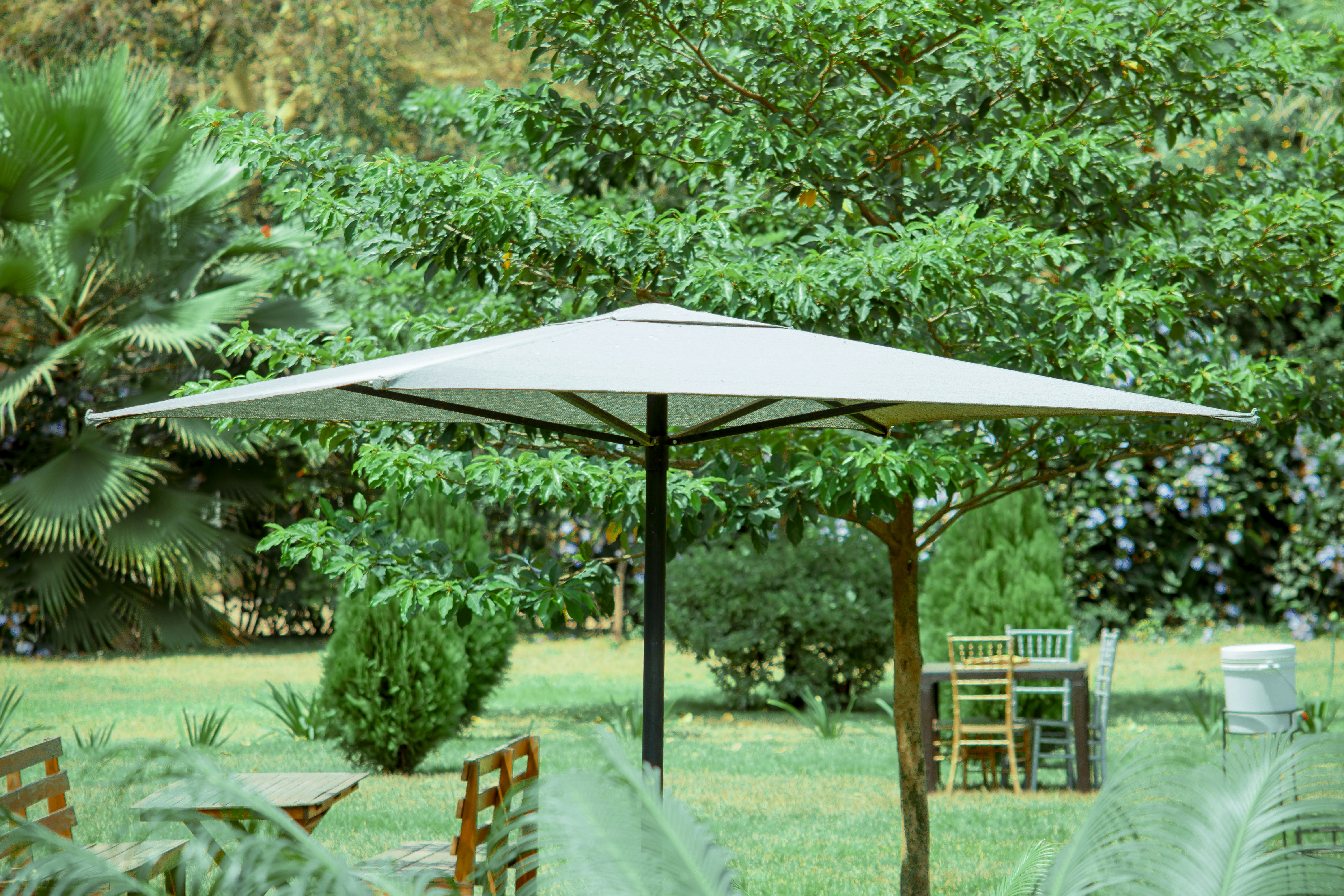
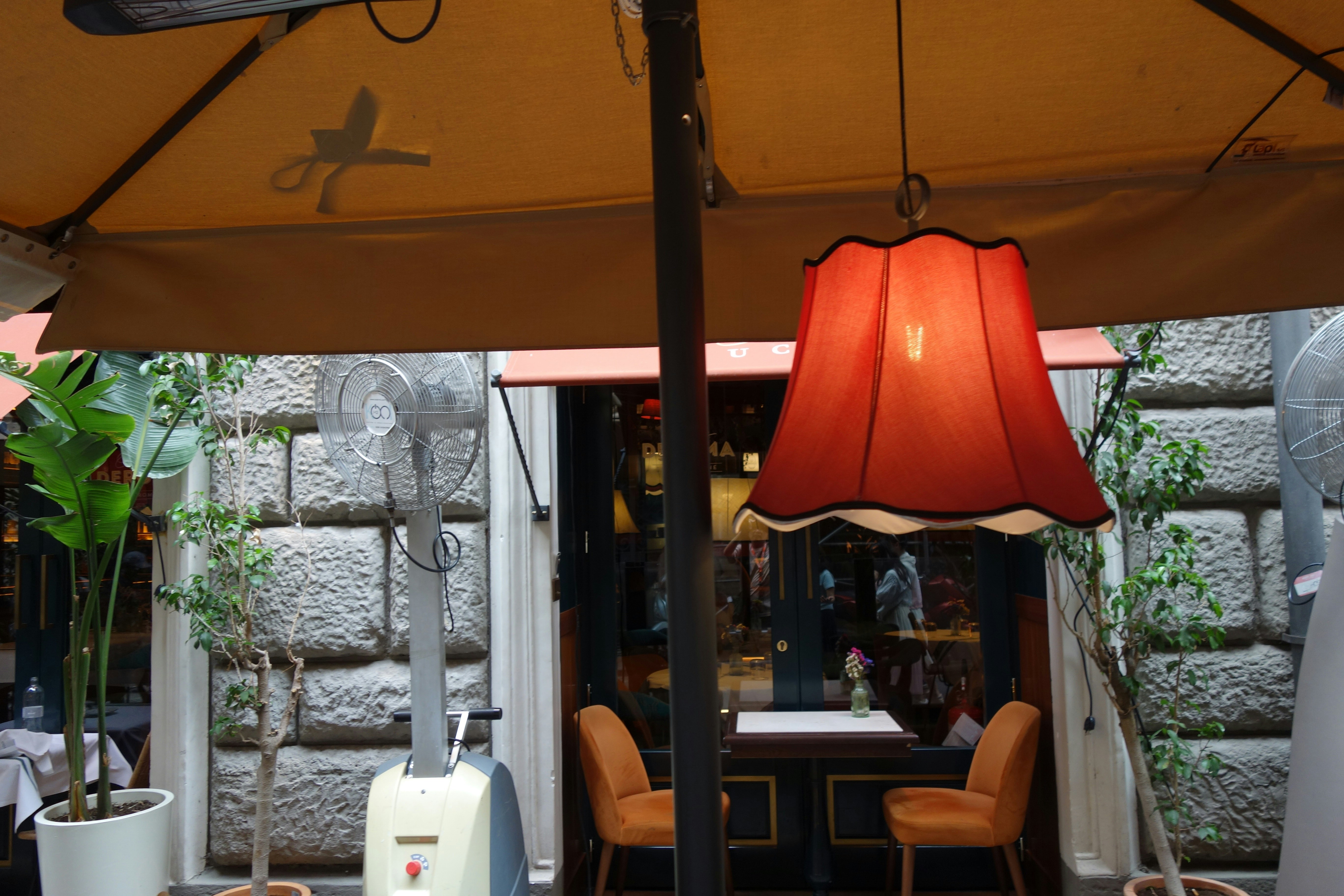
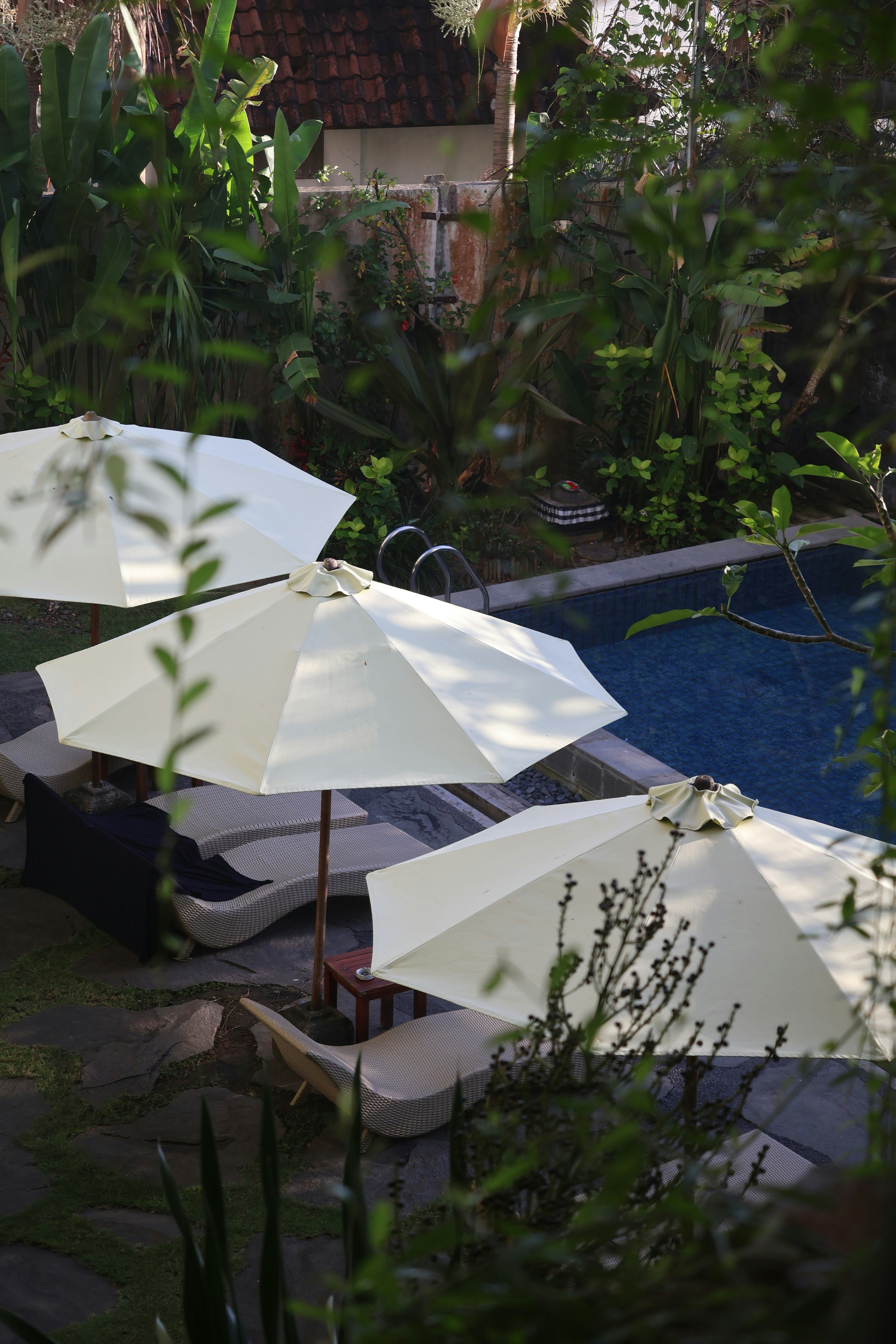
What are the four commercial outdoor umbrella types?
Almost every commercial umbrella is one of four things, and the difference between them is where the pole sits and what the base does. That single fact drives everything else: how much floor you lose, how heavy the base has to be, and how the frame behaves when the wind gets up.
| Umbrella type | Pole position | Floor under the canopy | Base mass | Best suited to |
|---|---|---|---|---|
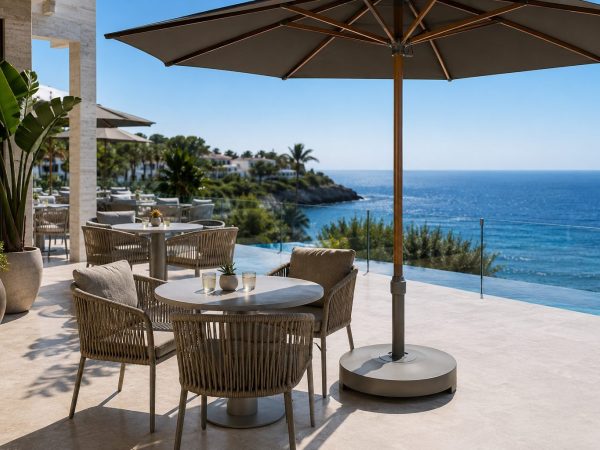
| Market (centre-pole) | Centre, through the table | One pole, plus a base at the centre | 60 - 90 kg | Defined dining areas, table-served service |
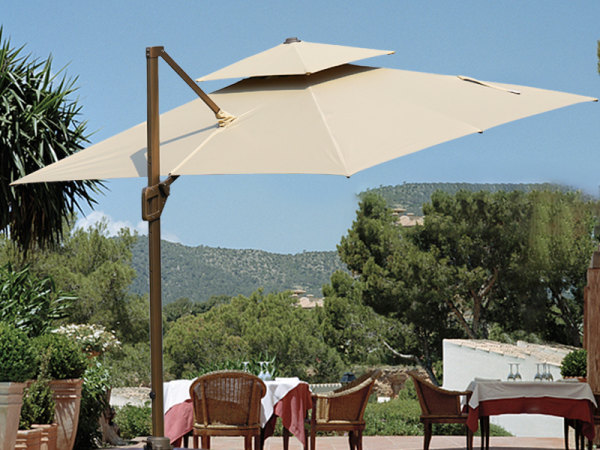
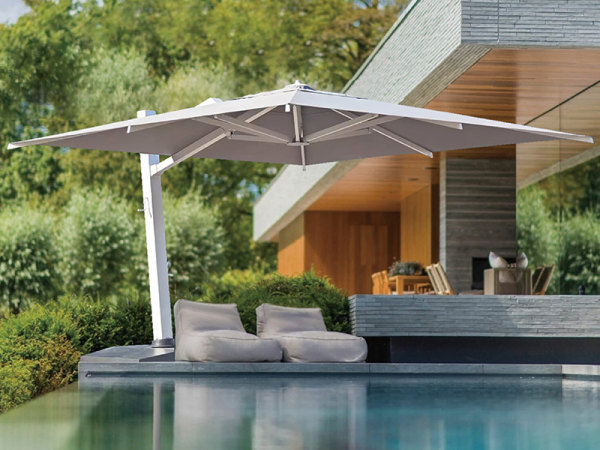
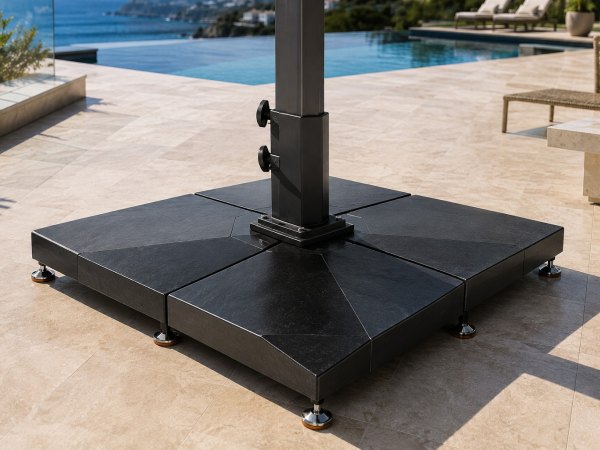
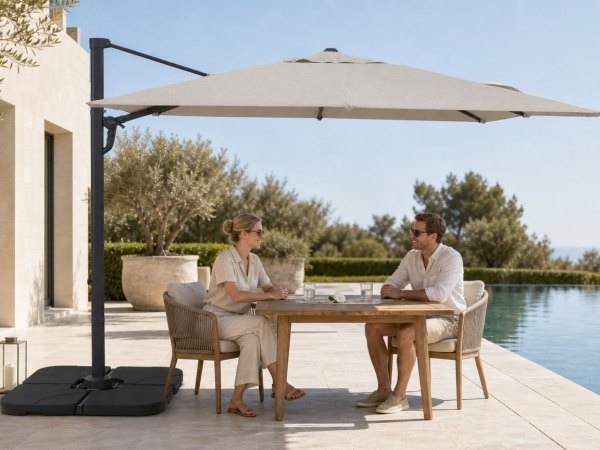
| Cantilever (offset) | Side, outside the shaded area | Completely clear | 180 - 400 kg | Pool decks, free-standing terraces |
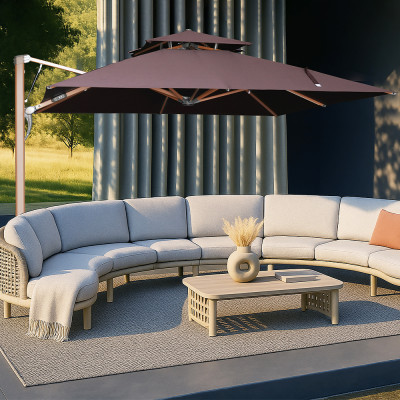
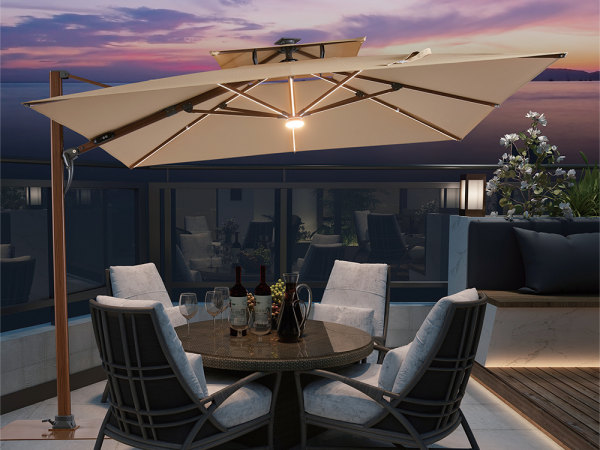
| Roman (rectangular cantilever) | Side, offset arm | Completely clear | 180 - 400 kg | Hotel terraces, branded and square coverage |
| Square / rectangular centre-pole | Centre | One pole, plus a base | 90 - 150 kg | Square tables, high-end courtyard dining |
Four things follow from that table. A market umbrella is the cheapest to run because the load runs straight down into the base. A cantilever is the only one that leaves the floor entirely clear. A Roman umbrella is a cantilever built for commercial duty, usually with a heavier frame and a rectangular canopy. And a square centre-pole exists because a square table with a round canopy looks wrong and a round canopy on a square table leaves two corners unshaded.
Round, square and rectangular canopies: how shape changes the coverage
Canopy shape is the decision buyers rush, and it is the one that shows. A round canopy covers a round table cleanly and sheds water evenly, but it leaves the corners of a square table exposed. A square canopy on a square table gives even overhang on all four sides. A rectangular canopy is the only shape that covers a long dining run or a lounger row properly.
| Canopy shape | Coverage rule | Tables it suits | Water behaviour in wind |
|---|---|---|---|
| Round | 24 in (600 mm) overhang per seat | Round tables, single tables | Sheds evenly, lowest wind resistance of the three |
| Square | 24 in (600 mm) overhang on all four sides | Square and rectangular tables | Even pressure, good for moderate wind |
| Rectangular | 24 in (600 mm) overhang along the long edge | Long dining runs, lounger bays | Larger sail area, needs the heaviest base |
The practical rule is that overhang should be 600 mm per seated person. That means a 2.3 m round canopy for a 48 inch round table, a 3 x 3 m square for a 48 inch square table, and a 3 x 4 m rectangle for a long run of six to eight seats.
Market umbrella vs cantilever umbrella: which one should a terrace run?
Most hospitality terraces need both, and running only one is the most common specification mistake. The comparison below is the practical version of the decision.
| Consideration | Market umbrella | Cantilever umbrella |
|---|---|---|
| Usable floor | One pole interrupts the layout | Entire area under the canopy is clear |
| Base footprint | Small, often hidden under the table | Large and visible, must be positioned clear of the walkway |
| Base weight | 60 - 90 kg for a 2.3 m canopy | 180 - 400 kg for a 3 x 3 m canopy |
| Mobility | Light enough to move for daily set-up | Heavy, usually positioned once |
| Wind behaviour | Symmetrical load, more stable | Offset arm creates lift, needs more mass |
| Best for | Table-served dining, tight budgets | Pool decks, loungers, walk-under shade |
For a restaurant with tight service areas and table-served food, the market umbrella is usually the right answer. For a hotel pool deck where guests walk under the shade and the loungers cannot be interrupted by a pole, the cantilever is the only one that works.
How umbrella base weight changes with umbrella type
Base weight is not a detail to be settled at the end. It follows from the canopy area and the way the load transfers, and getting it wrong is what causes umbrellas to overturn.
| Canopy size | Market umbrella base | Cantilever umbrella base | Notes |
|---|---|---|---|
| 2.3 m (9 ft) round | 60 - 90 kg | Not applicable | Standard market footprint |
| 2.7 m (10 ft) round | 90 - 120 kg | Not applicable | Heavier table, heavier base |
| 3 x 3 m square | Not standard | 180 - 260 kg | Minimum for sheltered sites |
| 3 x 4 m rectangle | Not standard | 260 - 400 kg | Largest sail area in the range |
For coastal and rooftop sites, add an exposure allowance on top of these figures. The same canopy on a sheltered courtyard and on an exposed seafront terrace is not the same product.
How to specify an umbrella type for each terrace zone
Once the types are clear, the specification is a zoning exercise rather than a product exercise. Work through the zones in this order.
Zone one: the pool deck
Cantilever, 3 x 3 m or 3 x 4 m, offset to one side so the lounger bay stays clear. This is where the free floor earns its cost.
Zone two: the main dining terrace
Market centre-pole where the tables are square or round and service needs to move through, cantilever where the terrace is open and guests walk under the shade.
Zone three: the bar and lounge
Roman or heavy cantilever for a branded, architectural look with a rectangular canopy that covers a sofa run properly.
Zone four: the courtyard
Square centre-pole. A square canopy on a square table gives even overhang, which is what makes a courtyard look considered rather than accidental.
Choosing between an umbrella type and a shade sail
The same decision is often framed as umbrella versus permanent shade, and it is worth settling directly. Our comparison of patio shade options covers the full set. In short, an umbrella gives you shade you can move, fold away in high wind and remove in winter, while a sail is fixed and needs engineered anchor points.
For further reading on the structural side, our guide to what makes a commercial outdoor umbrella wind resistant explains the five engineering factors behind the ratings, and what makes an umbrella heavy duty covers how to read a heavy duty specification rather than taking the claim on trust.
Frequently Asked Questions (FAQ)
1. What is the difference between a cantilever umbrella and a Roman umbrella?
Both are offset designs, so both leave the floor under the canopy completely clear. The difference is engineering and application. A cantilever uses a single side pole and an arm, usually with a square canopy, and is the more economical commercial form. A Roman umbrella is built with a heavier, often more decorative frame and usually carries a rectangular canopy, and it is specified where the look has to carry as much as the function. For a plain dining terrace a cantilever is enough; for a branded hotel terrace a Roman reads better.
2. Which umbrella type is best for a restaurant with a small terrace?
A market centre-pole, on the evidence of cost and flexibility. A small terrace usually cannot accommodate a 200 kg cantilever base without eating a seat or a walkway, and the base is the part buyers forget to plan. If the terrace has genuinely clear floor and a wider budget, a cantilever gives back seating that a pole would have taken.
3. How do I know if a canopy size is right for my table?
Measure the table, then add 600 mm of overhang on each seated side. A 48 inch round table needs a 2.3 m round canopy. A 48 inch square table needs a 3 x 3 m square canopy. A 72 inch rectangular table with seats on the long sides needs a 3 x 4 m rectangle. Canopy size alone is not a specification, which is why the footprint matters as much as the diameter.
4. Is a square canopy really better than a round one?
On a square table, yes, and it is a visible difference rather than a technical one. A round canopy on a square table leaves the corners of the table in full sun and reads as a size mismatch. A square canopy also drains evenly and catches wind more symmetrically. On a round table, a round canopy remains the correct answer.
5. How many umbrella types do I actually need for one property?
Two, in most cases. A market centre-pole for service-led dining and a cantilever for pool decks and loungers covers almost every hospitality brief, and running the same type everywhere is what makes a property look like it was specified by default rather than by design.
Specify your umbrella mix with Foris Hortus
We manufacture commercial-grade cantilever, centre-pole, roman and large umbrellas for hotels, resorts, distributors and design projects. Send us your site plan and zone counts and we will return a layout with the umbrella mix, base specification and lead time. See our hospitality shading solutions.