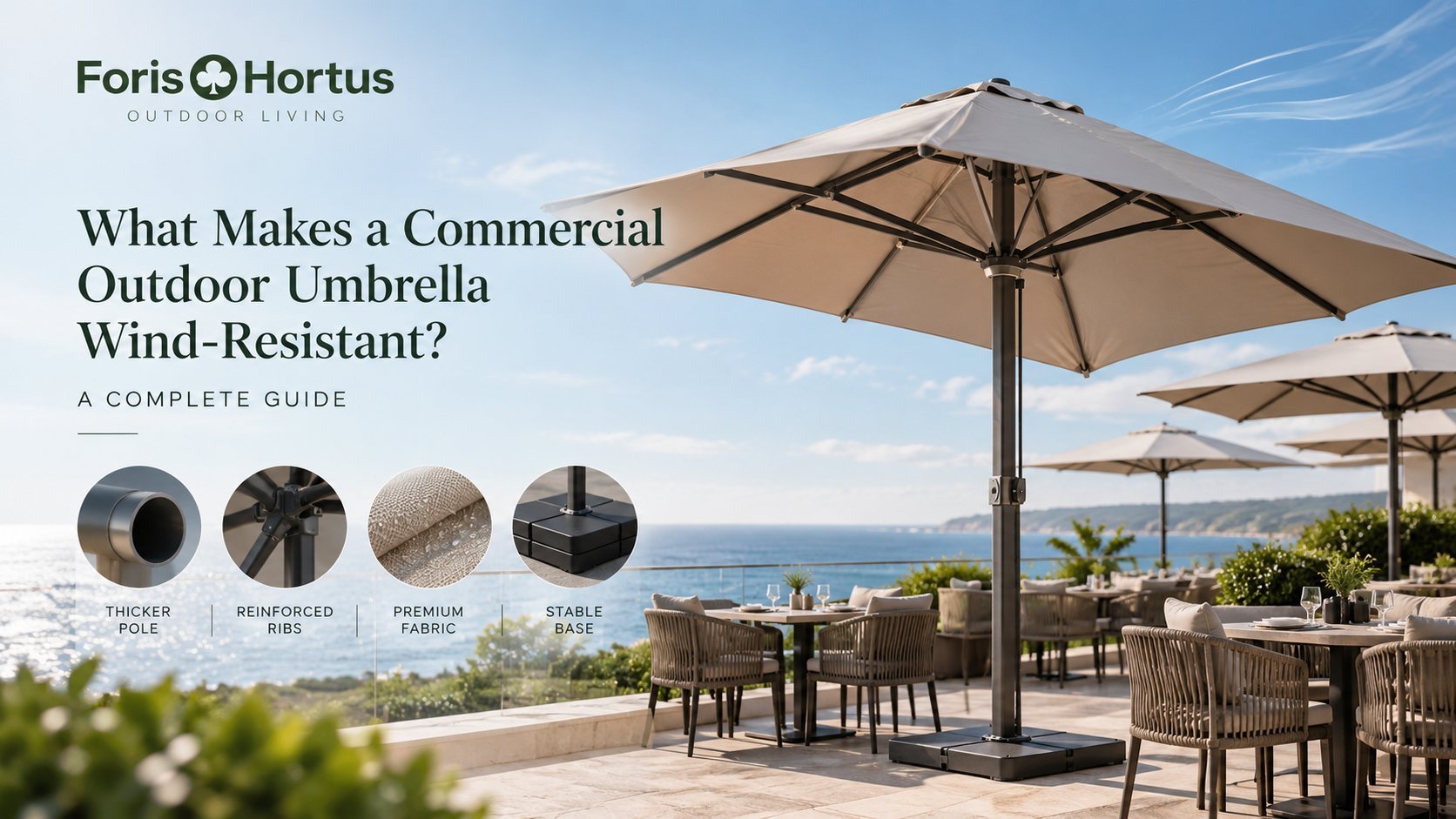
What Makes a Commercial Outdoor Umbrella Wind-Resistant? A Complete Guide
A wind-resistant commercial outdoor umbrella is not defined by a single feature. It is the result of five engineered decisions—pole wall thickness, rib design and count, canopy fabric and size, base weight, and frame connections—working together against uplift, torsion, and fatigue.
Why Wind Resistance Matters More for Commercial Users
Residential buyers can close an umbrella and carry it indoors before a storm. Hotels, restaurants, cafés, and resorts rarely have that luxury. Their umbrellas stay open through lunch service, pool hours, rooftop events, and seasonal operation windows that often run 8–12 hours a day, five to seven days a week.
The financial and legal exposure is also different. A failing umbrella in a commercial space can injure guests, damage furniture, interrupt service, and trigger insurance claims. According to ASTM F3681-25, the standard test method for outdoor umbrellas, a commercial-grade unit must remain stable under sustained wind conditions that would lift or invert most retail models.
- Exposure time: commercial umbrellas operate 4–6× longer per week than home units.
- Wind environment: rooftops, waterfronts, and open terraces see sustained gusts 25–40% higher than sheltered residential patios.
- Liability: a single tipping event on a busy terrace can exceed the replacement cost of the entire umbrella fleet.
5 Key Factors That Determine Wind Resistance
When procurement teams compare models, the specification sheet often hides more than it reveals. Focus on these five measurable points instead of marketing phrases.
1. Pole Wall Thickness
A 2.0 mm aluminum pole wall resists bending and wobble far better than the 1.2–1.5 mm walls common in retail lines. For commercial center-pole umbrellas over 3 m, 2.0 mm is the practical minimum.
2. Rib Thickness & Rib Count
Ribs transfer wind load from the canopy to the hub. A 1.6 mm rib with 8 arms shortens the unsupported span and distributes force more evenly than a 1.0 mm/6-rib layout.
3. Canopy Size and Fabric
Larger canopies generate more uplift. Solution-dyed acrylic or 280–300 gsm coated polyester resists tearing better than thin PE alternatives. Vented canopies reduce pressure by letting air escape.
4. Umbrella Base Weight
For center-pole market umbrellas, plan roughly 10 kg of base weight per 0.3 m of canopy diameter. Cantilever umbrellas typically need 80–150 kg, depending on size and exposure.
5. Frame Structure & Connection Points
Reinforced hubs, stainless-steel pins, and welded or bolted joints outperform riveted or plastic connectors under repeated gust cycles.
Is a Thicker Pole Always Better?
Wall thickness helps, but it is not the whole story. The aluminum alloy grade, outer diameter, connection geometry, and surface treatment all influence real-world strength. A 1.5 mm pole made from 6061-T6 alloy with a large diameter can outperform a 2.0 mm pole made from softer 6063 if the application demands high bending resistance.
| Attribute | Retail/Entry Pole | Commercial Pole |
|---|---|---|
| Wall thickness | 1.2–1.5 mm | 2.0 mm+ |
| Common alloy | 6063-T5 | 6061-T6 / 6063-T5 reinforced |
| Outer diameter (3 m umbrella) | 38–45 mm | 48–58 mm |
| Finish | Basic powder coat | Marine-grade anodizing or heavy powder coat |
| Best use | Residential, occasional use | Hospitality, daily commercial use |
The takeaway: specify thickness, alloy, and diameter together. A thicker wall in a small-diameter, low-grade alloy still flexes under commercial loads.
Why the Ribs Matter More Than You Think
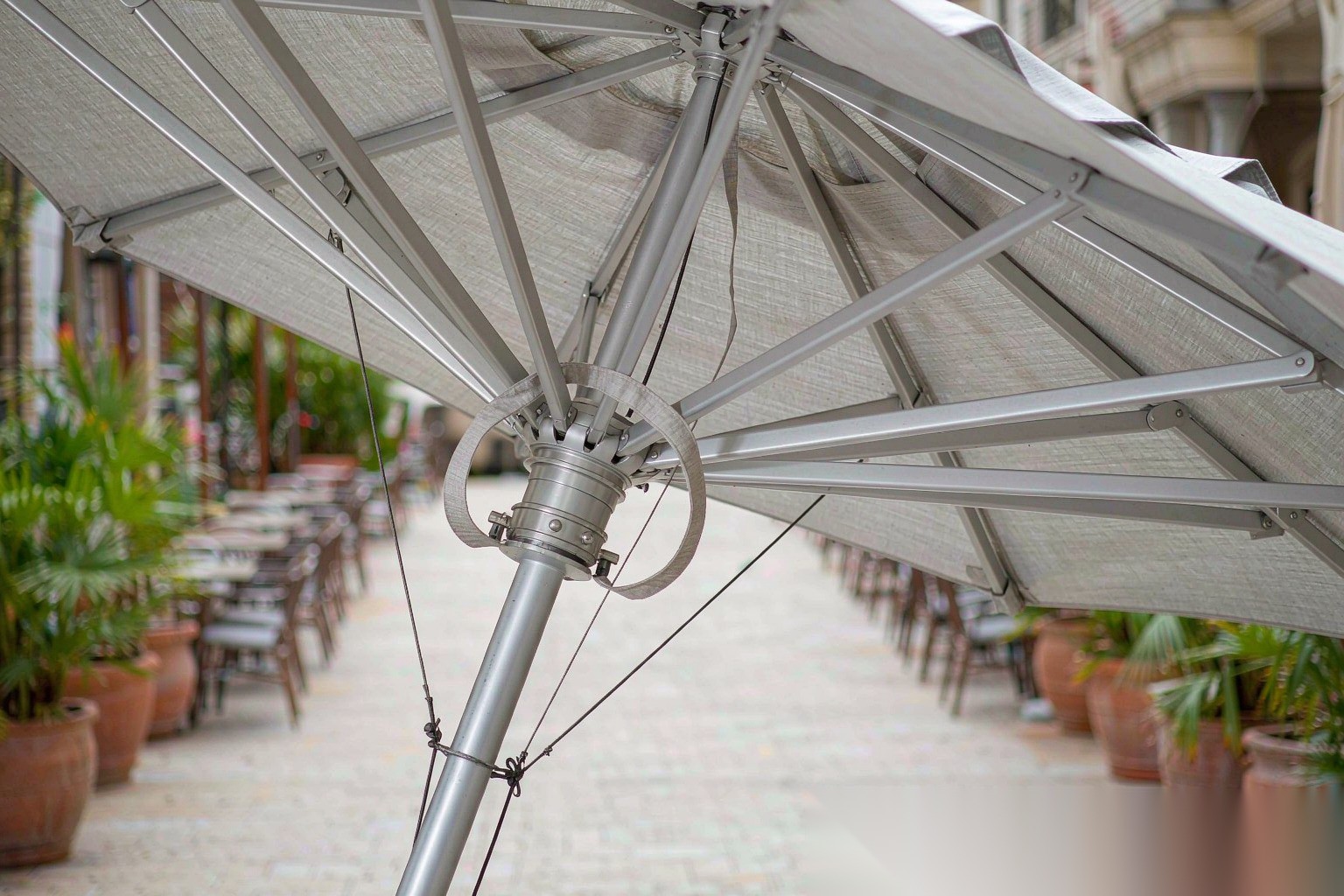
Most canopy failures start at the ribs. When wind presses from below, ribs bow upward. If they are too thin or too widely spaced, the fabric tears at the pockets or the rib itself kinks. Reinforced ribs are the difference between a model that survives a season and one that needs replacement after the first strong front.
| Specification | Standard Rib | Reinforced Commercial Rib |
|---|---|---|
| Wall thickness | 1.0 mm | 1.6 mm |
| Typical rib count (3 m) | 6 | 8 |
| Unsupported canopy span | ~1.57 m | ~1.18 m |
| Connection to hub | Basic rivet or plastic | Reinforced bracket + stainless pin |
| Result under gust load | Higher flex, faster fatigue | Lower flex, longer service life |
The 1.6 mm wall gives the rib roughly 60% more bending stiffness than a 1.0 mm equivalent, assuming the same alloy and profile. Combined with eight ribs instead of six, each rib carries a smaller share of the total load, and the canopy pocket spacing tightens, reducing point stress on the fabric.
How to Choose the Right Umbrella Base
The base is where wind force meets the ground. Even the strongest frame will fail if the base is too light or the wrong type for the location. Match the base to the umbrella format, canopy size, and exposure level.
- Water-fillable bases: ship empty and fill on site. Popular for terraces where freight weight matters. Effective for center-pole models up to about 3.5 m.
- Resin or concrete bases: dense, low-profile, and stable. Best for permanent installations where appearance and theft resistance matter.
- Surface-mount plates: bolt directly to a concrete slab. Ideal for high-wind rooftops or waterfront decks where a freestanding base would walk.
- In-ground anchors: the most secure option for fixed poolside or boardwalk rows, but require core drilling.
Foris Hortus supplies water tank bases, resin bases, and custom anchoring solutions that match the frame specifications. You can explore the full base range on the products page.
Wind Resistance for Different Applications
Not every location faces the same wind regime. A private garden in a sheltered suburb is not the same as a rooftop bar overlooking the ocean. Match the specification to the application.
| Application | Exposure Level | Recommended Base Weight | Key Frame Notes |
|---|---|---|---|
| Restaurant terrace | Moderate | 80–100 kg | 2.0 mm pole, 8 ribs, vented canopy |
| Hotel & resort pool deck | Moderate to high | 100–120 kg | Reinforced hub, premium fabric, professional install |
| Rooftop bar | High | 100–150 kg or fixed mount | 6061-T6 pole, surface or in-ground anchoring |
| Waterfront restaurant | Very high | 120–180 kg | Marine-grade finish, 1.6 mm ribs, vented canopy |
| Private garden | Low to moderate | 40–80 kg | Standard commercial grade is usually sufficient |
How Foris Hortus Builds More Reliable Commercial Umbrellas
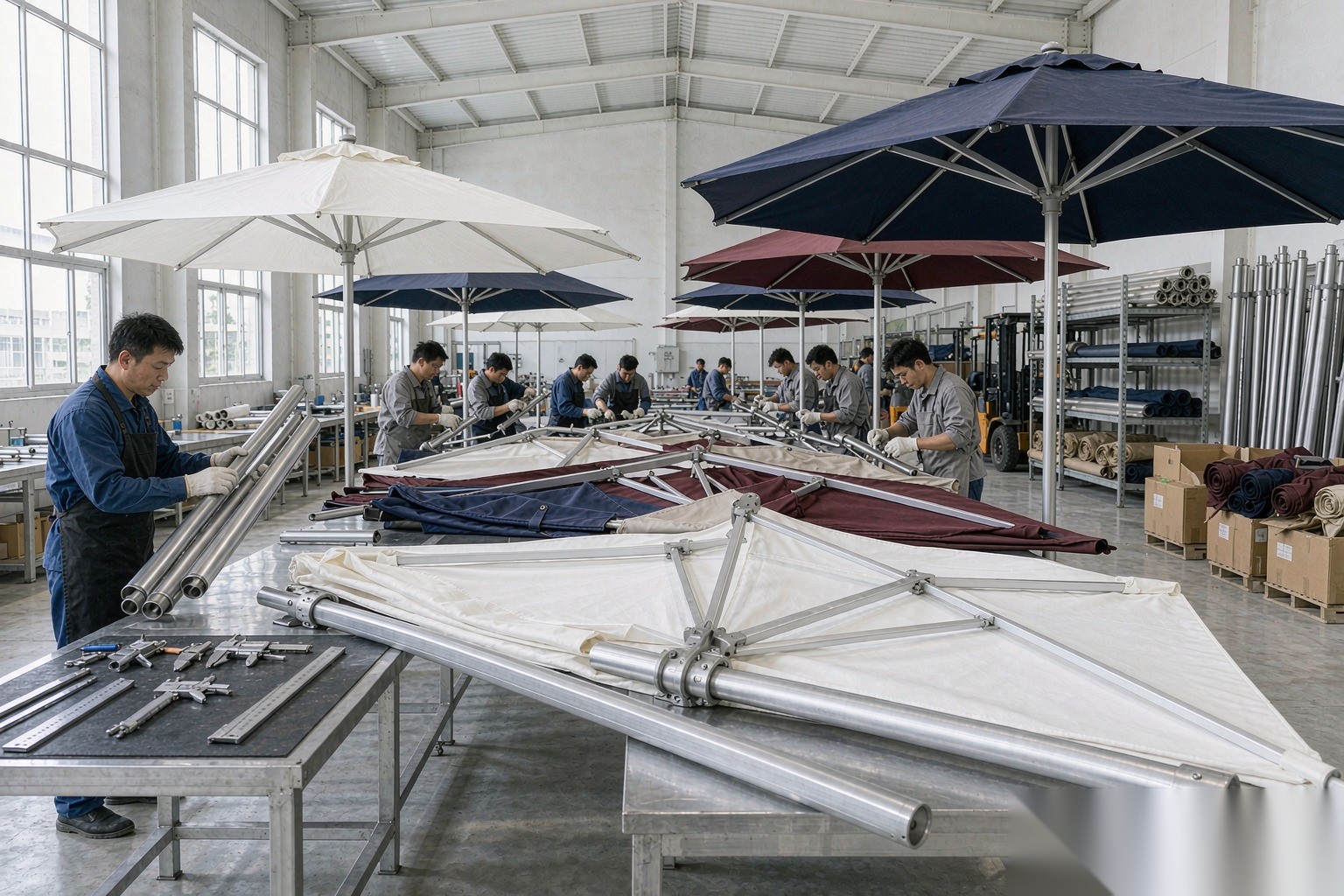
Foris Hortus designs commercial umbrellas around the same five factors above, with specifications chosen for daily hospitality use rather than occasional home use.
- 2.0 mm pole walls as standard on commercial center-pole models, with 6061-T6 alloy options for high-wind sites.
- 1.6 mm reinforced ribs with eight-arm layouts and stainless-steel hub connections.
- Customized structure options including canopy vents, reinforced pockets, and branded valances.
- Factory testing for frame fatigue, base stability, and fabric tear resistance before shipment.
- OEM & ODM services for hospitality chains, resorts, and furniture brands that need private-label outdoor solutions.
If you are specifying umbrellas for a hotel, restaurant, rooftop, or resort project, the wind-resistance details on the data sheet matter as much as the price. Assess your site exposure, match canopy size to base weight, and prioritize frame specifications over surface styling. If you need a wind-resistance spec sheet or a tailored quote, contact the Foris Hortus team.