Large Commercial Umbrella
Wide-coverage shade built for hospitality
A large commercial umbrella is sized for the space it has to shade, not for a garden table. Canopies start where domestic umbrellas stop, so one frame covers a whole dining group, and the load that has to be carried goes up with the canopy every time.
That is why the frame, the fabric and the fixing all change together at commercial scale. Everything below covers how to specify for a hotel terrace, a resort poolside or a restaurant patio without ending up with shade that is elegant in a photograph and unusable on a windy afternoon.
- Reinforced aluminium frames
- UV-protected yarn-dyed fabric
- OEM and ODM supported
- Bulk project supply
What makes a commercial umbrella commercial grade
Three parts separate a frame that survives a hotel terrace from one that survives a back garden. Ask about all three, because they fail at different rates.
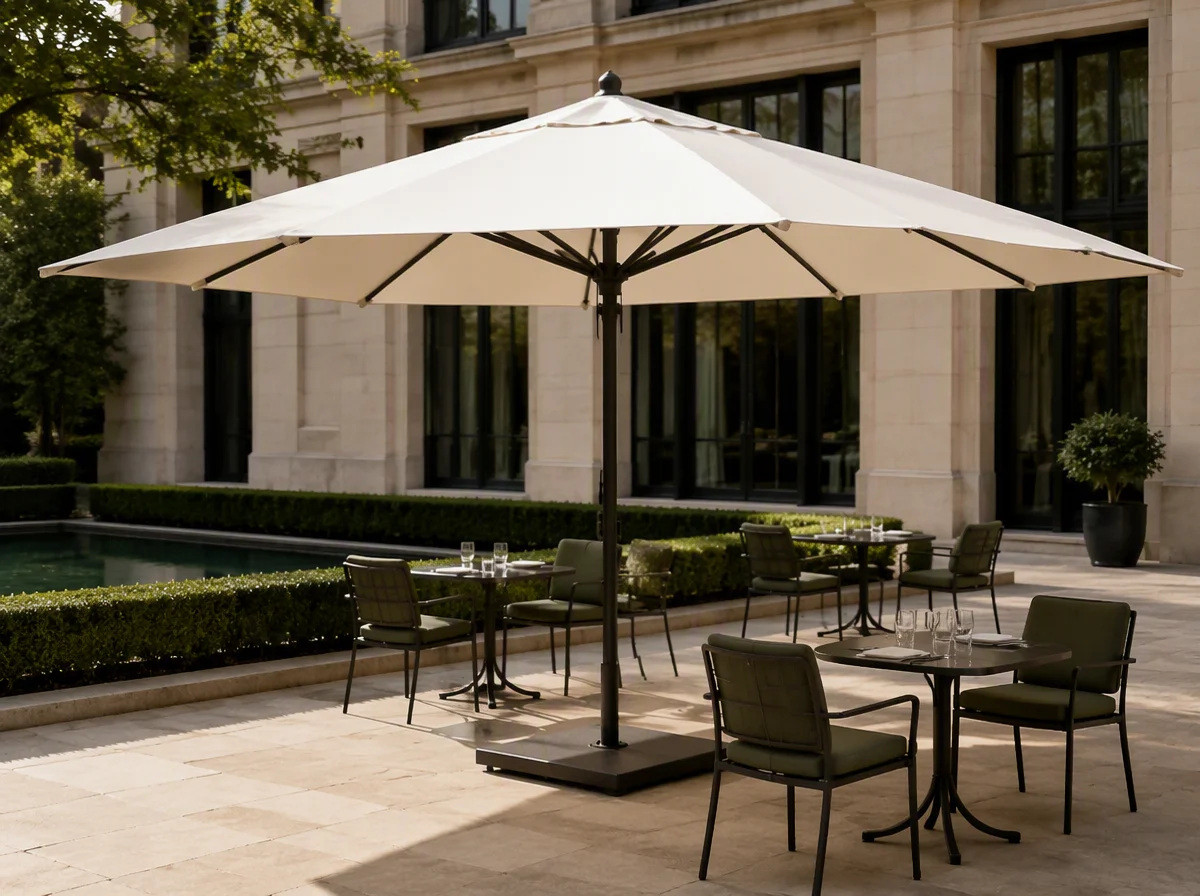
The canopy and its coverage
A commercial canopy is wide enough to shade a whole table group from one frame, which is what removes the clutter of small umbrellas along a terrace.
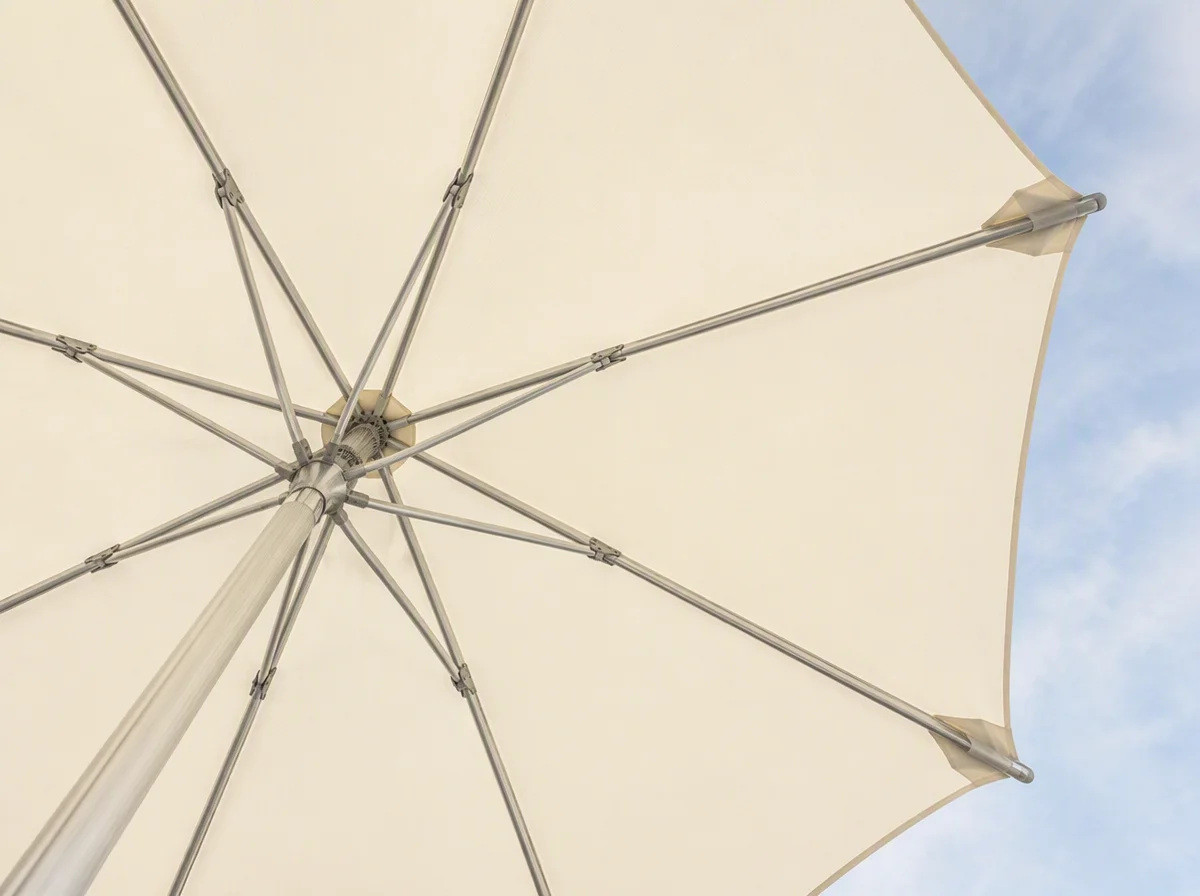
The frame and ribs
Reinforced aluminium poles and ribs carry the extra span. The rib count and the wall thickness are what hold the canopy shape in wind.
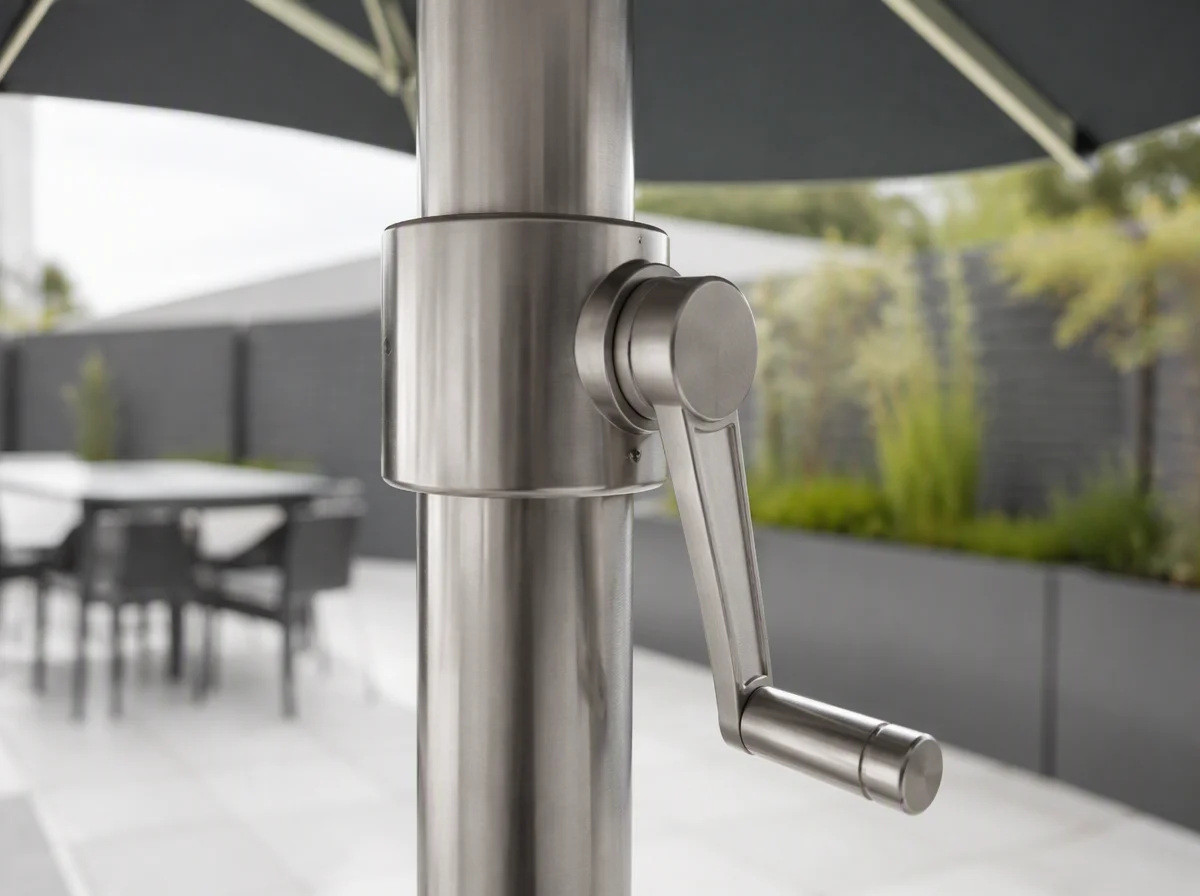
The winding mechanism
A smooth crank and collar matter more at commercial scale, because staff open and close the same umbrella several times a day.
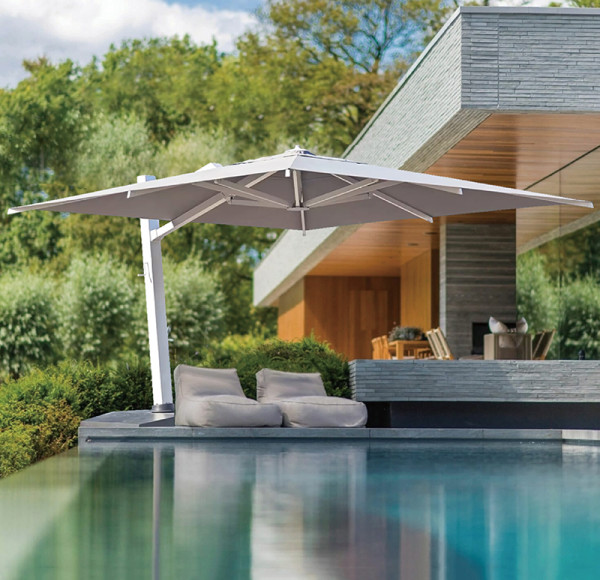
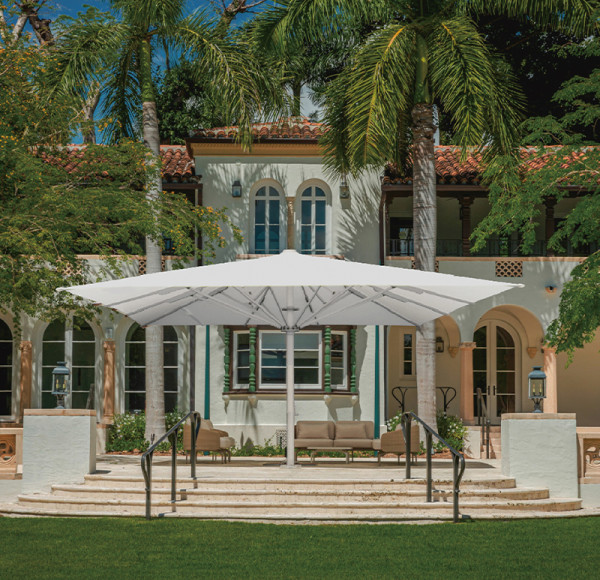
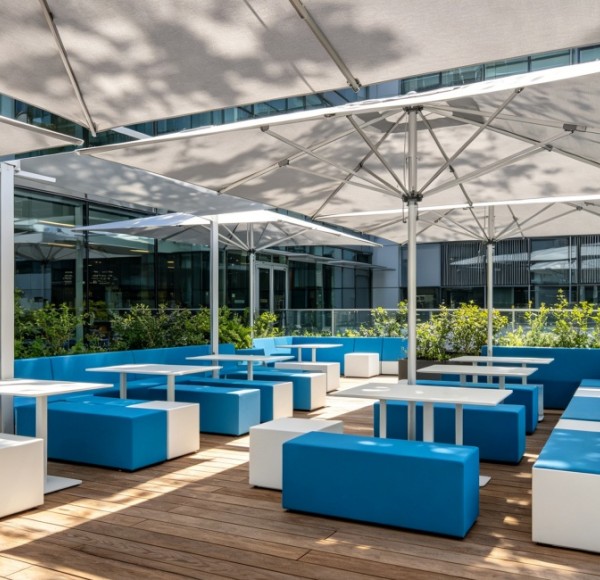
Where Large Commercial Patio Umbrellas Perform Best
From seaside resorts to rooftop restaurants, our umbrellas are specified for spaces where durability, shade coverage, and visual consistency matter most.
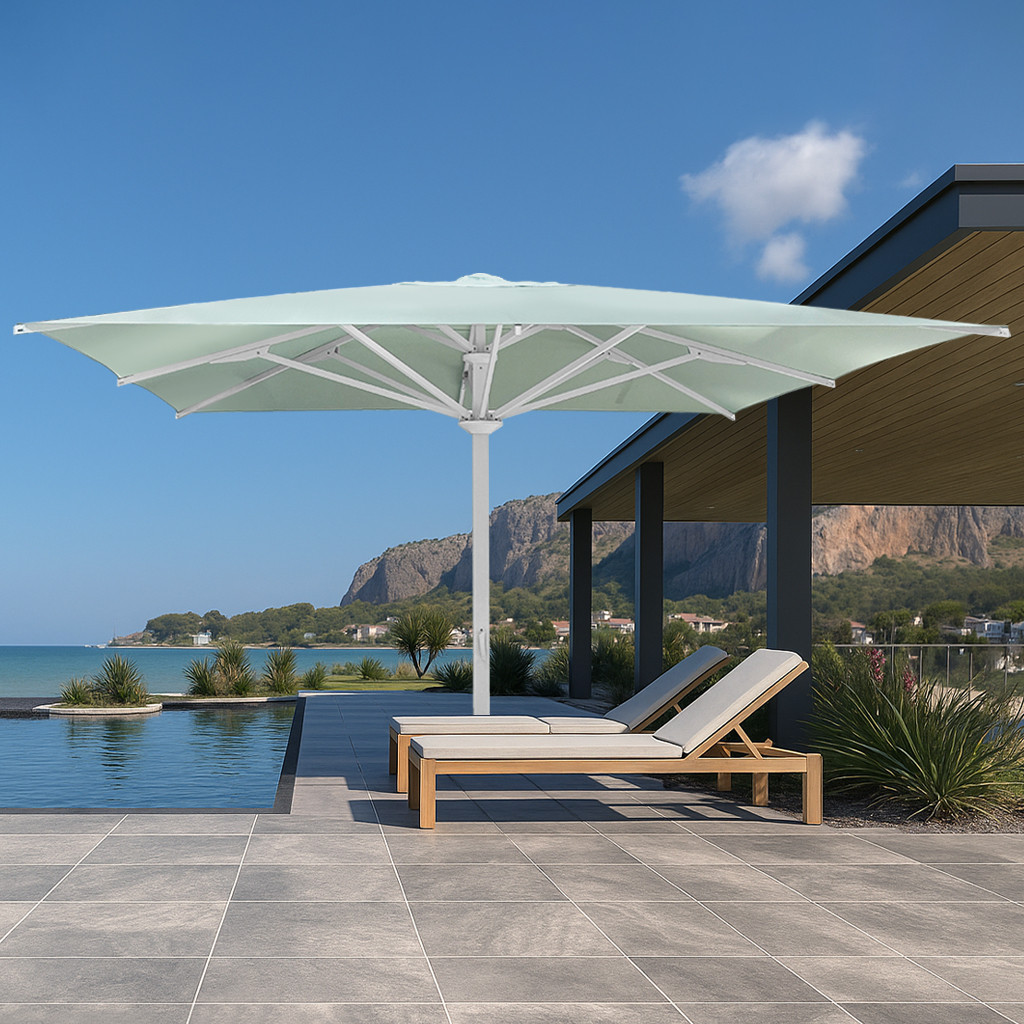
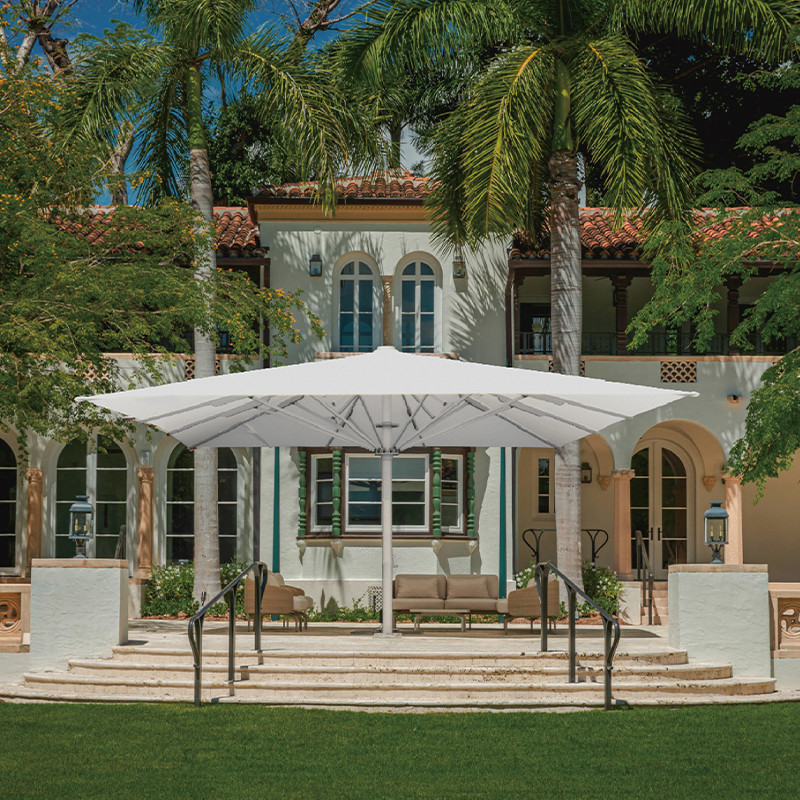
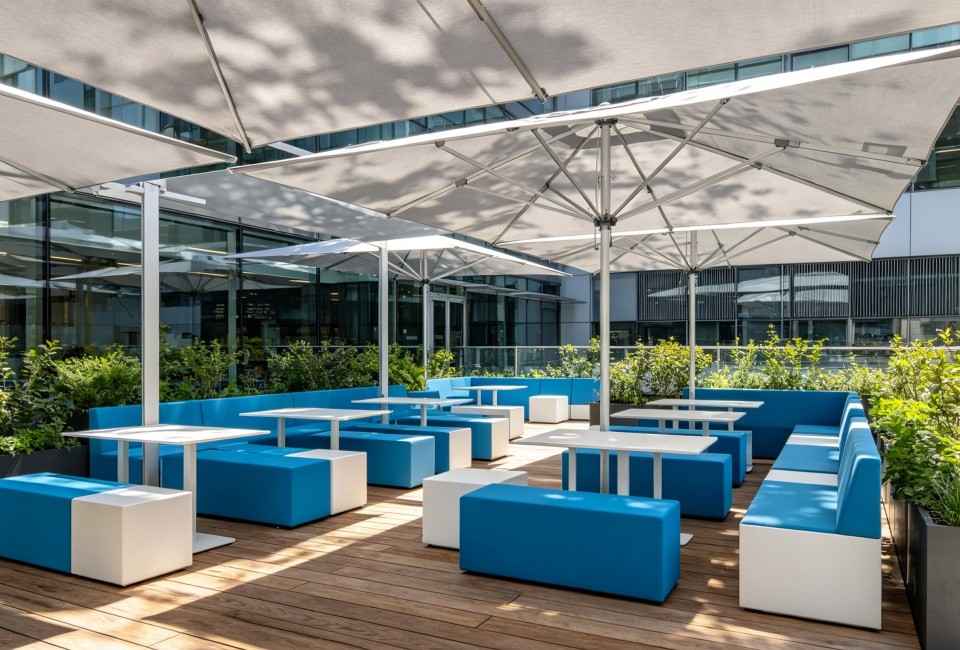
Built for Commercial Sun Umbrella Projects
We support architects, procurement teams, and hospitality operators with reliable production, clear communication, and consistent quality.
In-House Engineering
Structural review and CAD support for custom mounting and wind-load requirements.
Branded Finishes
Canopy color matching, logo printing, and powder-coat frame options available.
Quality Controlled
Incoming material checks, assembly inspections, and pre-shipment verification.
Reliable Delivery
Consolidated packing and logistics coordination for hotel and resort rollouts.
Large Commercial Umbrella Buying Guide
Answers to common questions from architects, hoteliers, and restaurant owners sourcing large commercial outdoor umbrellas.
What sizes are available for large commercial patio umbrellas?
Our large commercial umbrellas are available in a range of square and round canopies, typically from 2.5 m up to 4 m or larger. Custom dimensions can be engineered for specific terrace or pool layouts.
Can the frame and canopy be customized to match our brand?
Yes. We offer custom canopy colors, logo printing on valances or panels, and frame finishes including anodized and powder-coated aluminum to align with your property’s visual identity.
Are these umbrellas suitable for windy coastal locations?
Models in this collection use reinforced aluminum ribs, heavy-gauge poles, and balanced hub designs. Specific wind ratings vary by size and base configuration—contact us for project-specific guidance.
What base options do you offer for commercial installations?
We supply water tanks, resin bases, and steel plate bases. For fixed installations, we can also provide in-ground anchors and deck-mount solutions tailored to your site.
Plan Your Next Commercial Shading Project
Whether you need three umbrellas for a restaurant patio or three hundred for a resort development, Foris Hortus can scale production to your timeline and budget.
Centre pole or cantilever for a commercial terrace
Both carry a wide canopy. The difference is where the structure stands, and what that does to the layout of the seating.
Centre pole
The mast passes through the middle of the setting. The simplest and most rigid frame, the easiest to repair, and the natural choice where a fixed dining table hides the pole anyway.
Cantilever
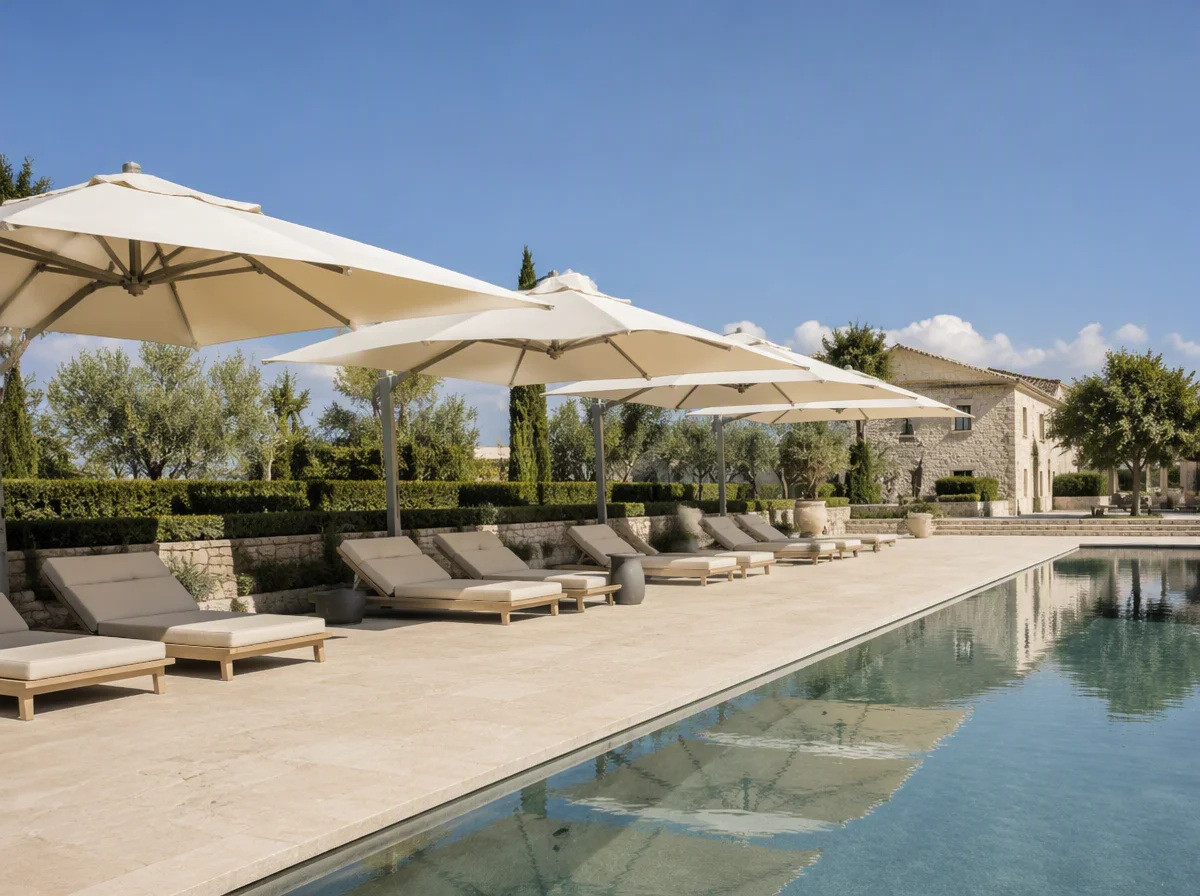
The upright stands to one side and the arm carries the canopy over the seating. Needed where the table has to stay clear, and usual for poolside loungers and lounge groups.
What changes on site
A cantilever asks far more of its base, and usually rotates so the shade can follow the sun. A centre pole asks less of the base and nothing of the layout.
| Consideration | Centre pole | Cantilever |
|---|---|---|
| Space under the canopy | One upright through the middle of the setting | Completely clear, with the upright at the edge |
| Base requirement | Lighter: the mast shares the load with the base | Heavy counterweight or a bolt-down plate |
| Shade movement | Fixed position, or tilts only | Usually rotates and tilts to follow the sun |
| Best fit | Fixed dining rows and restaurant patios | Poolside lounges, lounge groups and event decks |
Where large commercial umbrellas get specified
Four settings where the umbrella is part of the furniture plan rather than an accessory to it.
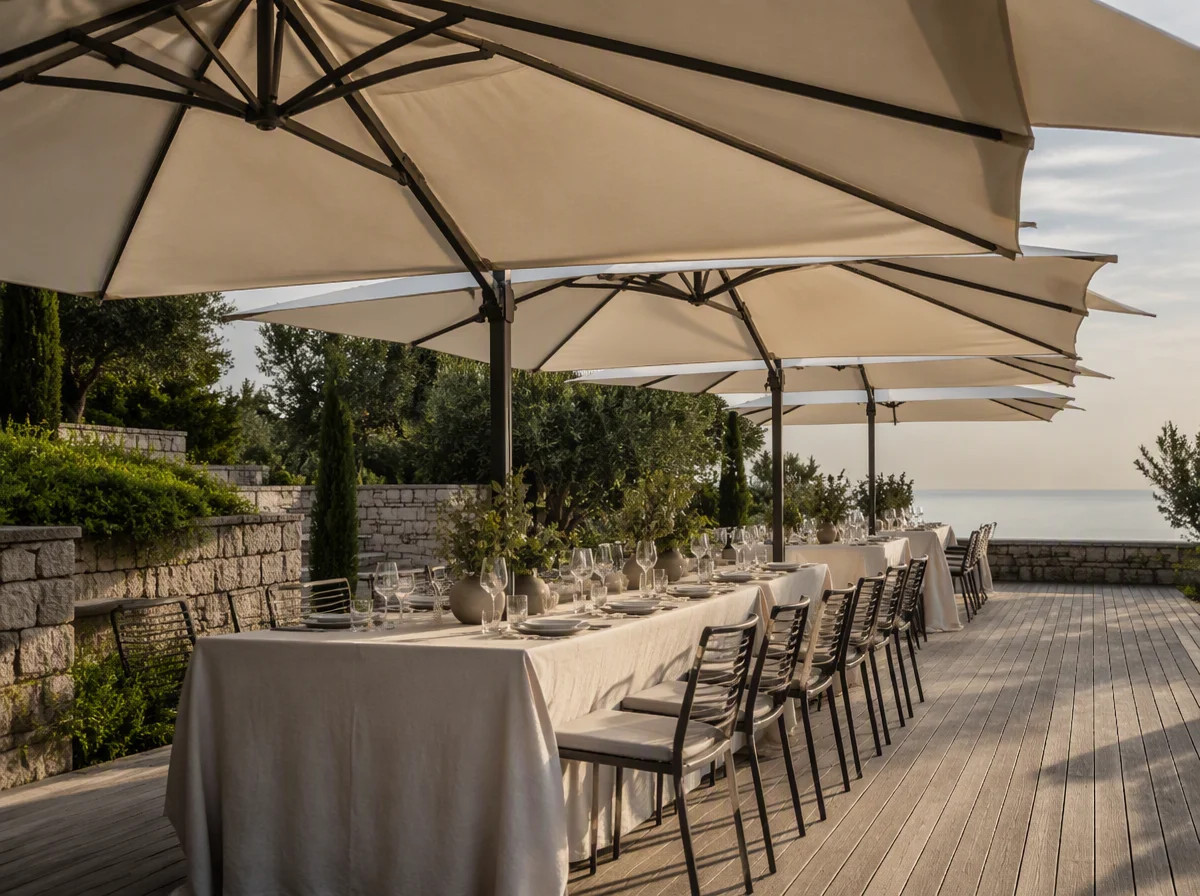
Hotel terraces
Long runs of identical umbrellas where one canopy has to cover a whole dining group, not a single table.
Resort poolside
Lounger rows with the shade carried from the edge, so the deck between the rows stays walkable.
Restaurant patios
Coverage over fixed dining rows, where the frame has to survive being opened and closed every single service.
Event and banquet decks
Frames that can be opened, repositioned and closed again around a changing programme of events.
Coverage and layout: how large is large enough
Canopy size is only half the calculation. What matters is how many covers each frame actually shades once the sun is low.
Canopy size
Start from the footprint of the tables or loungers that have to be shaded, then allow for the sun angle at the hour the terrace is busiest.
Reach from the mast
On an offset frame the shade lands where the arm reaches. Canopy size without reach still leaves the far chairs in the sun.
Spacing between frames
Neighbouring canopies shade each other, so the gap between uprights is part of the layout rather than an afterthought.
Wind exposure
The bigger the canopy, the more it catches. On an exposed terrace the answer is usually more frames rather than bigger ones.
Canopy fabric: what UV protection really means
Fabric is where a commercial umbrella either keeps its colour for a decade or fades in two seasons. Four things decide which one you get.
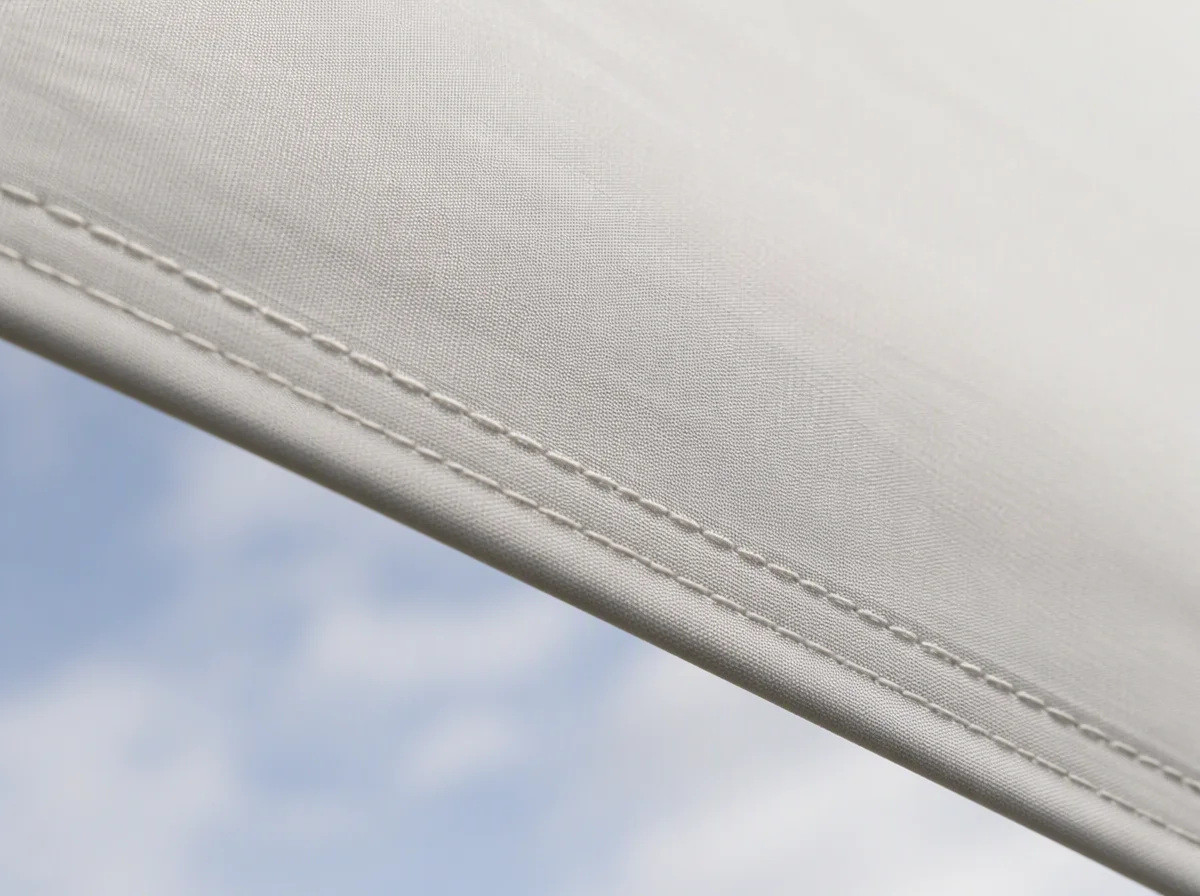
Yarn-dyed, not surface-printed
Colour goes into the yarn before weaving, so it does not sit on the surface waiting to fade or scuff off.
UV protection and coating
Heavyweight polyester with a protective coating blocks harsh sun and resists fading season after season.
Weight of the cloth
A heavier cloth hangs better across a wide span and does not flap itself to pieces on an exposed terrace.
Stitching and replacement
Check the seam quality, and confirm the canopy can be replaced on its own rather than with the whole frame.
Wind is the design driver on a commercial terrace
Sun decides how much shade you need. Wind decides whether the umbrella is still there in the morning.
Rated wind speed
Ask what wind speed the frame is rated for, and at what speed the canopy has to be closed. A sheltered courtyard and an exposed seafront need different answers.
Rib structure
Rib count and wall thickness carry the canopy shape. More ribs is not always better, but fewer ribs on a wide span is a weak point.
Open or closed overnight
Frames left open through the season carry a standing load every night, which changes both the frame and the base you should specify.
Coastal and salt air
Seafront terraces need corrosion-resistant aluminium hardware and stainless fixings, or the frame becomes the thing that fails first.
What to check before you specify
Five details that decide whether a wide canopy is still usable in year three, not just photogenic in year one.
Coverage, not just canopy size
Check that the canopy actually shades the covers you have, at the sun angle the terrace sees when it is full.
Frame and rib construction
Confirm the pole and rib material, the rib count and whether the frame is built for daily commercial operation.
Fabric specification
Ask whether the fabric is yarn-dyed, what coating it carries, and how the canopy is replaced when it eventually wears.
Wind rating
Ask for the rated wind speed and the speed at which the canopy has to be closed, and write the closing policy into the handover.
Base and anchoring
Match the base to the frame type and the surface. A wide canopy needs a far heavier base than a domestic umbrella of the same family.
Planning questions we ask before quoting
Six answers decide the frame, the canopy and the fixing. None of them are technical.
How many covers per umbrella?
It sets the canopy size directly, and the canopy size sets the frame and the base behind it.
Fixed dining rows or loose seating?
A fixed row suits a centre pole. Loose loungers and lounge groups usually need the shade carried from the edge.
How exposed is the terrace?
Seafront, rooftop and open plaza sites need a higher wind rating and a heavier base for the same canopy.
What does the surface allow?
Bolted plates, ballasted bases and in-ground sockets suit different decks and different load limits.
Who opens and closes them, and when?
A terrace closed nightly by staff and one left open all season need different frames and different bases.
Is this one site or a rollout?
A multi-site programme is easier to run if every site shares one frame, one canopy and one spare-parts list.
Common specifying mistakes
Six things that are cheap to get right at quotation stage and expensive to correct once the terrace is open.
Buying umbrellas as furniture
A commercial terrace opens and closes the same frame every day. A frame specified like a garden umbrella will not last a season of that.
Sizing the canopy from the table, not the sun
A canopy that covers the table at noon leaves it in the sun by four. Size from the sun angle, not the furniture footprint.
Forgetting the space between frames
Neighbouring canopies shade each other, so a tightly packed row covers less than the same number spread out.
No wind-closing policy
Most commercial umbrella damage happens to open canopies in wind. The rating means nothing if nobody has agreed when to close them.
Specifying the base last
A wide canopy on an offset frame needs a heavy counterweight or a bolt-down plate. Deciding that after the paving is laid is expensive.
No replacement canopies planned
Canopies wear before frames do. A rollout that does not plan for replacements ends up replacing whole umbrellas instead.
Getting a commercial umbrella onto the terrace
The sequence matters at this size, because a wide canopy is not something to reposition on a whim once the base is set.
- 1
Set out positions and check coverage
Mark the upright positions and check the shade over the actual covers at the busiest hour, not at noon.
- 2
Fix or place the base
Bolt the plate down where the surface allows; otherwise position and level a ballasted base sized for the canopy.
- 3
Assemble the frame
Stand the pole, fit the ribs and check the crank through its full travel before the canopy goes on.
- 4
Fit and open the canopy
Fit the canopy, open it fully and check the tension across the span and the clearance under the ribs.
- 5
Test it on a breezy day and hand over
Check the frame in real wind, then agree and document the wind speed at which staff close the canopies.
Bases and anchoring for a wide canopy
A large canopy multiplies every load the base has to resist. These are the four things that decide it.
Canopy size drives the weight
Wind load scales with the canopy, so a wide frame needs a base sized to the canopy rather than to the pole diameter.
Offset needs a counterweight
A cantilever turns the canopy into a lever, which is why offset frames use water-tank, cross-frame or bolt-down bases.
Bolt down where you can
A bolted plate is the sturdiest arrangement and the least intrusive in use, provided the fixing goes into something structural.
Plan the fill and the drain
Fillable bases ship empty. Agree who fills them, how much they take, and where they are drained before a hard frost.
Running a rollout and keeping spares
A single terrace is a purchase. Several terraces is a programme, and programmes live or die on standardisation.
One frame across sites
Standardising the frame, the canopy and the base means one spare-parts list covers every terrace you operate.
Replacement canopies
Canopies wear before frames, so keep replacement canopies on the order for anything that runs every day.
Wearing parts
Cranks, collars and ribs are the parts that move. A small stock of each turns a repair into an afternoon's work.
Bulk supply and lead times
Project supply is planned around your opening dates, so tell us the rollout sequence rather than ordering site by site.
Why source large commercial umbrellas from a manufacturer
We build the frame, not trade it. From frame engineering to fabric finishing, every detail is optimised for commercial performance and long-term outdoor exposure, which is the substance behind the experience, expertise, authoritativeness and trust that B2B buyers need before they commit.
- Direct from our Linhai factory
- CAD support and samples
- Wind-resistant frame engineering
- Bulk production and project supply
Common questions about large commercial umbrellas
The questions buyers ask most often before they specify shade for a hospitality terrace.
How is a commercial umbrella different from a domestic one?
It is built to be opened and closed every day by staff, over a wider canopy, with a reinforced frame and a fabric chosen to hold its colour under constant exposure.
Centre pole or cantilever?
A centre pole is simpler, lighter on the base and right for fixed dining rows. A cantilever is needed where the table has to stay clear, and costs more in base weight to get there.
How big a canopy do I need?
Work back from the covers you have to shade and the sun angle at your busiest hour, not from the table footprint at noon.
Can the umbrellas be left out all season?
They can, if the frame and base are specified for it. Ask for the rated wind speed and agree the speed at which the canopies are closed.
Can the canopy be replaced?
Confirm before ordering that the canopy comes off on its own and that replacements are available in the same colour, because canopies wear long before frames do.
Do you support OEM and bulk projects?
Yes. Colour, size, branding and base configuration can be tailored to a project, and we work directly from our Linhai factory with samples and CAD support before bulk production.
Terms used on this page
Short definitions of the words that come up most often in a commercial umbrella quotation.
Related umbrella pages
Where to go next, depending on the frame and the fixing you settle on.
Specifying shade for a hospitality terrace?
Send us the covers per umbrella, whether the seating is fixed or loose, how exposed the site is and what the surface allows, and we will come back with the frame, the canopy, the base and a delivered price. Start a quotation request.

Elevate Garden Living
- Phone
- *Title
- *Content