What are the Essential Outdoor Umbrella Types & Features You Need to Know?
As we embrace outdoor living, an essential element for comfort and style in any backyard, patio, or deck is a reliable outdoor umbrella. It not only provides crucial protection from the sun's harsh rays and unexpected weather but also elevates the aesthetic of our outdoor spaces. With a myriad of outdoor umbrella types and features available, choosing the right one can feel overwhelming. I'm here to guide you through the key considerations, ensuring you select an umbrella that perfectly complements your outdoor oasis and lifestyle. From understanding different designs to evaluating material durability and determining the ideal size, I'll break down everything you need to know to make an informed decision for your perfect outdoor retreat.
Key Takeaways
Choosing the perfect outdoor umbrella involves more than just picking a color; it's about matching the umbrella's type, size, materials, and features to your specific needs and environment. Here’s a summary of the critical points to consider:
- Umbrella Type Dictates Functionality: The two primary types are market umbrellas and cantilever umbrellas. Market umbrellas, with their classic center-pole design, are ideal for smaller spaces and fitting through dining tables. They offer straightforward, reliable shade. Cantilever (or offset) umbrellas provide versatile, unobstructed shade, making them perfect for large, multi-functional areas like lounge settings or poolside decks where a central pole would be intrusive. Specialty types like tilting, wall-mounted, and half umbrellas offer solutions for dynamic sun tracking and extremely limited spaces.
- Size and Shape are Crucial for Coverage: The size of your umbrella should be determined by the area you need to shade. A key rule is to choose an umbrella canopy that extends at least two feet beyond each side of your table or seating area. For example, a 4-foot table needs at least an 8-foot umbrella. The shape of the canopy—round, square, or rectangular—should complement your furniture layout. A round umbrella works well with a round table, while a rectangular umbrella provides better coverage for a long dining set.
- Material Quality Equals Longevity and Performance: The durability of your umbrella lies in its canopy fabric, frame, and base.
- Canopy Fabric: Look for high-performance fabrics like solution-dyed acrylic (such as Sunbrella), which offer superior UV protection (UPF 50+), water resistance, and fade resistance. Polyester and olefin are more budget-friendly alternatives but may not offer the same long-term color fastness and durability.
- Frame and Pole: Aluminum is the most popular frame material due to its lightweight, rust-proof, and durable nature. Wood offers a classic, high-end look but requires more maintenance. Steel is strong but can be heavy and prone to rust if not properly finished. Fiberglass ribs are an excellent feature for wind resistance, as they are flexible and less likely to snap.
- Base Stability: The base is critical for safety. Its weight must correspond to the umbrella's size and placement. Freestanding umbrellas require a much heavier base (often 75 lbs or more) than those supported by a sturdy patio table. Always follow the manufacturer's weight recommendations to prevent your umbrella from becoming a safety hazard in windy conditions.
- Functional Features Enhance Usability: Modern umbrellas come with features designed for convenience.
- Lift Systems: Crank lifts are the most common and easy to use. Pulley and push-up systems are simpler but may require more effort.
- Tilt Mechanisms: Tilting features allow you to adjust the canopy angle to block the sun as it moves across the sky. Common types include push-button, collar-tilt (which is very user-friendly), and crank-tilt.
- Vents and Lights: A vented or double-vented canopy is essential for stability, as it allows wind and heat to escape, preventing the umbrella from lifting or toppling. Integrated LED lights are a popular feature for extending the usability of your outdoor space into the evening.
By carefully evaluating these essential types and features, you can invest in an outdoor umbrella that provides reliable shade, enhances your decor, and stands the test of time, ensuring countless hours of comfortable outdoor enjoyment.
Understanding Essential Outdoor Umbrella Types & Features
To select the right umbrella, you must first understand the fundamental designs available. Each type is engineered for different spaces and functional requirements, from the classic market umbrella to the highly versatile cantilever.
Market Umbrellas: The Timeless Classic Outdoor Umbrella Type
Also known as center-pole umbrellas, market umbrellas are what most people picture when they think of a patio umbrella. They are a classic and popular choice, recognized for their straightforward design and functionality. Their history is rooted in providing shade for business purposes, such as at outdoor restaurants, cafes, and farmers' market stalls.
Characteristics and Ideal Placement
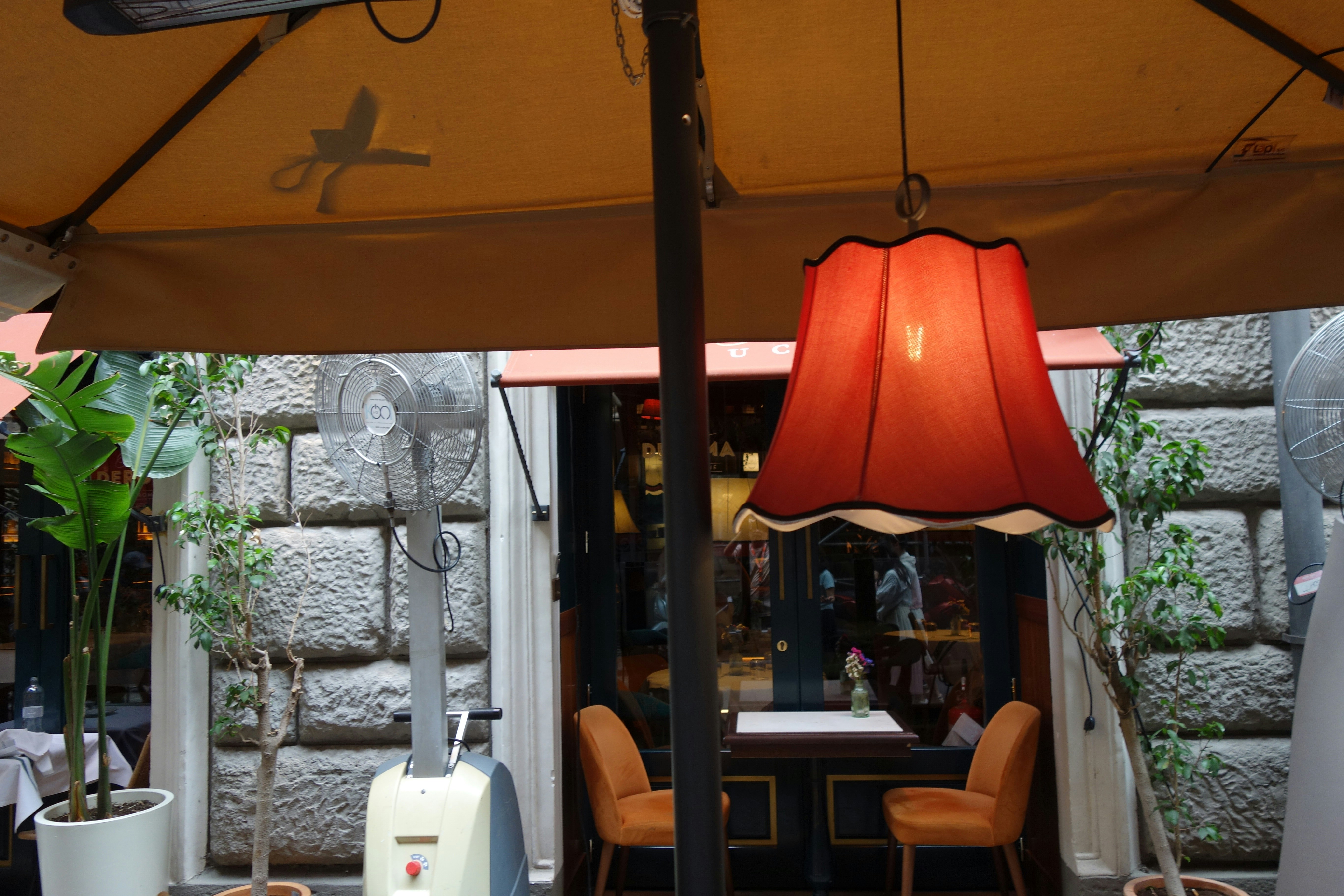
A market umbrella is defined by its straight, central pole that supports the canopy from directly underneath. This simple design makes them sturdy and reliable providers of sun and rain protection. For optimal use, market umbrellas should be placed in the center of the area you wish to shade. They are perfectly suited for outdoor dining tables that have a pre-drilled hole, creating a balanced and symmetrical look. When securing a market umbrella, a heavy base is crucial for stability, especially if it's not supported by a table.
Benefits for Smaller Spaces and Dining Areas
Market umbrellas are an excellent, space-efficient option, making them ideal for smaller patios, balconies, or decks where shade is needed but space is limited. Their design is highly effective for shading bistro sets and small-to-medium dining tables. Because the pole is centered, they provide direct and effective coverage for people seated around a table, ensuring everyone is protected from the sun. Compared to more complex designs, market umbrellas are generally more affordable, making them an accessible investment for enhancing your outdoor comfort.
Cantilever (Offset) Umbrellas: Versatile Outdoor Umbrella Types for Flexible Shade
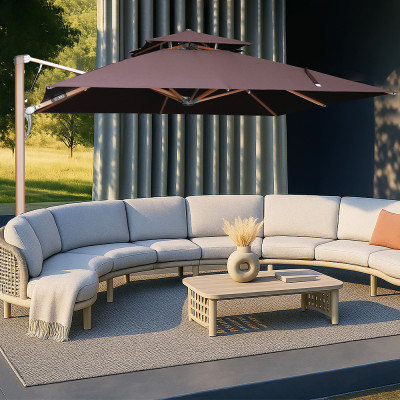
Cantilever umbrellas, often called offset umbrellas, represent a modern and highly flexible approach to outdoor shade. Their defining feature is a side-mounted pole that supports the canopy from above with an articulated arm, eliminating the need for a central pole.
Design and Unobstructed Coverage
The engineering behind a cantilever umbrella focuses on balancing weight distribution to ensure stability despite its offset design. This design provides a completely open and unobstructed space under the canopy, which fundamentally transforms the functionality of an outdoor area. Without a pole in the middle, you have total freedom in how you arrange your furniture, making it perfect for conversation pits, large sectional sofas, or poolside lounges where a center pole would be an obstacle. Many high-quality cantilever models offer advanced features like 360-degree rotation and multi-angle tilting, allowing you to easily adjust the shade as the sun moves throughout the day.
Best Use for Large Spaces and Lounging
The expansive, clear-span coverage of cantilever umbrellas makes them the superior choice for large and multi-functional outdoor living spaces. They are ideal for shading:
- Lounge Areas: Cover spacious outdoor seating arrangements without a pole getting in the way of conversation or views.
- Poolside Decks: Extend shade over chaise lounges or even a portion of the pool without the base needing to be right next to the water.
- Large Dining Sets: Provide comprehensive shade for large rectangular or sectional dining tables where a center pole wouldn't be practical. The versatility of a cantilever umbrella makes it a worthwhile investment for those who need adaptable shade for various activities, from dining to relaxing.
Specialty Outdoor Umbrella Types for Unique Needs
Beyond the two main types, several specialty designs cater to specific challenges like dynamic sun angles and tight spaces.
Tilt Umbrellas for Dynamic Sun Protection
A tilt umbrella allows you to adjust the angle of the canopy to block the sun as it moves across the sky, while the main pole remains stationary. This feature provides continuous, targeted shade throughout the day without needing to move the entire umbrella. Tilting mechanisms vary, including simple push-button styles, crank-tilts, and convenient collar-tilts located on the pole above the crank. This dynamic functionality is invaluable for all-day outdoor comfort.
Wall-Mounted and Half Umbrellas for Space-Saving Solutions
For areas where floor space is at a premium, such as small balconies, narrow patios, or tight entryways, specialty umbrellas offer brilliant solutions.
- Wall-Mounted Umbrellas: These attach directly to a solid vertical surface, eliminating the need for a pole or a bulky base entirely. This design frees up valuable floor space and provides very stable shade that is less susceptible to wind. They are an excellent choice for apartment balconies or covering a small cafe-style seating area against a wall.
- Half Umbrellas: As the name suggests, these are essentially market umbrellas cut in half. Their flat back allows them to sit flush against a wall, providing targeted shade for small spaces where a full-sized umbrella would be too large.
Key Outdoor Umbrella Features: Sizing and Coverage
Choosing an umbrella that is too small for your space is a common mistake that leads to inadequate shade and frustration. To ensure your investment provides the comfort you expect, carefully consider the size and shape of the canopy.
Determining the Right Outdoor Umbrella Size for Your Space
The effectiveness of your umbrella hinges on selecting the correct size. The goal is to provide ample shade for your seating or dining area without overpowering the space.
Calculating Optimal Diameter for Tables
A widely accepted rule of thumb is that your umbrella's canopy should be about two feet wider than the edge of your table on all sides. This ensures that everyone seated at the table remains comfortably shaded, even when their chairs are pulled out.
Here's a simple guide to matching umbrella diameter to table size:
- For tables up to 36 inches: A 6 to 8-foot umbrella is suitable.
- For tables up to 48 inches: A 9 to 11-foot umbrella is recommended.
- For tables up to 60-72 inches: An 11-foot or larger umbrella will provide the best coverage.
To measure, simply take the diameter of the area you want to shade and add four feet (two feet for each side) to determine the ideal umbrella diameter.
Matching Umbrella Size to Dining and Lounge Areas
The same principle applies to lounge areas and larger dining setups. Measure the entire seating group and choose an umbrella that extends beyond it to provide a generous shady retreat.
- Small (6 to 7.5 feet): Perfect for bistro sets, small balconies, or shading two chairs.
- Medium (8 to 9 feet): The most common size, ideal for 4-6 person dining sets.
- Large (10 to 11 feet): Great for larger dining tables (6-8 people) or small lounge areas.
- Extra-Large (12+ feet): Necessary for oversized dining furniture, large sectional sofas, or expansive poolside areas.
Understanding Shade Radius vs. Umbrella Diameter
It's important to distinguish between the umbrella's diameter—the measurement from one edge of the canopy to the other—and the actual shade it provides. The shade pattern moves and shrinks throughout the day as the sun's angle changes. The two-foot overhang rule helps compensate for this, ensuring consistent coverage. A larger diameter will always provide a more forgiving and extensive shade radius, minimizing the need to reposition furniture to stay out of the sun.
The Importance of Outdoor Umbrella Shape
The shape of your umbrella aeffects both its aesthetic appeal and its functional efficiency. The main options are round (including octagonal/hexagonal), square, and rectangular.
Round, Square, and Rectangular Options
- Round/Octagonal: This is the classic, most common umbrella shape. It provides a very traditional and cozy feel, works well in a variety of settings, and creates a symmetrical shade pattern ideal for round tables and circular conversation sets.
- Square: A square umbrella offers a modern, architectural look. A key advantage is that it provides more coverage than a round umbrella of the same nominal size—up to 30% more shade. Its straight edges are perfect for maximizing shade in corners or when placed against a wall.
- Rectangular: This shape is specifically designed to provide excellent coverage for long rectangular or oval dining tables and outdoor sofas. It creates a defined, room-like feel over a linear furniture arrangement.
Matching Shape to Furniture Layout
The most straightforward principle is to match the umbrella shape to your furniture's shape.
| Furniture Layout | Recommended Umbrella Shape | Why it Works |
|---|---|---|
| Round or Small Square Table (2-4 people) | Round or Octagonal | Creates even, symmetrical shade and complements the table shape. |
| Large Rectangular or Oval Table (6+ people) | Rectangular | Provides complete an end-to-end coverage that a round umbrella cannot. |
| Outdoor Sectional Sofa | Rectangular or Large Cantilever | Casts a long shadow that can protect the entire length of the sofa. |
| Circular Seating Area / Fire Pit | Round or Octagonal | Enhances the cozy, defined "room" feel of the conversational space. |
Durability and Functionality: Important Outdoor Umbrella Features
An outdoor umbrella is an investment that should last for many seasons. Its longevity depends almost entirely on the quality of its materials—from the canopy fabric that shields you from the elements to the frame and base that provide its structure and stability.
Choosing Robust Outdoor Umbrella Canopy Materials
The canopy is your first line of defense against sun and rain. A high-quality fabric is essential for providing protection, retaining its color, and resisting wear and tear.
UV-Resistance, Water-Proofing, and Fade-Resistance
When evaluating canopy fabrics, prioritize these three qualities:
- UV Resistance: A fabric with a high Ultraviolet Protection Factor (UPF) rating will block harmful UV rays, protecting your skin and preventing the fabric itself from degrading. High-quality fabrics can block 98% or more of UV rays.
- Water Resistance: The fabric should be able to repel water to keep you dry during light showers. While most outdoor fabrics are water-resistant, not all are fully waterproof. Look for materials that dry quickly to prevent mildew.
- Fade-Resistance: Constant sun exposure can cause colors to fade quickly. Fabrics that are "solution-dyed" offer the best performance, as the color pigment is added to the fibers before they are spun into yarn, making the color an integral part of the fabric. This process ensures the color remains vibrant for years.
Popular Fabrics: Acrylic, Polyester, and Olefin
There are three main tiers of fabric used for outdoor umbrellas, each offering a different balance of performance and price.
| Fabric Type | Key Characteristics | Best For |
|---|---|---|
| Solution-Dyed Acrylic (e.g., Sunbrella®) | Premium option. Exceptional UV resistance (UPF 50+), superior fade resistance, and excellent water repellency. It's soft, breathable, and can last 8-10 years with proper care. | Those seeking the best long-term durability, color retention, and performance, especially in high-sun environments. |
| Olefin (Polypropylene) | Mid-range option. Offers good UV and fade resistance for its price point. It has strong moisture and mildew resistance and is quick-drying. | Residential use in moderate climates where a balance of performance and affordability is desired. |
| Polyester | Entry-level option. The most budget-friendly choice but prone to fading and weakening with prolonged sun exposure. Higher-quality versions are solution-dyed or have UV-protective coatings to improve performance. | Shaded spaces, occasional use, or buyers on a tight budget. Expect a shorter lifespan of 1-2 years with regular use. |
Selecting Strong Outdoor Umbrella Frame and Pole Materials
The frame and pole provide the essential structure and strength of the umbrella. The material used impacts its durability, weight, and resistance to elements like wind and rust. The primary materials used are aluminum, wood, steel, and fiberglass.
Aluminum for Durability and Lightweight Designs
Aluminum is the most popular choice for modern umbrella frames for several good reasons. It is lightweight, making the umbrella easier to move and set up. High-quality aluminum is also naturally rustproof and can be powder-coated for extra protection against corrosion and wear. This makes it a durable, low-maintenance, and affordable option that performs well in most conditions.
Wood for Classic Aesthetics and Steel for Strength
- Wood: Wooden frames, often made from teak or other hardwoods, offer a classic, sophisticated aesthetic that blends beautifully with natural surroundings. However, they are generally less sturdy than metal or fiberglass and can be prone to snapping in high winds. They also require more maintenance to prevent weathering and rot.
- Steel: Steel offers superior strength and is ideal for heavy-duty commercial umbrellas. However, it is very heavy and susceptible to rust if its protective coating is chipped or scratched, making it less ideal for residential or coastal environments.
Fiberglass for Wind Resistance
Fiberglass is a high-performance composite material increasingly used for umbrella ribs. Its standout feature is flexibility. Fiberglass ribs are designed to bend and flex in strong winds without snapping, then return to their original shape. This makes them incredibly wind-resistant and durable. While it can be a more expensive option, umbrellas with fiberglass ribs offer unparalleled longevity, especially in windy locations.
Ensuring Stability with the Right Outdoor Umbrella Base
The umbrella base is not an afterthought; it is a critical safety component. An improperly weighted base can lead to your umbrella tipping over, causing damage or injury.
Matching Base Weight to Umbrella Size
The weight of the base must be proportional to the size of the umbrella canopy. A common rule of thumb is to have at least 10 pounds of base weight for every foot of the umbrella's diameter.
Here is a general guideline for minimum base weight:
- Up to 7.5 ft Umbrella: 50 lbs base
- 9 ft Umbrella: 75 lbs base
- 11 ft Umbrella or larger: 100+ lbs base
- Cantilever Umbrellas: Always require a much heavier base, often 70kg (approx. 154 lbs) or more, due to their offset design.
Always add more weight for freestanding umbrellas, windy locations, or if you plan to use the tilt feature frequently.
Freestanding vs. Table-Supported Bases
There are two primary ways to support an umbrella, and each impacts the base weight you need.
- Table-Supported Base: When an umbrella is placed through a hole in a sturdy patio table, the table itself provides significant additional stability. While you still need a base, it can generally be lighter than one for a freestanding umbrella.
- Freestanding Base: An umbrella that stands on its own—common with cantilevers or market umbrellas used to shade lounge areas—requires a much heavier and more substantial base to keep it securely anchored. This is because there is no table structure to help counteract wind forces.
Convenience and Aesthetics: Advanced Outdoor Umbrella Features
Beyond the fundamental choices of type, size, and material, modern outdoor umbrellas offer a host of advanced features designed to improve ease of use, enhance stability, and add a touch of ambiance to your outdoor setting.
Lift and Tilt Mechanisms for Ease of Use
Operating a large patio umbrella shouldn't be a chore. Modern lift and tilt mechanisms are designed to make opening, closing, and adjusting your umbrella simple and effortless.
Crank, Pulley, and Push-Up Lift Systems
These are the three primary ways to raise and lower an umbrella canopy:
- Crank Lift: This is the most common system on residential umbrellas. It uses a simple hand crank on the pole to smoothly open and close the canopy. Its user-friendly design requires minimal physical effort, making it ideal for everyone.
- Pulley and Pin: Often found on larger commercial or market umbrellas, this system uses a rope and pulley to hoist the canopy. Once open, a pin is inserted through the pole to hold it in place. While very reliable, it can require more strength to pull the rope and secure the pin compared to a crank system.
- Push-Up Lift: This is the most basic mechanism, working just like a personal rain umbrella. You manually push the hub up the pole until it locks into an open position. It's a simple, no-frills system but requires the most physical effort.
Button, Collar, and Crank Tilt Options
Tilting features allow you to angle the canopy to block the sun as it moves. The mechanisms for this function vary in convenience:
- Push-Button Tilt: The simplest tilt option, a button is located on a joint near the top of the pole. Pushing it allows you to manually angle the canopy. While straightforward, it can be hard to reach on tall umbrellas and may offer a limited range of motion.
- Collar Tilt: This highly convenient mechanism features a ring, or "collar," located on the pole just above the crank. After opening the umbrella, you simply twist the collar to adjust the tilt angle without having to reach up high.
- Crank Tilt (Auto-Tilt): In this integrated system, the same crank handle used to open the umbrella also controls the tilt. Once the canopy is fully open, continuing to turn the crank will cause it to start tilting.
Additional Outdoor Umbrella Features for Enhanced Experience
Look for these value-adding features that improve an umbrella's performance and extend its usability.
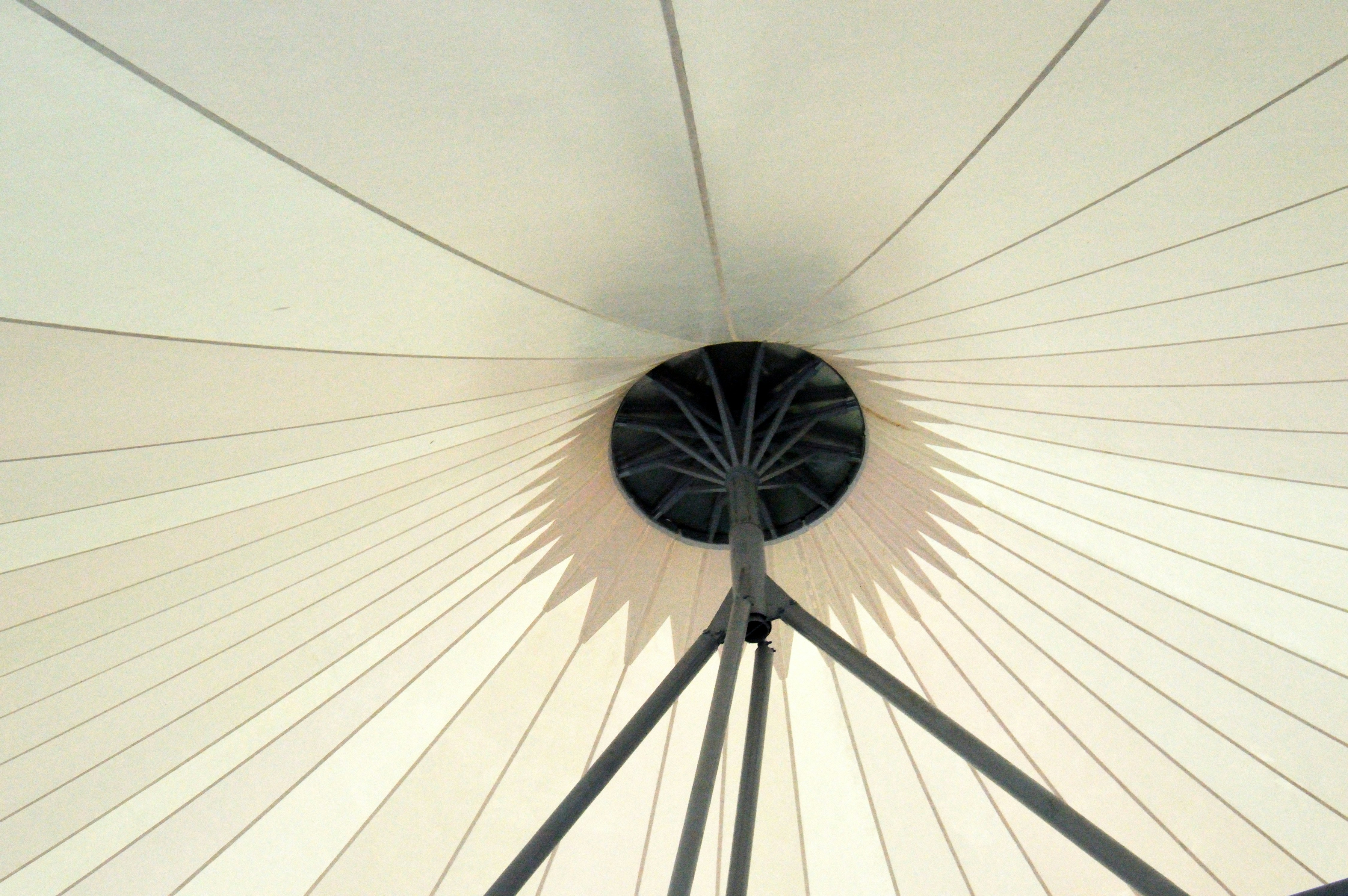
Vented Canopies for Airflow and Stability
A vented, or double-top, canopy is a crucial feature, especially in windy areas. It has an overlapping flap of fabric at the top of the umbrella that allows wind gusts and trapped hot air to escape. The benefits are twofold:
- Enhanced Stability: By allowing wind to pass through, the vents reduce the pressure that can cause an umbrella to lift, wobble, or even flip inside out. This significantly improves stability and reduces strain on the frame, contributing to a longer lifespan.
- Improved Air Circulation: On hot days, the vents allow heat rising off the ground to escape, preventing a buildup of hot, stagnant air under the canopy and keeping you cooler.
Integrated Lighting and Other Personalization Options
Many modern umbrellas come with features designed to extend your enjoyment of the patio into the evening hours.
- Integrated LED Lights: Umbrellas with LED lights built into the ribs have become incredibly popular. They provide a warm, ambient glow perfect for evening dining or conversation. Most are solar-powered, with a small panel on top of the umbrella that charges a battery during the day, making them energy-efficient and hassle-free. Some models even offer dimming options or different light colors.
- Personalization Options: Beyond function, you can often customize the look of your umbrella to perfectly match your outdoor decor. This can include a wide array of fabric colors and patterns, different frame finishes (like wood-grain aluminum), and decorative finials for the top of the pole.
Frequently Asked Questions (FAQ)
1. What is the best way to clean and maintain an outdoor umbrella?
Regular maintenance is key to extending the life of your umbrella. For the canopy, periodically brush off loose dirt and debris. To clean, use a soft brush with a solution of mild soap and lukewarm water. Rinse thoroughly with clean water to remove all soap residue and let it air dry completely before closing to prevent mold and mildew. For the frame, wipe it down with a soft, damp cloth. If you have a wood frame, you may need to treat it periodically with a sealant to protect it from moisture. Always store your umbrella in a dry, protected place during the off-season or in a protective cover when not in use for long periods.
2. How do I stop my patio umbrella from spinning or falling over in the wind?
Stability is paramount for safety. First, ensure your base is heavy enough for your umbrella's size and whether it is freestanding or in a table. A good rule is to have at least 10 pounds of base weight for every foot of canopy diameter. For windy areas, add even more weight. Second, a vented canopy is essential as it allows wind to pass through, greatly reducing the "sail effect" that causes umbrellas to lift and topple. Finally, and most importantly, always close your umbrella when it is not in use or when winds become strong. No residential umbrella is designed to be left open in harsh weather.
3. Can I leave my patio umbrella outside in the rain?
Most high-quality umbrella canopies made from fabrics like acrylic, olefin, or treated polyester are water-resistant and can handle light to moderate rain just fine. They will keep you dry during a passing shower. However, it is not advisable to leave an umbrella open during heavy downpours or thunderstorms. The weight of the water can put stress on the fabric and frame, and strong winds associated with storms can easily cause damage. It's always best to close the umbrella during severe weather.
4. What's the difference between a market umbrella and a patio umbrella?
The terms are often used interchangeably, but traditionally, there is a slight difference. A "market umbrella" typically has a clean, straight-edged canopy with no valance (the decorative flap of fabric hanging from the edges). A "patio umbrella" often features a scalloped edge with a valance. Today, however, the term market umbrella is commonly used to refer to almost any center-pole umbrella, with or without a valance. The function is essentially the same.
5. Are umbrellas with integrated LED lights worth it?
For many people, yes. Umbrellas with built-in LED lights are a fantastic feature for extending the use of your outdoor space into the evening. They provide convenient and pleasant ambient lighting for dining or socializing without the need for separate string lights or candles. Most are solar-powered, making them eco-friendly and extremely low-maintenance. If you enjoy spending evenings on your patio, the added atmosphere and functionality of an integrated lighting system is a very worthwhile investment.
Conclusion
By carefully considering the various outdoor umbrella types and features, you can confidently select an umbrella that not only provides superior shade and protection but also enhances the overall appeal and functionality of your outdoor living areas. The key is to match the umbrella's design to your specific environment and needs.
Remember to assess your space, from the size of your dining table to the layout of your lounge chairs, to determine the right size and shape. Prioritize quality materials and thoughtful design—like a solution-dyed acrylic canopy, a wind-resistant fiberglass or aluminum frame, and a sufficiently heavy base—for a lasting and enjoyable outdoor experience. With the right outdoor umbrella, you'll be ready to embrace sunny days and create unforgettable moments in your personalized outdoor sanctuary. We encourage you to share this guide with friends and family to help them create their own perfect shaded retreat