Resin vs. Water-Filled vs. Concrete Umbrella Bases: A Base Weight & Pole Fit Guide
Most umbrellas that end up on the ground were not blown over by a canopy that failed. They were tipped by a base that was too light for the canopy size, the pole diameter or the wind exposure of the site. Choosing an umbrella base is a calculation, not an accessory decision, and it is the specification mistake commercial buyers make most often.
Why published base-weight rules disagree
Search for a base weight recommendation and you will find numbers ranging from 50 lb to more than 130 lb for the same 9 ft umbrella. All of them are defensible, because each one assumes a different setup.
Table-supported umbrellas
The table itself adds stability, so a lighter base is acceptable. Grosfillex puts table setups at roughly 30–50 lb, while freestanding commercial bases start at about 75 lb.
Freestanding center-pole umbrellas
The widely used retail rule is about 10 lb of ballast per foot of canopy diameter — roughly 90 lb for a 9 ft canopy. Midtown Umbrellas publishes a more conservative 50 lb minimum for a 9 ft canopy in a sheltered setting and recommends 75 lb or more for commercial and large-canopy models.
Exposed, coastal and rooftop sites
Add roughly 25–50% to the baseline, which puts a 9 ft freestanding umbrella at about 115–135 lb once wind exposure is accounted for.
Cantilever umbrellas
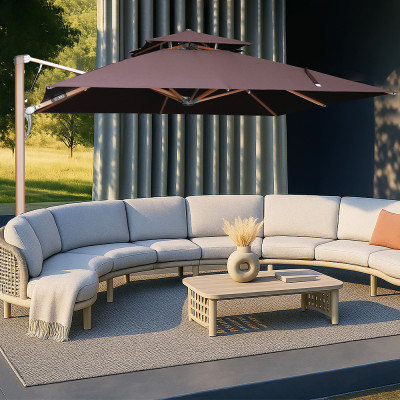
A cantilever umbrella base sits outside every rule above. Because the canopy hangs away from the mast, the leverage is far greater, so the base must be specified per model — usually a cross base with separate weight plates, or a one-piece unit in the 160–360 kg range.
Direct answer: for a freestanding center-pole umbrella, start at 10 lb of base weight per foot of canopy diameter, then add 25–50% for exposed sites. For table-supported umbrellas, 30–50 lb is normally sufficient. For cantilevers, always use the base the frame was designed for.
For a water filled umbrella base or a sand-fillable model, always think in two weights: the shipping weight when empty, and the working weight once filled. Sand provides more ballast than water in the same shell, which matters whenever the base footprint is limited.
| Canopy diameter | Sheltered patio | Open or breezy patio | Coastal or rooftop |
|---|---|---|---|
| 7.5 ft (2.3 m) | 75 lb (34 kg) | about 95 lb (43 kg) | about 115 lb (52 kg) |
| 9 ft (2.7 m) | 90 lb (41 kg) | about 115 lb (52 kg) | about 135 lb (61 kg) |
| 11 ft (3.3 m) | 110 lb (50 kg) | about 140 lb (63 kg) | about 165 lb (75 kg) |
| Through-table setup | 30–50 lb (13–23 kg) is normally sufficient, because the table adds stability | ||
| Cantilever umbrella | Model-specific ballast only — typically a cross base with plates, or 160–360 kg one-piece | ||
Resin bases: the cleanest solution for table and patio setups
A resin patio umbrella base is cast from resin or composite and finished in black, bronze or wood-look coatings, which is why designers choose it over raw concrete. Our range runs from decorative bronze-finish units built for 38–48 mm poles up to 14 kg commercial models with dual pole compatibility, so one base can serve both a center-pole umbrella and a heavier side-pole frame.
Check the pole holder, not only the weight
A resin umbrella stand is only as good as its fit. A loose pole rattles, wears the holder and lets the canopy invert in a gust. Look for a locking knob or an adapter ring, and confirm the holder size against the pole you are using.
A parasol pole adapter solves mismatch cheaply
If a client already owns bases with a 48 mm holder and specifies 38 mm poles, a parasol pole adapter is usually the difference between a return and a repeat order.
Water-fillable bases: volume without freight cost
Water filled bases ship empty, which is why they dominate long-distance and container projects: you pay freight on a few kilos of HDPE instead of 40 kg of concrete, and the end user fills the base on site with water or sand. Typical capacities in our line are 60 L, 138 L and 180 L. A 138 L shell filled with water is roughly 138 kg of ballast, and heavier again when filled with sand.
The trade-offs are real and worth stating in your quotation: a water fillable umbrella base needs a water source and a drain point, it must be drained before winter storage in freezing climates to avoid cracking, and the fill level directly determines performance. For a water filled umbrella stand on a rooftop bar, write the drain-down routine into the operating manual — most winter damage we see is cracked shells, not fabric failure.
Concrete, steel-plate and marble bases: maximum stability, minimum movement
For permanent installations, steel-plated concrete bases from about 45 kg and welded marble bases up to 360 kg for large cantilevers deliver the best stability per unit of footprint.
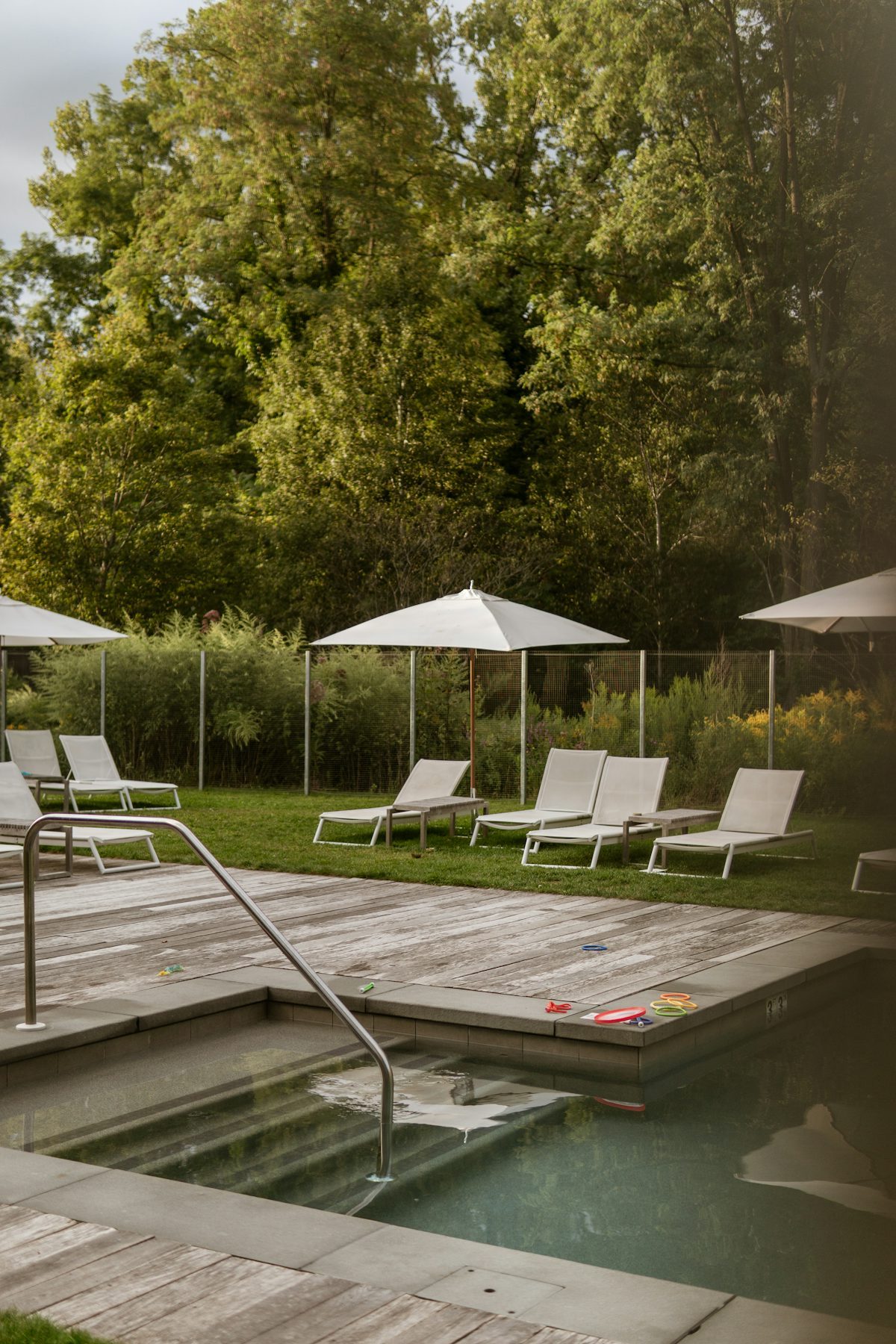
Fixed and in-ground mounts go one step further. Bolted or sleeved into a slab or planter, they remove the base from the floor plan entirely and are the standard choice for hotel courtyards, plazas and restaurant terraces where tripping hazards and clean sightlines matter. A base umbrella chosen for a table hole is often the wrong unit for a freestanding or in-ground installation, so decide the mounting method before the base family.
Pole fit and mounting: the numbers buyers forget
- Pole diameter — 38 mm, 48 mm and 50 mm cover most commercial umbrellas; heavier frames above 3 m usually move to 50 mm or a two-piece pole.
- Mounting type — through-table, freestanding, cross base with plates, or in-ground sleeve. Each one changes the required base weight.
- Surface — flat, solid and stable. A base that can rock on a decking gap loses much of its effective weight.
- Wind habits — no base makes an open canopy safe in storm-force wind. Bases hold umbrellas down; closing them is what prevents damage.
What leading brands get right
- Grosfillex leads with engineering basics: it recommends pole diameters of 1.5–2.5 in — smaller for umbrellas up to 9 ft, larger for bigger canopies — pairs them with base weights of 30–50 lb for table setups and 75 lb or more freestanding (75–150 lb depending on size and wind), and promotes flexible fibreglass ribs for wind. Its commercially oriented approach of bundling handles and locking mechanisms is a small detail that wins on busy sites. See the Grosfillex commercial base guide.
- ABCCanopy turns base weight into a table customers can actually use: about 10 lb per foot of canopy diameter, then +25% for open patios and +50% for coastal or rooftop exposure — while labelling the numbers as planning figures rather than certified wind ratings. That honesty reduces post-sale disputes. Read the ABCCanopy wind and base guide.
- Midtown Umbrellas connects base weight to serviceability, telling buyers to ask about commercial warranty terms and replacement part lead times — a reminder that the base is part of a serviceable system, not a one-off purchase. See how Midtown specifies bases for restaurants.
Foris Hortus builds bases to the same logic inside one supply chain: cast resin umbrella bases for table and patio work, HDPE fillable bases from 60 L to 180 L for container projects, steel-plate concrete and welded marble bases for large cantilevers up to 360 kg, plus in-ground and bolt-down options for permanent hospitality sites. Pole diameter, colour finish and locking mechanism are agreed at quotation stage, so the base arrives matched to the umbrella instead of being an afterthought.
Base selection checklist for your RFQ
- Umbrella type and canopy size — center pole, cantilever or side pole, in diameter or square size.
- Pole diameter — 38 mm, 48 mm or 50 mm, or the pole you already own.
- Mounting type — through table, freestanding, cross base or in-ground.
- Base family preference — resin, water or sand fillable, concrete or marble.
- Site exposure — sheltered patio, open plaza, coastal or rooftop.
- Finish and colour, plus any branding requirement.
- Quantity and destination port.
Frequently asked questions
How heavy should a patio umbrella base be?
For a freestanding center-pole umbrella, start at about 10 lb per foot of canopy diameter — roughly 90 lb for a 9 ft canopy — and add 25–50% for exposed, coastal or rooftop locations. Table-supported umbrellas can use less, typically 30–50 lb.
Is a water filled umbrella base as stable as resin or concrete?
Once filled correctly, a water-filled base provides equivalent ballast for the canopy size it is rated for. Two differences matter: the ballast depends on the user filling it properly, and the shell must be drained before freezing weather.
Can I use one base for both a center-pole and a cantilever umbrella?
No. Cantilevers load the base with far greater leverage and require model-specific ballast, usually a cross base with plates or a 160–360 kg one-piece base. Using a center-pole base under a cantilever is the most common cause of tipping.
What pole diameter does a resin umbrella stand accept?
Our resin bases are typically supplied for 38–48 mm poles, with dual-compatibility models and adapter rings available for other diameters. Always confirm the holder size against the pole before ordering.
Match the base before you order the canopy
Sizing the base and the canopy in the same conversation is what keeps a terrace usable all season. Start from the mounting method, then the canopy size, then the exposure of the site — and confirm pole diameter and weight in writing. You can browse the full umbrella bases and accessories range to compare families side by side.
Working through a project? These pages cover the two most common configurations: center pole umbrella base options for through-table and freestanding setups, and cantilever and side-pole umbrella bases for offset layouts. Two models buyers quote most often are the 14 kg commercial resin umbrella base with dual pole compatibility and the 138 L heavy-duty water-fill umbrella base — one for patios and hotel terraces, the other for container projects where freight weight is the deciding factor.