Everything You Need to Know: The commercial umbrella base weight guide
As experts in outdoor furnishings from Foris Hortus, we understand that choosing the right support for your establishment's shade solution is paramount. A commercial umbrella isn't just about providing shade; it's about ensuring safety, stability, and longevity for your investment and the comfort of your patrons. This comprehensive commercial umbrella base weight guide will walk you through everything you need to know.
Selecting the ideal commercial umbrella base weight is critical, as an inadequate base can lead to umbrellas tipping over, causing potential damage or injury. Our guide aims to simplify this crucial decision, empowering you to find the perfect base to meet your specific needs. We'll delve into the factors that influence base weight requirements, different base types, and practical tips to help you make an informed choice for your commercial space.
Key Takeaways
- Prioritize Safety: The primary function of a properly weighted umbrella base is to prevent tipping, which can cause significant property damage and customer injury. In a commercial setting, this is not just a practical concern but a crucial liability issue.
- Base Weight is Not One-Size-Fits-All: The required weight for your base is determined by a combination of factors. The most important are the umbrella's canopy size (diameter), its type (market vs. cantilever), and its placement (freestanding vs. through a table).
- Follow the General Rule, But Adjust: A common guideline is to use 10 pounds of base weight for every foot of canopy diameter for freestanding umbrellas. However, this is a starting point. Cantilever umbrellas, windy locations, and umbrellas with tilt mechanisms all require a significantly heavier base. For example, a freestanding 9-foot umbrella needs at least a 90-pound base, but a cantilever version may require 200 pounds or more.
- Material Matters: Base materials offer a trade-off between stability, aesthetics, and portability.
- Solid Bases (Granite, Concrete, Steel): Offer maximum, hassle-free stability and a premium look but are very heavy and difficult to move.
- Fillable Bases (Plastic/Resin): Provide excellent versatility. They are lightweight when empty, making them easy to position, and can be filled with water or sand to achieve the desired weight. Sand is denser and provides more weight for the same volume.
- Permanent Mounts (In-ground, Deck-mount): Offer the ultimate in stability and a zero-footprint solution, ideal for fixed locations like poolside areas or permanent dining patios.
- Consider Your Environment: A breezy café patio will require a much heavier base than a sheltered courtyard. Always assess the typical wind conditions of your location and err on the side of a heavier base for safety. Closing umbrellas during high winds is a non-negotiable safety practice.
- Compatibility is Key: Before purchasing, ensure the base's tube diameter is compatible with your umbrella's pole diameter. A snug fit is essential to prevent wobbling and reduce stress on the pole. Most quality bases offer adjustable inserts or tightening knobs to accommodate various pole sizes.
- Maintenance Extends Life: Regularly check your base for cracks, rust, or other damage. For fillable bases, ensure the plug is secure to prevent leaks. Clean the base periodically to maintain its appearance and prevent mold or mildew growth, especially in damp environments. For winter storage, empty fillable bases to prevent cracking from frozen water.
Understanding the Importance of the Right Commercial Umbrella Base Weight
Safety First: Why Base Weight Matters in a Commercial Setting
In a bustling commercial environment like a restaurant patio, hotel pool deck, or café sidewalk, the safety of your patrons is the highest priority. A commercial umbrella that is not properly anchored can become a dangerous projectile in a sudden gust of wind. According to the U.S. Consumer Products Safety Commission (CPSC), thousands of people are treated for umbrella-related injuries each year. These incidents can lead to serious harm, including head injuries, lacerations, and even impalement, creating significant legal and financial liabilities for a business owner.
Choosing the correct base weight is not simply about keeping your umbrella upright; it is about creating a secure environment and demonstrating a duty of care to your customers. An inadequately weighted base makes an umbrella unstable, risking not only injury but also damage to property, such as tables, windows, or surrounding structures. In the event of an accident, a business could be found negligent if it failed to use a sufficiently heavy base or did not secure umbrellas in adverse weather conditions. Therefore, investing in a heavy, appropriate base is a critical step in risk management for any commercial enterprise.
Factors Influencing Your Commercial Umbrella Base Weight Needs
Selecting the correct base weight is not a one-size-fits-all decision. Several critical factors must be considered to ensure your umbrella is both safe and effective. The primary elements influencing your choice are the umbrella's design, its size, and the environmental conditions of your specific location.
Umbrella Type: Market vs. Cantilever
The style of your commercial umbrella is a major determinant of the required base weight. There are two main types:
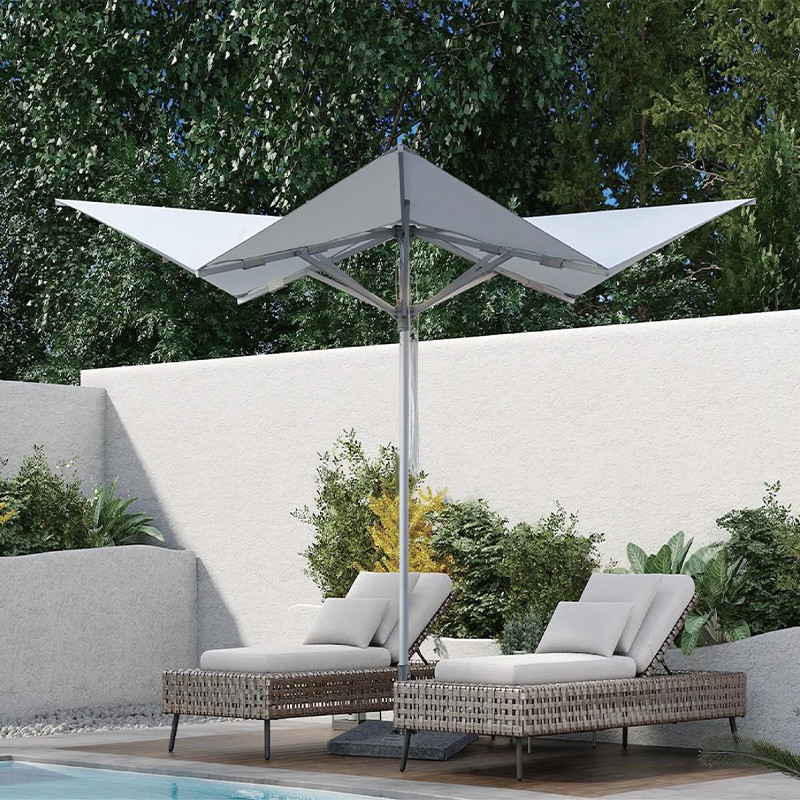
- Market Umbrellas: These are the traditional center-pole umbrellas. Because the pole is located directly under the canopy, the weight is distributed evenly, giving them a natural stability. As a result, they generally require less base weight compared to their cantilever counterparts.
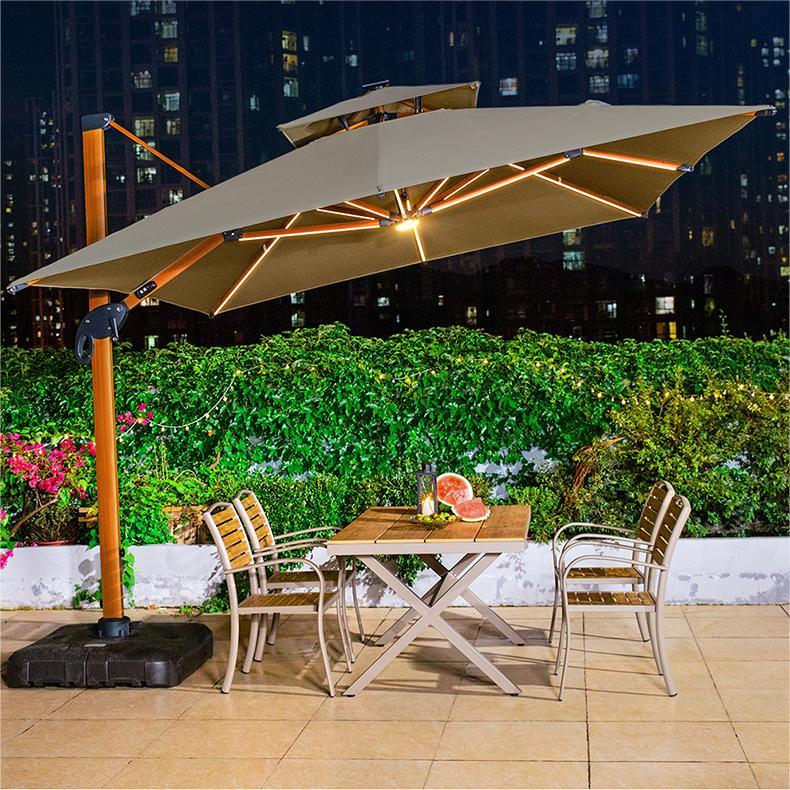
- Cantilever (Offset) Umbrellas: These umbrellas have a side-mounted pole and an articulated arm that suspends the canopy over your seating area. This design offers the significant advantage of an open, unobstructed space under the shade. However, the offset center of gravity creates leverage, meaning it requires a substantially heavier base—sometimes 400 pounds or more—to safely counterbalance the weight of the canopy. For example, a 10-foot market umbrella might need a 75-100 lb base, while a 10-foot cantilever umbrella could require 180-200 lbs or even more to remain stable.

Canopy Size and Shape: The Bigger, The Heavier
The logic is simple: the larger the umbrella's canopy, the more wind it can catch, and therefore, the heavier the base needs to be to hold it down. The canopy's surface area acts like a sail, and a larger sail requires a stronger anchor. An 11-foot umbrella will require a significantly heavier base than a 7-foot one.
The shape of the canopy also plays a role. While round and square canopies are common, the key factor remains the total surface area. A good rule of thumb is to increase the base weight proportionally with the canopy's diameter or width. Most manufacturers provide minimum weight recommendations based on canopy size, and it is crucial to follow these guidelines as a starting point.
Environmental Conditions: Wind and Exposure
You cannot ignore the specific environmental conditions of your commercial space. An umbrella placed in a sheltered, enclosed courtyard will be subjected to far less wind than one on an open rooftop terrace or a coastal restaurant patio.
- Windy Areas: If your location is prone to moderate or high winds, you must select a heavier base than the standard recommendation. It's always safer to err on the side of caution and choose a more substantial base. Some manufacturers even provide wind ratings for their umbrellas, but these are often guides and assume proper anchoring.
- Elevation: An umbrella on a 15th-floor balcony will experience much stronger winds than one at ground level and thus needs a significantly heavier base.
- Unattended Umbrellas: It is a critical safety practice to always close umbrellas when they are not in use or when winds are expected to exceed 25 mph. No base, no matter how heavy, can guarantee an open umbrella will be safe in extreme weather.
Calculating the Optimal Commercial Umbrella Base Weight
The Golden Rule: Pounds Per Foot of Canopy
While many factors come into play, the industry has a widely accepted "golden rule" to provide a baseline calculation for market-style umbrellas. This rule helps establish a minimum safe weight to prevent your umbrella from tipping over in normal conditions.
The Rule: For a freestanding market umbrella, you should have a minimum of 10 pounds of base weight for every foot of canopy diameter.
Applying this rule is straightforward:
- 7.5-foot canopy x 10 lbs/ft = 75-pound base
- 9-foot canopy x 10 lbs/ft = 90-pound base
- 11-foot canopy x 10 lbs/ft = 110-pound base
It is critical to remember that this is a minimum starting point. This calculation does not account for cantilever umbrellas, high-wind areas, or placement through a table, all of which require significant adjustments. Think of this rule as the absolute bare minimum for a freestanding umbrella in a calm, sheltered location. When in doubt, especially for a commercial setting, always choose a heavier base.
Adjusting for Specific Commercial Umbrella Base Weight Requirements
While the "10 pounds per foot" rule is a solid foundation, several common scenarios in a commercial setting demand significant adjustments to ensure safety and stability. The two most important considerations are whether the umbrella is freestanding or stabilized by a table, and whether it has advanced features like tilting or rotation.
Free-Standing vs. Table-Mounted Umbrellas
The placement of your umbrella has a huge impact on the necessary base weight.
- Free-Standing: A freestanding umbrella relies entirely on its base for stability against wind and gravity. Because it has no additional support, you must use a much heavier base. Some experts recommend that freestanding setups require 20-30% more weight than the standard calculation. There is no room for compromise here; a heavier base is always the safer choice. For commercial freestanding umbrellas, exceeding the minimum recommendation is a wise investment in safety.
- Table-Mounted (Through-Table): When an umbrella's pole is secured through a sturdy, heavy patio table, the table itself acts as a significant ballast and stabilizer. The table helps distribute the forces from wind and prevents the umbrella from tipping at the base. In this configuration, you can often use a lighter base than you would for a freestanding setup. Some guides suggest a base for a through-table umbrella can be about 20 pounds lighter than its freestanding counterpart. However, a base is still absolutely necessary to anchor the bottom of the pole and prevent it from shifting, which could damage the table or create an unstable setup.
| Umbrella Setup | Base Weight Requirement | Rationale |
|---|---|---|
| Freestanding | Significantly Heavier | The base is the sole source of stability. |
| Through-Table | Lighter | The table provides additional weight and support. |
Addressing Tilt Functions and Enhanced Maneuverability
Modern commercial umbrellas often come with features designed for convenience and maximum shade coverage, such as crank tilts, collar tilts, and 360-degree rotation. While these features are highly functional, they alter the umbrella's center of gravity and its reaction to wind.
When an umbrella canopy is tilted, it changes from a relatively flat surface to an angled one, which can catch the wind much like a sail. This dramatically increases the leverage and the tipping force exerted on the base.
As a result, any umbrella with a tilt function requires a heavier base than a non-tilting umbrella of the same size. This is especially true for cantilever umbrellas, where tilting the already offset canopy puts immense stress on the entire structure. For market umbrellas, you should consider adding at least 10-20 extra pounds to your base if you frequently use the tilt feature. For cantilever umbrellas, an additional 40 pounds or more is a reasonable precaution. Never leave an umbrella in a tilted position during windy conditions or when unattended.
Exploring Commercial Umbrella Base Types and Materials
The material and type of your commercial umbrella base are just as important as its weight. They influence not only stability but also durability, portability, and aesthetics. Commercial bases can be broadly categorized into three families: solid bases, fillable bases, and permanent mounts.
Solid Bases: Maximum Stability for Your Commercial Umbrella Base Weight
Solid bases are prized in commercial settings for their inherent weight and "set it and forget it" nature. Made from dense, heavy materials, they provide immediate and reliable stability without the need for assembly or filling.
Concrete and Granite: Heavy-Duty Solutions
- Concrete & Granite: These materials are the heavyweights of the base world. Granite offers a polished, high-end aesthetic, while concrete provides rugged durability. Both are ideal for large commercial umbrellas, especially in windy locations, as their substantial mass keeps the umbrella firmly grounded. Some concrete bases are covered in powder-coated steel for a more refined look and added rust resistance.
- Pros: Maximum stability, durable, weather-resistant, premium appearance (especially granite).
- Cons: Very heavy and difficult to move, can be more expensive.
Metal Bases: Steel and Cast Iron Options
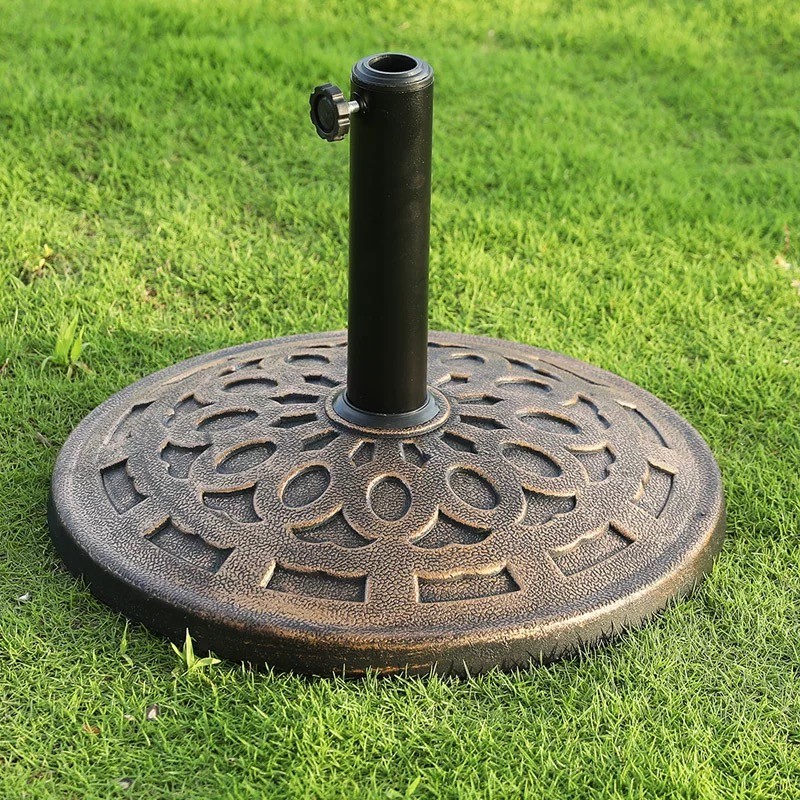
- Steel & Cast Iron: These bases offer excellent strength and a classic look. Cast iron is heavy and stable, often featuring decorative designs. Steel is also a strong and beautiful option, but it's crucial to choose a model with a protective finish, like powder-coating or galvanization, to prevent rust and corrosion, especially in humid or coastal climates.
- Pros: Very strong and durable, aesthetically pleasing, provide significant weight.
- Cons: Can rust if not properly coated, still very heavy to relocate.
Fillable Bases: Versatility and Adjustability
Fillable bases, typically made of high-density polyethylene (HDPE) or resin, offer a flexible solution that balances stability with portability. They are lightweight when empty, making them easy to transport and position, and can then be filled with a weighted material on-site.
Water or Sand: Choosing Your Filling Material
The choice of filling material directly impacts the final weight and stability of the base.
- Water: Easy to fill and empty, making the base relatively convenient to move if needed.
- Sand: Denser and heavier than water, providing significantly more weight and stability for the same volume. For commercial applications, especially with larger umbrellas or in windy areas, sand is the superior choice for maximizing stability.
| Filling Material | Portability | Stability | Best Use Case |
|---|---|---|---|
| Water | Higher (easier to empty) | Good | Sheltered areas, smaller umbrellas |
| Sand | Lower (harder to empty) | Excellent | Windy areas, large and cantilever umbrellas |
Portability and Storage Considerations
The primary advantage of fillable bases is their portability when empty. This is ideal for businesses that need to reconfigure seating areas or store umbrellas nightly or seasonally. Many models also include built-in wheels and handles, which allow for easier repositioning even when partially or fully filled. When storing for winter, it's crucial to empty water-filled bases to prevent cracking from freezing.
Permanent Mounting Options for Commercial Umbrella Base Weight
For ultimate stability and a clean, zero-footprint aesthetic, permanent mounts are the professional's choice. These are ideal for high-traffic commercial spaces where umbrellas have a fixed location.
In-Ground and Deck-Mounted Solutions
- In-Ground Mounts: These mounts are anchored directly into the ground, usually by setting a steel tube in concrete. This method offers unparalleled stability and is perfect for lawns, patios, and poolside areas where you want a permanent shade solution without a visible base to trip over.
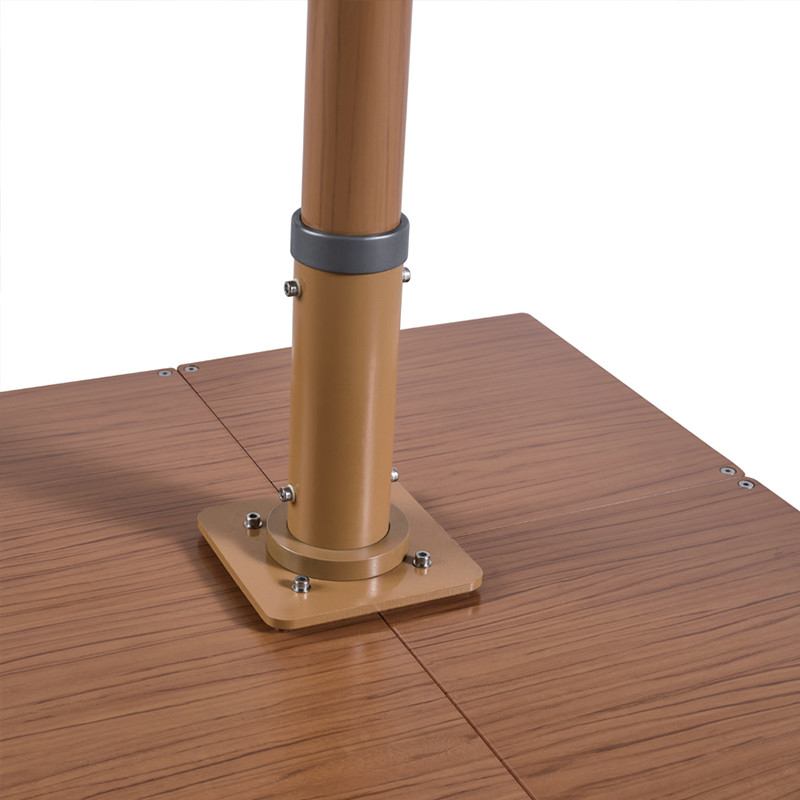
- Deck/Surface Mounts: These involve bolting a metal plate directly onto a solid surface like a wooden deck or concrete patio. They provide exceptional security and are a great semi-permanent option for securing large umbrellas in windy or high-traffic zones.
Wall-Mounted Designs for Space Optimization
A clever solution for tight spaces, wall-mounted umbrellas attach directly to a sturdy building wall. These are typically cantilever-style arms that can extend, rotate, and tilt, offering flexible shade coverage without using any floor space. This is an excellent option for narrow balconies, walkways, or small café patios where a traditional base would be an obstruction.
Optimizing Your Commercial Umbrella Base Weight for Performance
Matching Pole Diameter to Base Compatibility
A crucial but often overlooked detail is the compatibility between your umbrella's pole and the base's receiver tube. An improper fit can lead to wobbling, instability, and even damage to the pole over time.
- Measure Your Pole: Before purchasing a base, you must know the exact diameter of your umbrella's pole. Most standard market umbrella poles are 1.5 to 2 inches in diameter, while heavy-duty commercial or cantilever umbrellas can have poles up to 3 inches or more. Use a caliper or wrap a flexible measuring tape around the pole to find the circumference, then divide by 3.14 (pi) to get the diameter.
- Check the Base's Sleeve/Tube Diameter: The product specifications for any quality base will list the range of pole diameters it can accommodate. A good base should have a tube that is only slightly larger than your pole.
- Use Locking Mechanisms and Inserts: The best commercial bases come with tightening knobs or screws that secure the pole firmly within the tube, preventing it from spinning or wobbling. Many also include plastic inserts or rings to create a snug fit for poles of slightly different sizes. A tight fit is essential for stability.
Accessories and Innovations for Enhanced Stability
Even with a heavy base, there are accessories that can provide extra security, especially for freestanding umbrellas or those in windy locations.
- Add-On Weights: These are supplemental weights, often made of cast iron or designed as fillable bags, that can be placed over or attached to your existing base. Cast iron "weight rings" often screw into the bottom of a compatible base, providing a seamless and secure addition of 30 pounds or more. This is an excellent solution for when you need to move an umbrella from a stable through-table position to a more vulnerable freestanding location.
- Weight Bags: These are durable fabric bags designed to be filled with sand and placed over the base. They are a versatile and cost-effective way to add significant weight (50-100 lbs or more per set) to nearly any type of base, from a solid base to the cross-bar stand of a cantilever umbrella.
- Stabilizer Bars: Some advanced cantilever umbrellas offer stabilizer bars. These arms attach from the main mast to the umbrella's canopy frame, creating a rigid structure that dramatically increases wind stability and reduces swaying.
Maintenance Tips to Prolong the Life of Your Commercial Umbrella Base
Proper maintenance ensures your base remains safe, functional, and visually appealing for many seasons.
- Regular Cleaning: Routinely clean your base to remove dirt, grime, and spilled residue. A simple solution of mild soap and water applied with a soft cloth or sponge is usually sufficient for all materials, including concrete, metal, and resin. Brush away any loose debris first.
- Inspect for Damage: Periodically check your base for any signs of wear and tear.
- Metal Bases: Look for chips in the powder-coating or finish, as these are spots where rust can begin. Touch up any scratches with outdoor paint.
- Fillable Bases: Check for cracks, especially before winter. Ensure the fill cap is secure and not leaking.
- Winterizing and Storage: Proper storage during the off-season is critical, especially in climates with freezing temperatures.
- Water-Filled Bases: You must completely drain the water before storing. Trapped water will freeze, expand, and crack the plastic.
- Sand-Filled & Solid Bases: While more durable in the cold, it is still best practice to store these bases indoors in a garage or shed if possible. If left outdoors, cover them with a heavy-duty, waterproof tarp to protect them from excessive moisture and freeze-thaw cycles.
- Before storing any base, clean and dry it completely to prevent mold and mildew from growing.
Frequently Asked Questions (FAQ)
1. What is the absolute minimum base weight I should consider for a commercial setting? For any freestanding commercial market umbrella, the starting point should be no less than 75-90 pounds, suitable for umbrellas up to 9 feet in calm conditions. However, at Foris Hortus, we strongly recommend exceeding this minimum for commercial use. The potential liability from an accident far outweighs the extra cost of a heavier, more secure base. For cantilever umbrellas, the minimums are much higher, often starting at 180-200 pounds and going up to 400 pounds or more for large canopies.
2. Can I use sand instead of water in any fillable base? Yes, and you absolutely should if maximizing weight is your goal. Sand is significantly denser than water, meaning it will make the base heavier and more stable for the same volume. While water is more convenient to fill and empty, the added security from sand is invaluable for commercial applications.
3. My patio is very windy. What's more important: a heavier base or an umbrella with wind vents? Both are critically important and work together. A heavier base provides the anchoring force, while wind vents in the canopy allow gusts of wind to pass through rather than catching the canopy like a sail. In a windy commercial environment, you should never compromise on either. Invest in a high-quality umbrella with reinforced ribs and double wind vents, AND secure it with a base that is heavier than the standard recommendation. Also, enforce a strict policy of closing umbrellas when winds become strong.
4. The pole of my new umbrella is loose in my old base. What can I do? A loose fit is a safety hazard. First, check if your base has a tightening screw and ensure it is fully engaged. If it's still loose, the base tube is too large for the pole. The best solution is to purchase a new base that properly fits your pole's diameter. As a temporary fix, you might be able to find pole inserts or shims that can fill the gap, but this is not a reliable long-term solution for a commercial setting where safety is paramount.
5. How do I stop my cantilever umbrella from spinning in the wind? Some swaying and spinning is normal for a cantilever design. However, excessive spinning can be a problem. The first line of defense is a correctly and heavily weighted base (often requiring 200-400+ lbs). Some high-end models have built-in rotation locks. For others, you can purchase aftermarket accessories like stabilizer bars that connect the mast to the canopy frame, drastically reducing movement. In moderate to high winds, the only truly safe option is to close the umbrella.
6. Is a permanent mount worth the installation effort for my restaurant patio? If your seating layout is fixed, a permanent mount (either in-ground or surface-mounted) is often the best possible solution for a commercial space. It offers unmatched stability, eliminates the tripping hazard of a bulky base, and creates a clean, professional look that maximizes usable floor space for tables and chairs. While the initial installation requires more effort, the long-term safety, durability, and aesthetic benefits are significant.
7. How should I clean my granite or cast iron umbrella base? For both granite and cast iron, use a soft cloth or sponge with a solution of mild dish soap and warm water. Gently scrub the surface to remove dirt and residue. Rinse thoroughly with clean water and allow it to air dry. Avoid using harsh, abrasive cleaners or stiff wire brushes, as these can scratch the surface or damage the protective coating on cast iron, leading to rust. Regular, gentle cleaning will keep it looking great for years.
We've covered the essential aspects of selecting the right commercial umbrella base weight, from understanding the foundational calculations to exploring various types and materials. Remember, the stability of your commercial umbrella, a cornerstone of your outdoor setup from Foris Hortus, is paramount for both safety and optimal performance.
By considering the size and type of your umbrella, local weather conditions, and the intended use of your space, you can confidently choose a commercial umbrella base weight that provides lasting security and peace of mind. A secure base protects your investment, your property, and most importantly, your patrons.
Making an informed decision about your commercial umbrella base weight ensures a secure and enjoyable outdoor experience for everyone. We encourage you to share this guide with fellow business owners and facility managers. If you have further questions, feel free to engage with our experts in the comments below.