Umbrella Base
The base is what keeps the umbrella standing
An umbrella base is the weighted foundation that anchors a patio or commercial umbrella to the ground and keeps the canopy upright in wind. The first decision is simple: a centre pole base sits directly beneath a straight mast, while a side pole base works as an off-centre counterweight for a cantilever.
Pick the wrong type and even a premium umbrella will lean or tip. Everything below is about matching the base to the umbrella, the surface and the wind the terrace actually gets, so the shade you paid for is still standing in year three.
- SGS-tested materials
- Wind-resistance engineering
- Fits 38-50mm poles
- OEM and ODM supply
Two base types, and how to tell them apart
Both are umbrella bases, but they solve different engineering problems. The quickest way to choose is to look at where the pole enters the base.

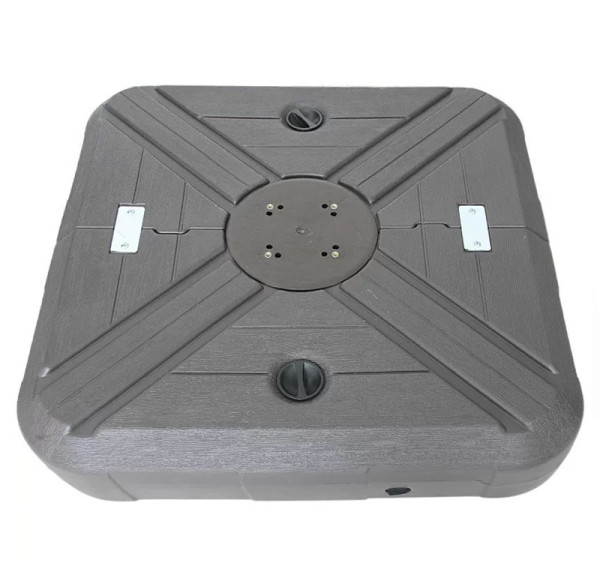
Centre pole base
The mast enters a socket in the middle of the base, so the load travels straight down. Lower weight, low profile, and the natural fit for market, patio and café umbrellas.
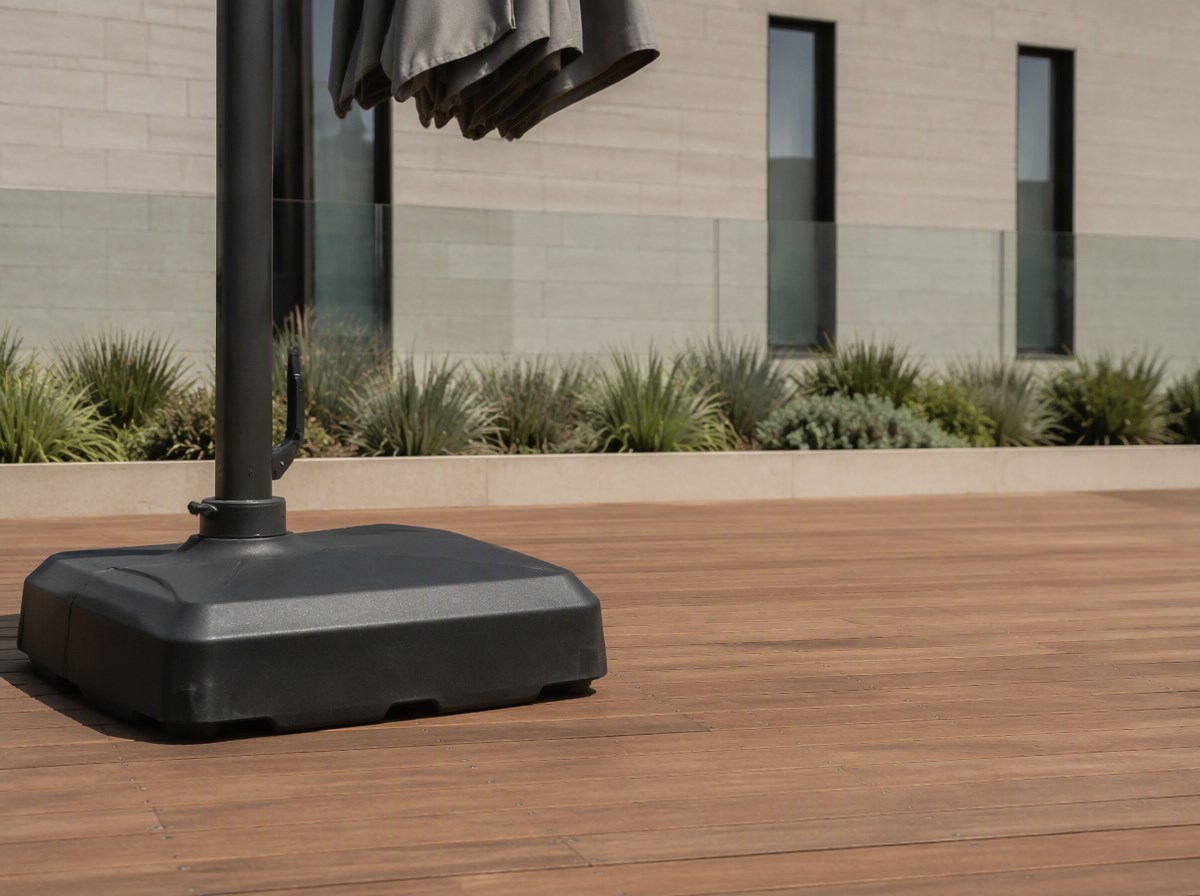
Side pole base
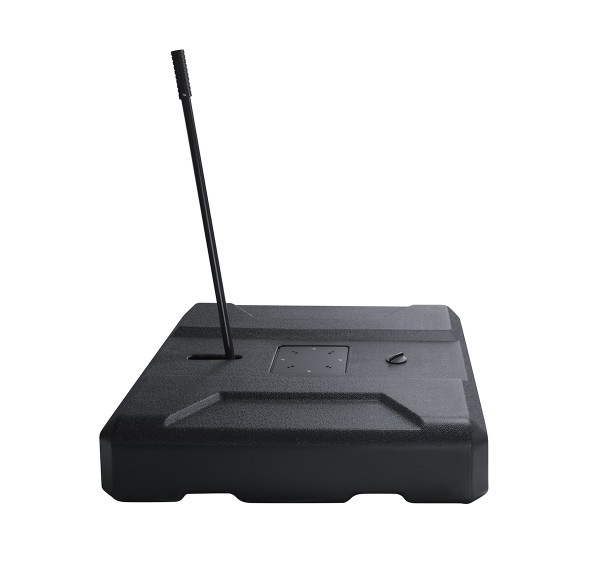
The upright stands off to one side, so the canopy pushes sideways and the base has to resist that leverage. Far heavier than a centre pole base, and usually filled on site.

Cross frame and bolt-down
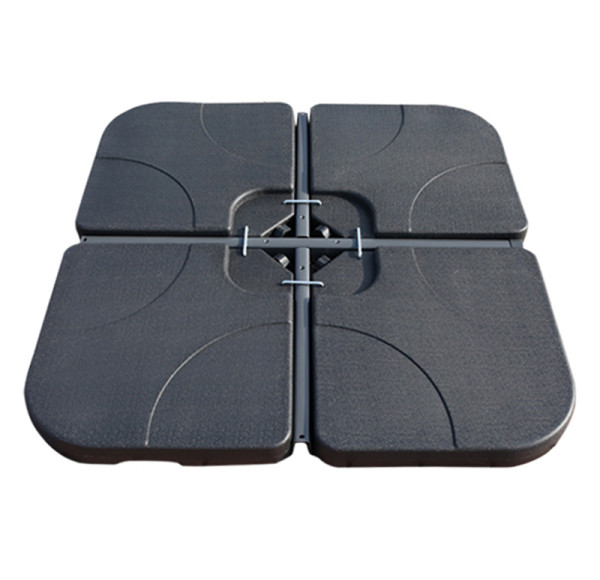
A four-piece interlocking frame or a flat plate, fixed to the deck or ballasted on top of it. The sturdiest option where the surface allows fixing.
| Criteria | Centre pole base | Side pole base |
|---|---|---|
| Pole position | Straight mast through the centre | Offset mast standing to one side |
| Typical weight | 10-25 kg, resin or fillable | 60-180 L water, roughly the same in kg filled |
| Form factor | Low square or round plinth | Cross frame or large water tank |
| Best for | Market, patio and café umbrellas | Cantilever, roman and large commercial shade |
How to size a base by canopy and pole type
Match the base to the umbrella, not the other way around. Under-specifying weight is the most common cause of tipping in wind. Use the guide below as a starting point, then allow more for exposed or coastal sites.
| Umbrella type | Canopy size | Base to specify |
|---|---|---|
| Centre pole | Up to 2.5 m | 10-15 kg resin or fillable base |
| Centre pole | 3.0-3.5 m | 18-25 kg base, or an in-ground socket |
| Side pole, cantilever | Around 3.0 m | 60 L water base, about 60 kg filled |
| Side pole, cantilever | 3.5 m and above | 138-180 L water, or a bolt-down cross frame |
What decides how much weight you need
Four things move the answer. Two of them are about the umbrella, two are about the terrace.
Canopy size
A bigger canopy catches more wind, and wind is what the base is actually resisting. Size the base to the canopy, not to the pole.
Offset or straight
An offset mast turns the canopy into a lever, so the same canopy needs far more base weight than it would on a centre pole.
Exposure on site
A sheltered courtyard and an open rooftop are different jobs. Coastal and high-level terraces need more weight for the same umbrella.
What the surface allows
Bolting down lets you use a smaller base than ballast alone, so the surface decides how much weight you have to carry.
Centre pole bases: stable, low-profile support
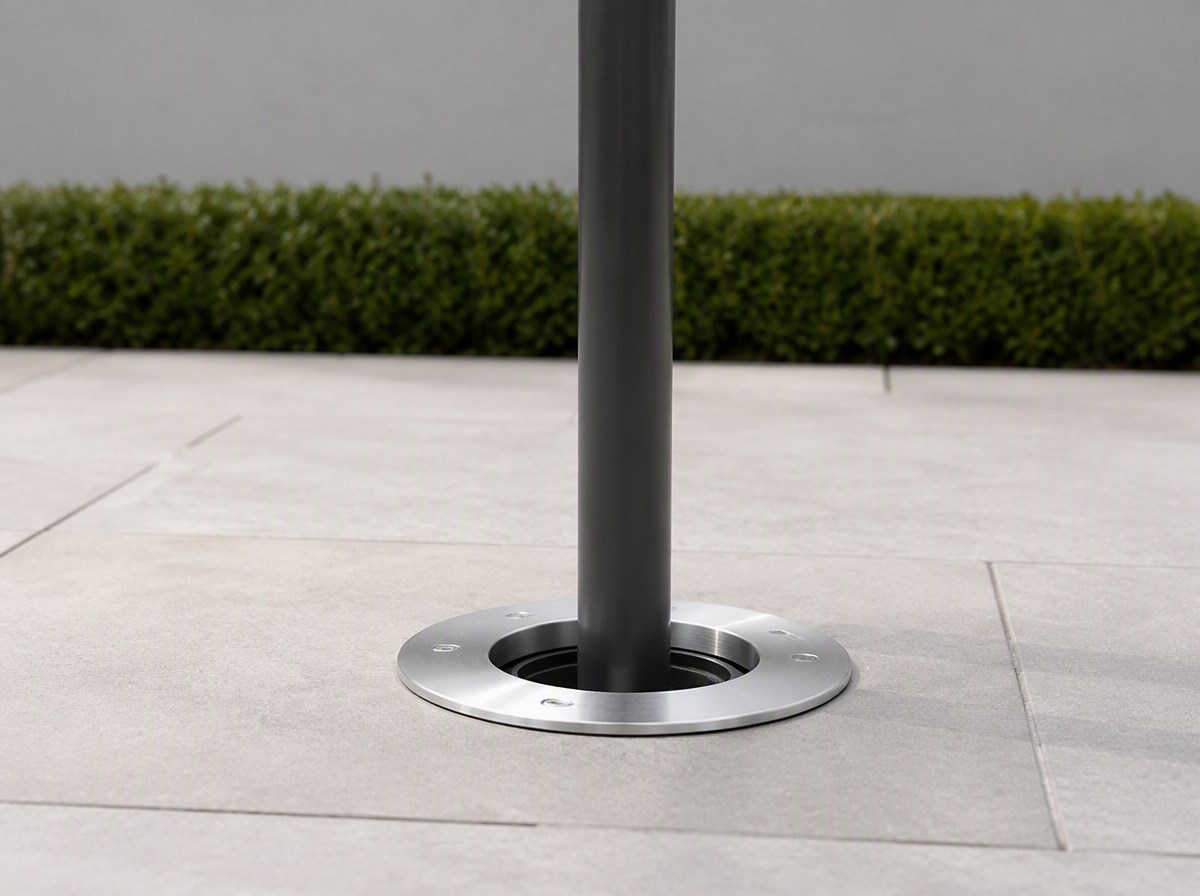
A centre pole base places the weight directly beneath the mast, so the load path is vertical and inherently stable. The range covers fillable squares, decorative resin stands and in-ground sockets, all built for the 38-50mm poles used on standard market and commercial umbrellas.
Fillable square and round bases
Filled with water or sand on site, so shipping stays light and the weight arrives where it is needed. The default choice for café and patio umbrellas.
Decorative resin stands
Fixed-weight bases with a cast finish, for terraces where the base stays visible all season and has to look deliberate.
Iron in-ground sockets
A socket set into paving or concrete, giving a permanent fixing with nothing to trip over and no base to move.
Side pole and cantilever bases: counterweight, not ballast
A cantilever pushes its canopy out to the side, which creates leverage the base has to resist. That is why a side pole base is far heavier than a centre pole version. Filling on site keeps shipping light, and the weight arrives with the water.
Water tank bases
A single large tank with the mast socket at one end. Fastest to install and to drain, and the usual answer for a mid-size cantilever on a finished deck.
Interlocking cross frames
Four plates that bolt together and are ballasted on top. Lower in profile than a tank, and easier to move when the terrace is reconfigured.
Bolt-down plates
A plate fixed to a slab or a structural deck. The sturdiest arrangement and the one that takes the least floor space under the seating.
Anchoring: bolted, ballasted or in-ground
Three ways to hold an umbrella down. Which one you can use depends entirely on what the terrace is made of.
Bolted to the deck
The sturdiest option and the least intrusive in use. It needs a surface you are allowed to drill, and a fixing that goes into something structural rather than a paving slab.
Ballasted on top
A heavy base or a ballasted frame standing on the surface. No drilling, so it suits stone and timber decks, but it takes floor space and has to be filled on site.
Set into the ground
A socket cast into paving or concrete. Nothing left on the deck at all, and the strongest fix, but it is a permanent decision and needs drainage thought.
Wind, filling and storage
A base is only as good as the routine around it. These four points decide whether the weight you specified is still there when it matters.
Fill on site
Fillable bases ship empty so freight stays cheap. Confirm who is filling them, and with what, before the umbrellas are handed over.
Drain before moving
A filled tank base is not something two people move. Plan the drain point before the season starts, not on the day you need to relocate it.
Wind rating and closing
Ask what wind speed the umbrella frame is rated for and at what point the canopy should be closed. No base makes an open canopy safe in a gale.
Off-season
Empty water-filled bases before a hard frost, or the expansion will find the weakest part of the moulding.
Where umbrella bases get specified
Four settings where the base, not the umbrella, is the thing that has to be got right first.
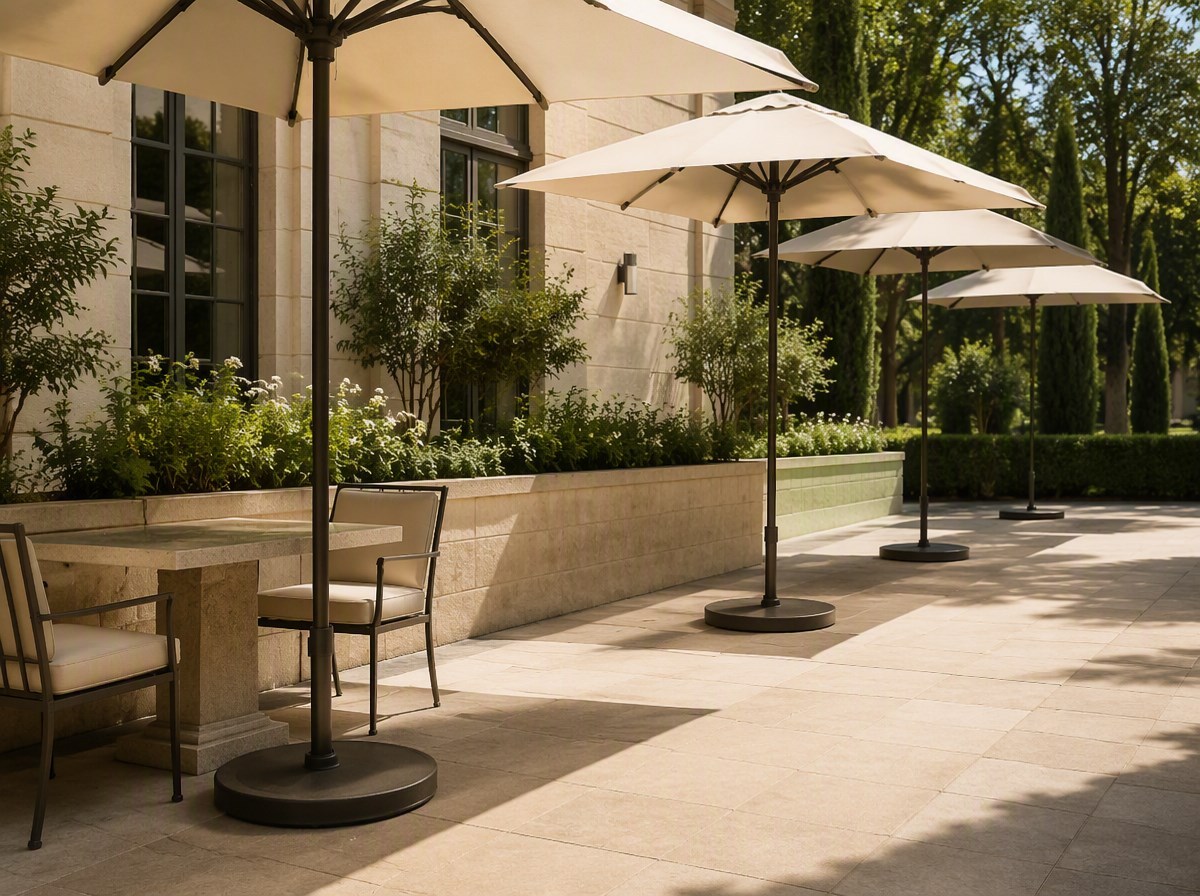
Hotel and resort terraces
Long runs of identical umbrellas, so a single base specification and one filling procedure covers the whole site.
Café and restaurant terraces
The base usually stays visible under the table, so profile and finish matter as much as the weight.
Pool decks
Bases sit on wet paving and get cleaned often, so the material and the fixings have to tolerate both.
Rooftop and event decks
Higher wind speeds and often no ground to drill into, so ballast and a wind-close policy carry the load.
What to check before you specify
Five details that decide whether the umbrella is still standing, and still vertical, in year three.
Base type and weight
Confirm the base matches the pole type, centre or offset, and the canopy size it will actually hold.
Fill medium and capacity
Ask what the base is filled with, what volume it takes, and what the filled weight really comes to.
Fixing method
Settle bolted, ballasted or in-ground before the surface is finished, not after the paving is laid.
Pole fit
Confirm the socket size for the pole you are using, or that the adaptor rings to take up the difference are included.
Wind rating
Ask for the rated wind speed of the umbrella and the speed at which the canopy has to be closed.
Planning questions we ask before quoting
Six answers decide the base, the fixing and the accessories. None of them are technical.
What pole does the umbrella use?
The socket diameter and whether the mast is straight or offset decides the base type before anything else is settled.
How big is the canopy?
Wind load follows the canopy, and the wind load is what sets the base weight.
What is the terrace made of?
Paving, timber decking, concrete slab and planted ground each allow a different fixing.
Is the terrace exposed?
A sheltered courtyard and an open rooftop need different weights for exactly the same umbrella.
Who fills the bases, and when?
Fillable bases ship empty, and somebody has to fill them before the terrace opens.
Will the umbrellas stay out all year?
Frames and bases that stay out need more weight and a frost plan for anything holding water.
Common specifying mistakes
Six things that are cheap to get right at quotation stage and expensive to correct once the terrace is built.
Sizing the base to the pole, not the canopy
Wind load follows the canopy, so a slim mast carrying a large canopy needs more base than the pole itself suggests.
A centre pole base under a cantilever
The two are not interchangeable. An offset mast turns the canopy into a lever that a centre pole base was never sized for.
Assuming the fill happens by itself
Fillable bases arrive empty. If nobody owns the filling, the weight on the drawing never reaches the terrace.
Leaving water in over winter
Frozen water expands and finds the weakest point of the moulding. Empty water-filled bases before the first hard frost.
Bolting into a paving slab
A fixing is only as strong as what it goes into. A slab bedded on sand is not a structural anchor.
Forgetting the adaptor
Poles and sockets are not universal. Check the socket size, or confirm the reduction rings are on the order.
Getting a base onto the terrace in five steps
The order matters, because a base that is filled before it is levelled is a base you will empty again.
- 1
Check the pole and socket first
Measure the mast and confirm the socket size or the adaptor rings match, before anything is filled or fixed.
- 2
Position and level
Set the base where the canopy will actually be used, then level it. A base sitting on a fall will lean the whole umbrella.
- 3
Fix or fill
Bolt the plate down, or fill the base to its stated capacity, and check the filled weight rather than assuming it.
- 4
Stand the mast and set the collar
Insert the pole, check the fit and the clearance, then tighten the fixing collar so the mast cannot rotate or lift.
- 5
Test it in wind, not in still air
Open the canopy and check the frame on a breezy day, and agree in writing the wind speed at which it gets closed.
What to order with a base
The base is the heavy part of the order. These are the small parts that decide whether it works on site.
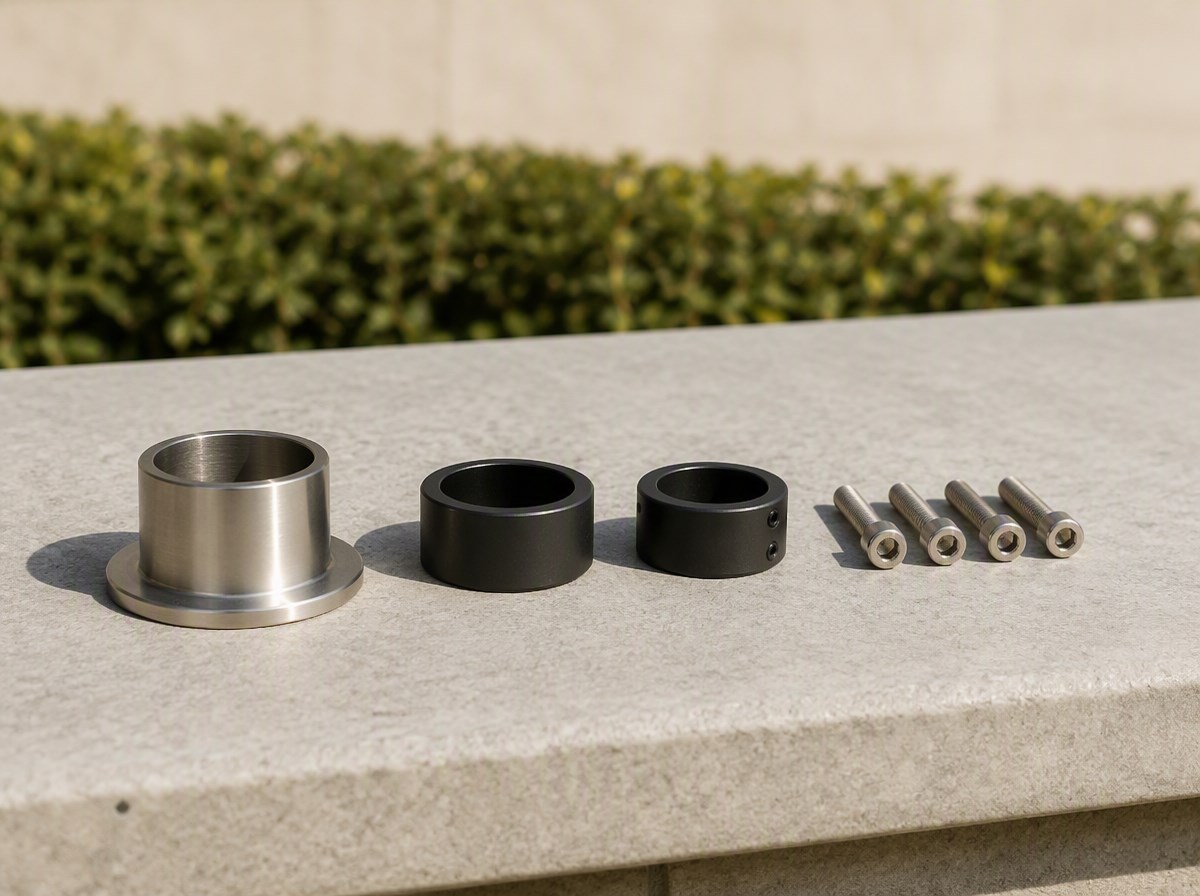
Reduction rings and adaptors
If the socket is larger than the mast, the rings that take up the difference have to be on the order.
Spare fixing kits
Bolts, washers and the tightening collar are the parts that go missing on site.
Loose ballast
For cross frames designed to be weighted rather than filled, the ballast is a separate line on the order.
Canopy cover or storage bag
A cover keeps the canopy clean between seasons, and costs a fraction of a replacement canopy.
A mover or transport wheels
On a terrace where umbrellas are moved for events, a mover earns its cost the first time a filled base has to be relocated.
Materials and finishes
Four materials cover almost every umbrella base on a commercial terrace, and they behave differently outdoors.
Rotomoulded HDPE
The usual fillable material: tough, UV-stable and light to ship empty, which is why most water bases are made this way.
Cast resin
Fixed-weight bases cast in a decorative finish, for terraces where the base stays on show all season.
Powder-coated steel
Cross frames and bolt-down plates are steel, powder-coated for outdoor use. Check the coating where a base sits on wet paving.
Stainless fixings
Ask for stainless bolts and collars on a terrace that gets washed down or sits near water or salt air.
Why source your umbrella base from a manufacturer
We build the base, not trade it. Every umbrella base is produced to spec, tested for stability and supported by documented quality control, which is the substance behind the experience, expertise, authoritativeness and trust that B2B buyers need before they commit.
- SGS material and load testing
- Wind-resistance engineering
- Flexible OEM / ODM and MOQ
- International design partners
Common questions about umbrella bases
The questions buyers ask most often before they specify the foundation under a terrace umbrella.
Can I use a centre pole base under a cantilever umbrella?
No. An offset mast turns the canopy into a lever acting sideways on the base, which a centre pole base is not sized for. Cantilever umbrellas need a side pole counterweight or a bolt-down frame.
How much does a base need to weigh?
It follows the canopy, the pole type and the exposure, not the pole diameter. Start from the sizing guide above and add weight for open, coastal or elevated sites.
Do fillable bases ship filled?
No. They ship empty so freight stays affordable, and the weight arrives with the water, sand or ballast on site. Agree who fills them before the terrace opens.
Bolted or free-standing?
Bolting is sturdier and takes less floor space, but it needs a surface you can drill into and something structural underneath. Where that is not possible, a heavier ballasted base does the same job in more space.
What about winter?
Empty any water-filled base before a hard frost, and store canopy covers dry. Frames that stay up through winter carry more load and should be specified with that in mind.
What should I send to get a quotation?
The pole diameter and type, the canopy size, what the terrace is made of, whether it is exposed, and how many umbrellas you need. With those we come back with the base, the fixing and a delivered price.
Terms used on this page
Short definitions of the words that come up most often in an umbrella base quotation.
Related umbrella pages
Where to go next, depending on the frame the base has to hold.
Specifying bases for a terrace?
Send us the pole diameter and type, the canopy size, what the terrace is made of and whether it is exposed, and we will come back with the base, the fixing and a delivered price. Start a quotation request.

Elevate Garden Living
- Phone
- *Title
- *Content