What Makes Outdoor Furniture Truly Good?
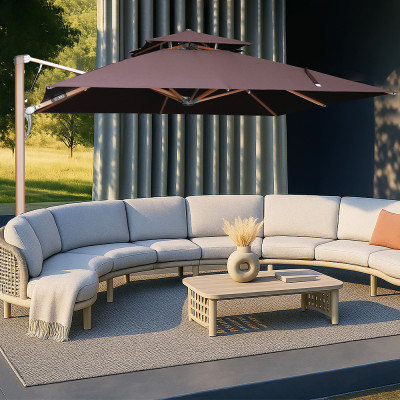
Outdoor furniture has changed. A garden sofa used to be little more than a practical place to sit outside. A dining set was something placed on a patio during warmer months. A parasol provided shade, and the rest of the space was an afterthought.
That approach is outdated. Today, outdoor spaces are designed like extensions of the home — for morning coffee, long lunches, informal work, evening drinks and conversations that continue long after dinner. This shift has also raised the bar for what good outdoor furniture must deliver.
And the numbers back up the shift. According to Grand View Research, the global outdoor furniture market was valued at USD 50.89 billion in 2024 and is projected to reach USD 86.65 billion by 2033, growing at a 6.3% CAGR. A separate 2025 industry survey found that 69% of homeowners invested in patio or garden upgrades that year, and 58% expanded outdoor seating capacity for family and guests. Outdoor living is no longer seasonal — it is a permanent part of how we live.
So what actually makes outdoor furniture good? The answer is not simply the material, the price or even the appearance. It is how all of these elements work together.
1Start With How the Space Will Be Used
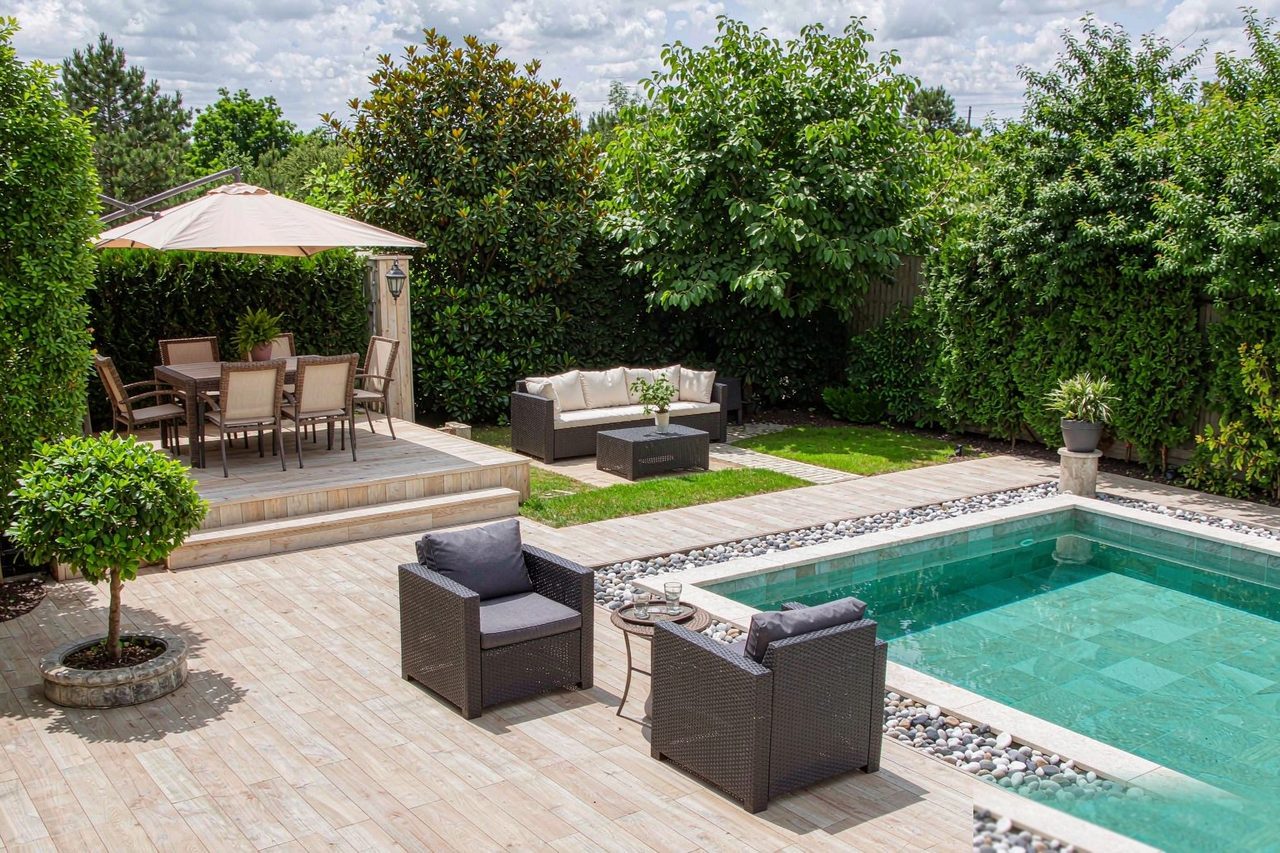
Before choosing furniture, ask a more basic question: what is this outdoor space actually for? A small urban terrace may need compact seating for morning coffee and occasional guests. A large garden might need separate zones for dining and lounging. A hotel terrace has completely different requirements — balancing guest comfort, appearance, maintenance and commercial durability.
This sounds simple, but it changes how furniture is selected. Instead of "which sofa do I like?", the question becomes "how do I want people to use this space?" A deep sectional can be perfect for relaxed evening conversations but unsuitable for an outdoor dining area. Likewise, a beautifully designed dining chair may be wrong when the primary purpose is long, informal lounging.
Outdoor furniture works best when it follows the lifestyle of the space. For larger gardens and hospitality projects, that often means combining different types of pieces rather than relying on one matching set.
2Comfort Is More Than Cushion Thickness
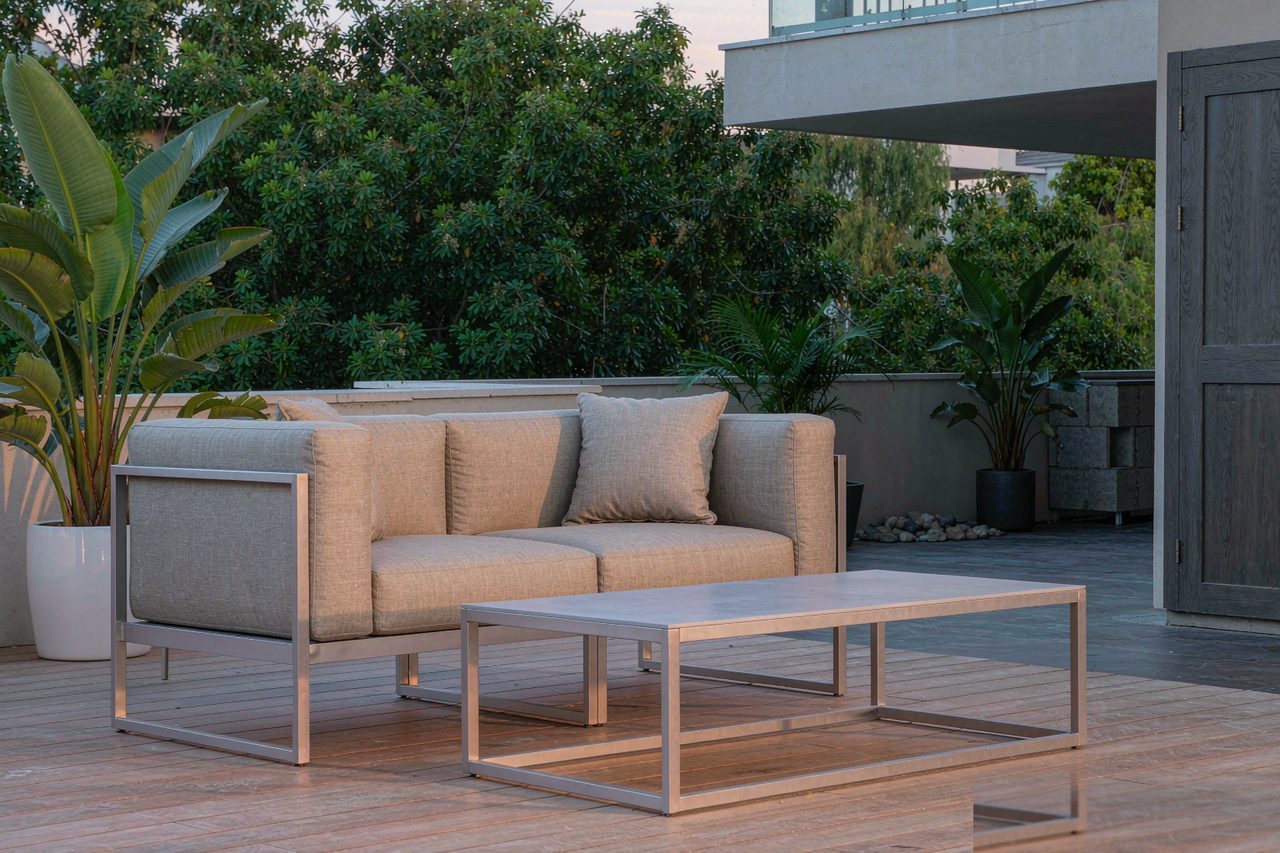
One of the easiest mistakes when evaluating an outdoor sofa is to judge comfort by cushion thickness alone. A thick cushion certainly looks inviting — but thickness does not determine whether a sofa is comfortable. Seat depth, seat height, backrest angle, cushion density and the support beneath the cushions all shape the final experience.
This matters even more for contemporary outdoor sofa designs, where deeper proportions have become common. The real test is performance in the open: an outdoor sofa must balance softness, support, drainage, drying time, UV exposure and long-term shape retention. Indoor comfort and outdoor comfort are not the same thing.
An indoor sofa can prioritise softness almost entirely. An outdoor sofa has to balance softness, support, drainage, drying time and UV exposure at once.
The cushion core is where most brands cut corners — and where the data is most striking. In independent soak tests by Urecel QuickDry, a 35×35×5 cm cushion was poured with 500 ml of water. After just 60 seconds, a standard foam retained 80% of the water, while reticulated quick-dry foam retained only 40%. After 3 hours, the standard foam still held ~69% of its water, while the quick-dry core was effectively dry. That gap is the difference between a seat you can use the next morning and a soggy sponge that grows mould.
Water retention after a 500 ml spill — quick-dry vs standard foam
Source: Urecel QuickDry Foam technical brochure (2024), 35×35×5 cm samples, room temp 28°C
Mould colonisation typically begins when foam stays damp beyond 48 hours. A standard core can take 24–72 hours to dry after rain; a quality quick-dry system is sit-ready in roughly 1–3 hours under sun and airflow. For buyers in coastal or high-rainfall markets, that single specification decides whether a cushion lasts one season or many.
3The Frame You Don't See May Matter More Than the Frame You Do
Look at an outdoor sofa from a distance and you notice the cushions, fabric and silhouette. The frame is hidden — yet it is one of the most important parts of the product.
Aluminium outdoor furniture has become a benchmark material because it combines low weight, structural strength and corrosion resistance. Unlike steel, aluminium forms a passive Al₂O₃ oxide layer that stops corrosion at the surface instead of eating through the metal. The difference is measurable: in ASTM B117 salt-spray testing, quality powder-coated aluminium withstands 1,500+ hours of continuous salt exposure without substrate corrosion, while standard powder-coated steel shows red rust within 500 hours once its coating is scratched. In coastal or poolside conditions, that gap is the difference between a 20-year frame and a 5-year replacement.
Aluminium is also roughly one-third the weight of steel (density 2.7 vs 7.85 g/cm³), which makes modular outdoor sofa pieces easy to rearrange without compromising a 20–30 year service life. There is no single "best" material — only the right one for a given climate, use, design, maintenance budget and price point.
Typical outdoor service life by frame material (years)
Compiled from ASTM B117 salt-spray data, manufacturer warranties and materials-engineering references (2024–2025)
4Materials Should Influence the Design
A good design does not pick a material after the shape is fixed — the material should influence the shape. Three common outdoor furniture materials each pull design in a different direction:
- Aluminium — lightweight, clean and versatile; works with contemporary architectural forms and slim profiles. This is why modern outdoor furniture increasingly leans on extruded aluminium.
- Teak — warm, tactile and naturally durable, with 5–7% natural oil content that repels water, insects and UV. It connects more strongly with traditional gardens and natural landscapes. Grade A teak can serve 50–75+ years outdoors with minimal maintenance.
- Woven materials — rope, HDPE wicker and other woven constructions add texture and visual softness, creating a relaxed, resort-inspired look.
The better question is not "which material lasts longest?" but "which material creates the right balance between performance and visual character for this environment?" A coastal terrace, a covered balcony, a private garden and a hotel pool deck may each need a different answer.
5Why Modern Outdoor Furniture Looks Less "Outdoor"
Perhaps the most interesting change in the category is aesthetic. The visual language of modern outdoor furniture is moving closer to indoor furniture — borrowing comfort, proportion, softness and warmth, while keeping the technical requirements of outdoor use.
The trend is supported by buyer behaviour. In 2025, metal furniture held about 36% of the outdoor category, and aluminium alone accounted for ~58% of metal demand, driven by its lightweight, rust-proof nature. At the same time, ~28% of consumers reported preferring modular configurations, and seating sets (sofas and sectionals) became a leading premium purchase as buyers shifted from "utility" to "outdoor living room".
6Modular Does Not Automatically Mean Better
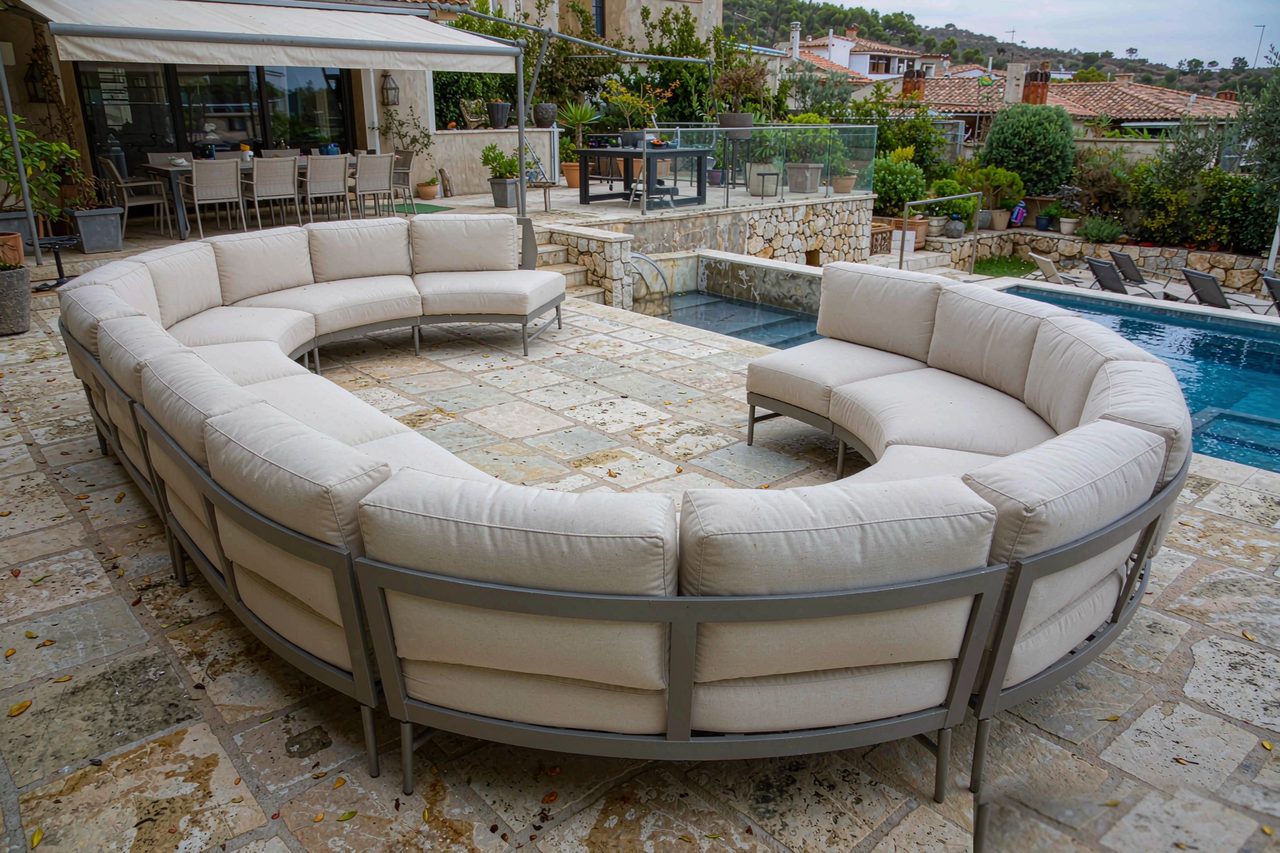
Modularity is a major development in outdoor furniture. A modular outdoor sofa can be separated, rearranged and expanded as needs change — extremely useful for a homeowner whose requirements evolve, or for a hospitality venue that reconfigures daily.
But modularity has its own engineering challenges. A good system must answer: do pieces stay aligned? Are connections stable? Can the configuration change easily? Does it still look coherent when separated? Can modules be added later without visual bulk? Simply cutting a large sofa into pieces does not create a successful modular design — the system must be designed as a system from the beginning.
7Small Details Often Reveal the Real Quality
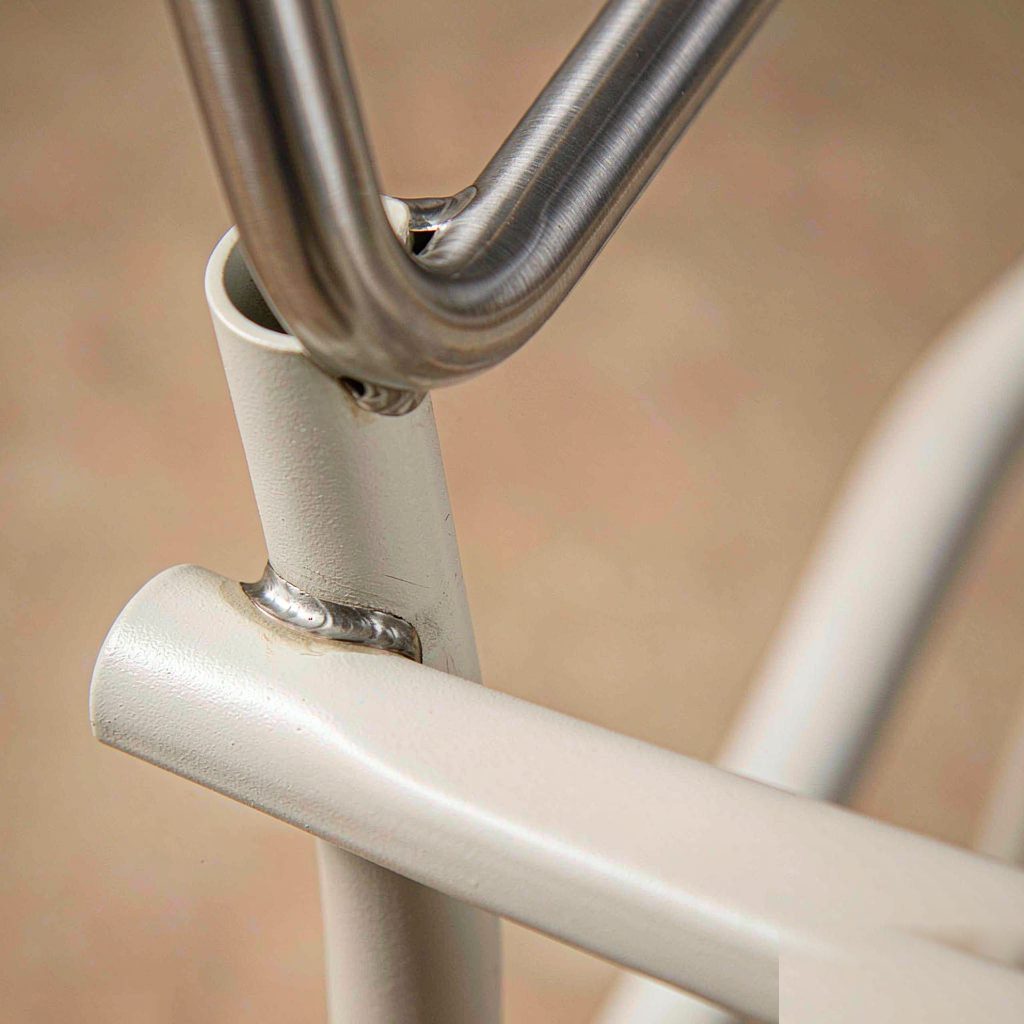
Outdoor furniture is full of overlooked details: the zipper on a cushion, the join between an armrest and the frame, the way water leaves the seat, the finish at a welded joint, the hardware that connects modules, the gap between frame and ground. None appear in a product's headline description — yet each affects long-term performance.
Premium modern outdoor furniture is often defined by details the customer never notices. Good design makes them disappear: the sofa feels stable, cushions stay in place, the finish stays consistent, the furniture drains properly after rain. That apparent simplicity is usually the result of considerable engineering behind the scenes.
8Durability Should Not Make Furniture Look Heavy
Outdoor furniture has traditionally been associated with visual weight — thick frames, heavy structures, large profiles, dark finishes. Strength and visual heaviness, however, are not the same thing.
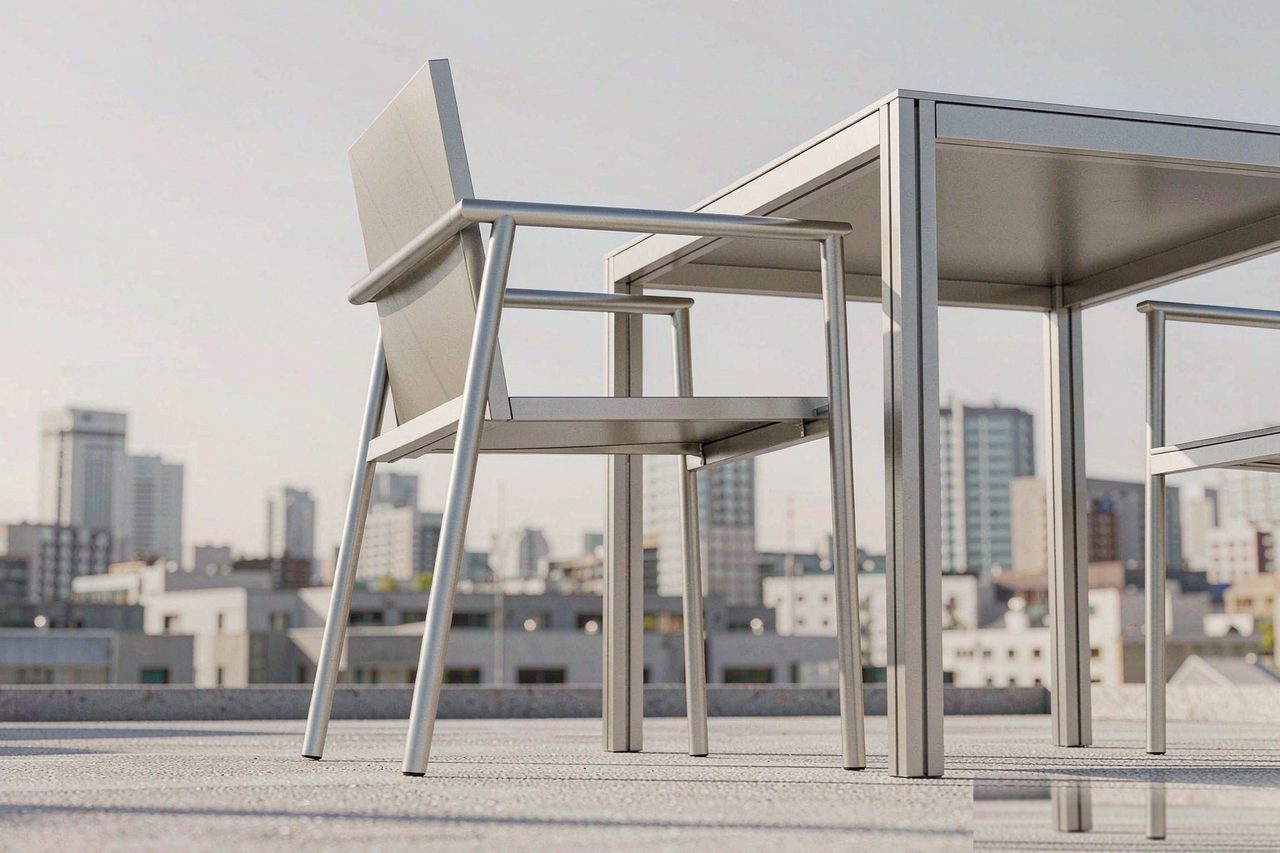
Contemporary aluminium outdoor furniture achieves the opposite: slim profiles, open structures and cleaner silhouettes while keeping the structural characteristics outdoor use demands. Aluminium allows designers to explore lighter forms without sacrificing the 20–30 year service life that coastal and commercial buyers rely on.
9Outdoor Furniture Should Belong to the Landscape
A beautiful sofa can still feel wrong if it has no relationship with its surroundings. Outdoor furniture is part of a larger composition — architecture, landscape, flooring, light and movement all matter more than a single colour or style choice.
- Architecture: what materials and lines already exist in the building?
- Landscape: is the garden formal, natural, Mediterranean or minimalist?
- Flooring: stone, timber decking, porcelain or grass?
- Light: mostly bright daylight or evening use?
- Movement: do people need to move freely around the furniture?
A contemporary aluminium sofa with neutral upholstery may sit naturally within a modern architectural terrace. A warm teak dining collection might feel more appropriate in a mature garden. A modular outdoor sofa can become the social centre around a fire pit or pool. The furniture succeeds when it belongs there.
10The Best Outdoor Furniture Is a Balance
After looking across materials, engineering and design approaches, one thing is clear: there is no single formula for good outdoor furniture. The goal is making the right decisions for the intended environment.
Fabric choice is the final piece of that balance. In accelerated weathering to AATCC 16 standards, quality solution-dyed acrylic (the class used in Sunbrella and similar brands) retains more than 90% of its original colour after 1,500+ hours of xenon-arc UV exposure — roughly 5–7 years of intense sun — and leading mills back it with 5- to 10-year warranties. By contrast, standard polyester visibly fades within a single season and loses an estimated 30–40% of its colour saturation by month 12. For a modern outdoor furniture piece meant to live outdoors year-round, the fabric specification is not a detail — it is the difference between "still looks new in year five" and "replace the covers next spring."
Colour retention after accelerated UV exposure
Source: AATCC 16 / ASTM G154 weathering tests; Sunbrella technical data (solution-dyed acrylic ≈95% after 1,000h; standard polyester fades within 1 season)
So, What Should You Look For?
When evaluating an outdoor furniture collection, look beyond the photograph. Ask:
- Is it comfortable? Check seat depth, height, back angle and cushion construction — not just cushion thickness.
- Is the material appropriate? Consider climate, exposure, maintenance and intended use. Aluminium outdoor furniture leads in coastal and low-maintenance settings; teak leads where natural warmth matters.
- Is the frame properly engineered? Look past the surface finish to joints, profiles and construction. Welded extruded aluminium outlasts bolted tubular frames.
- Does it fit the space? A beautiful product can still be wrong if its proportions overwhelm the environment.
- Does it offer the right flexibility? A modular outdoor sofa is valuable only when the flexibility actually serves the space.
- Will it still look good after several seasons? Balance aesthetics with real-world performance — and specify quick-dry cores and solution-dyed fabrics.
And perhaps the most important question: does it make you want to spend more time outside? Because ultimately, that is what outdoor furniture is supposed to achieve.
The Future of Outdoor Living
The category is moving in a clear direction: the boundary between indoor and outdoor living is fading, comfort is rising, materials are more sophisticated, and modular systems are more adaptable. The strongest designs bring comfort and durability together — comfort without fragility, durability without visual heaviness, flexibility without unnecessary complexity.
Talk to the Foris Hortus team
At Foris Hortus we design aluminium outdoor furniture, modular outdoor sofa systems and complete outdoor sofa set collections engineered for real climates - welded extruded frames, quick-dry cushion cores and solution-dyed fabrics as standard. Whether you are fitting a private garden or a commercial terrace, our team can help you specify the right materials and configurations. Email our team to request a catalogue or a tailored quotation for your project.
Sources: Grand View Research (market size & CAGR, 2025); Global Growth Insights / Research Reports World (consumer & material-share stats, 2025-2026); ASTM B117 salt-spray references and manufacturer warranty data (frame service life); Urecel QuickDry Foam technical brochure (cushion drainage); AATCC 16 / ASTM G154 and Sunbrella technical data (fabric UV retention).