UV-Resistant Umbrella Fabric: UPF, Fading and How to Choose
Material | UV Protection | Colorfastness | Water Resistance | Lifespan |
| Polyester | Moderate (with treatment) | Medium | Good | Shortest service life |
| Acrylic | Excellent when specification-dyed | Excellent | Excellent | Longest proven service life |
| Olefin | Good | Good | Good | Mid-range service life |
PVC-Coated Fabric | Excellent | Excellent | Fully waterproof | Long, but heavy and less breathable |
Related reading
- Understanding Commercial Umbrella Fabrics: Polyester, Acrylic, and Olefin Choices – commercial umbrella fabrics.
- What is the Best Umbrella Material for Your Climate? A Comprehensive Guide – best umbrella material for your climate.
- A Guide to Breathable vs. Waterproof Umbrella Materials: What You Need to Know – breathable vs waterproof umbrella materials.
- How UV Affects Outdoor Tent Fabrics: Understanding Degradation Rates – what UV exposure does to outdoor textiles.
- Commercial Umbrella Fabrics Compared: Acrylic, Polyester and Olefin Canopies – fibre-by-fibre comparison for commercial projects.
Frequently Asked Questions (FAQ)
1. What does UPF actually measure?
Ultraviolet Protection Factor, which is the ratio of skin exposure under the fabric to skin exposure with no protection. UPF 50 means about 2 percent of UV reaches the skin. It is measured on the fabric itself, so it tells you about the material rather than about the whole assembled umbrella.
2. Is a high UPF the same thing as a canopy that lasts?
No, and buyers conflate the two. UPF is a skin-protection figure. Canopy life is about color fastness, which is determined by how the color is dyed. A solution-dyed acrylic holds its color far longer because the color sits inside the fibre rather than on its surface, and that is a different property from the UPF rating.
3. What actually makes a canopy fade?
Ultraviolet light breaking down the dye, and it accelerates in direct, unobstructed sunlight. Polyester and olefin fade noticeably within a couple of seasons in full sun. Solution-dyed acrylic is markedly more resistant, which is why it is the standard for a terrace that has to look right in year five.
4. Does a waterproof canopy need a waterproof frame?
Not necessarily, but the joint matters. A water-resistant canopy on an open frame sheds rain through the vents and drains at the seams. What causes problems is water sitting in a joint, so the frame coating and the canopy attachment both need to be specified for the exposure.
5. How do I specify UV protection for a commercial terrace?
Ask for the UPF rating with the test standard named, the fabric type, and how the color is dyed. Then check the fabric against the actual exposure rather than against a generic specification. A terrace that is shaded by a building for half the day needs far less than a poolside canopy in full sun.
6. Does colour change UV protection?
Colour is a secondary factor. Dark navy or forest green shades absorb more UV than pale tones of the same fabric, but construction, weight and finish matter more. A tightly woven, treated light colour can outperform a loose dark one, so ask for the rated figure rather than judging by eye.
7. Are UV-resistant canopies breathable?
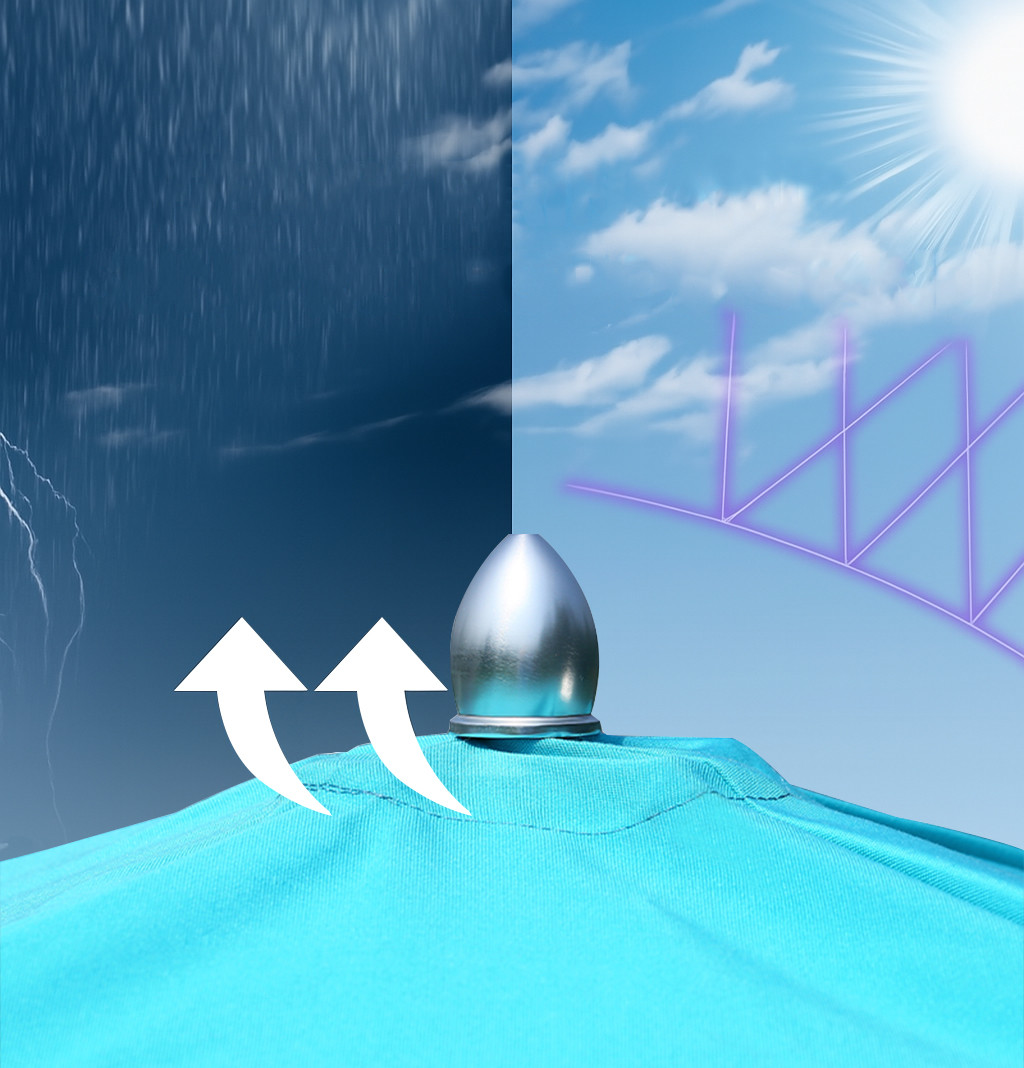
Good ones are. Breathability comes from the weave and the coating, not from sacrificing protection. A solution-dyed acrylic canopy sheds rain while still allowing air through, which is why it stays cooler underfoot than a PVC-coated fabric in a hot climate.