A Guide to Breathable vs. Waterproof Umbrella Materials: What You Need to Know
Have you ever found yourself caught in a downpour, only to discover a fine mist seeping through your umbrella, leaving you feeling annoyingly damp? Or perhaps you've sat under a large patio umbrella on a hot day, feeling stifled and wishing for a breeze. The secret to staying perfectly dry or comfortably shaded often lies in a detail we rarely consider: the fabric. It all comes down to the materials, and the critical difference between breathable vs. waterproof umbrella fabrics.
Choosing the right umbrella isn't as simple as picking a color or a style. The distinction between a material that is merely water-resistant and one that is genuinely waterproof is the key to performance. At Foris Hortus, we believe an informed customer is a happy customer. That's why we're diving deep into the world of umbrella materials. This guide will explore the technologies, fabrics, and features that define a great umbrella, helping you select one that perfectly meets your needs, whether you're navigating a rainy city street or creating a shady oasis in your backyard.
Key Takeaways
For those in a hurry, here’s a snapshot of the essential points to understand when choosing between breathable and waterproof umbrella materials:
- "Waterproof" is a Technical Term: A truly waterproof fabric creates an impenetrable barrier to water, often measured by a Hydrostatic Head (HH) rating. This is different from "water-resistant," which can only handle light, brief exposure to moisture. For umbrellas, true waterproof performance usually comes from the fabric itself combined with special coatings like polyurethane (PU) or silicone. These treatments seal the fabric's pores to prevent any water from passing through.
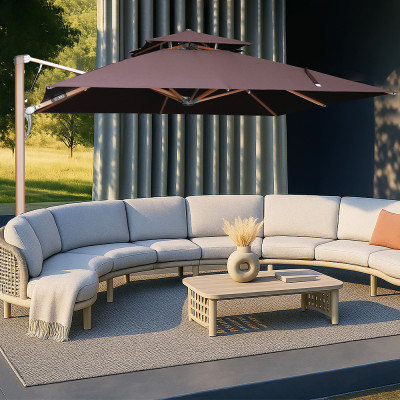
- Breathability Equals Comfort, Especially in the Sun: Breathable fabrics allow water vapor (like sweat and humid air) to escape. This is crucial for large patio or market umbrellas, where airflow is needed to prevent heat from getting trapped under the canopy, making the shaded area feel hot and stuffy. Vented canopies, often found in high-quality outdoor umbrellas, are a key feature that enhances this effect by allowing wind and heat to escape through the top.
- Common Materials Offer a Spectrum of Performance:
- Polyester: The most common umbrella material due to its affordability and decent water resistance. It's durable and resists stretching, but often requires a coating to be truly waterproof.
- Nylon: Lighter and stronger than polyester, with good water resistance. However, it can sometimes stretch or deform when wet, and is generally more expensive.
- Pongee: A high-density woven polyester fabric known for its soft feel and superior water-shedding ability. It causes water to bead up and roll off, making it a premium choice for high-end rain umbrellas.
- Acrylic & Olefin: These are top-tier materials for outdoor umbrellas. They are "solution-dyed," meaning the color is part of the fiber itself, giving them exceptional resistance to fading from UV exposure. They offer excellent durability, stain resistance, and UV protection.
- Don't Forget Sun Protection and Durability: The effectiveness of an umbrella isn't just about rain. An Ultraviolet Protection Factor (UPF) rating indicates how much of the sun's harmful radiation the fabric blocks. Materials like solution-dyed acrylic often provide very high UPF 50+ protection. Durability is also key; look for fabric weight (measured in denier or grams per square meter) and tear resistance, especially for umbrellas that will face wind and frequent use.
- Your Use Case Determines the Best Material: There is no single "best" material for every situation. A lightweight, compact pongee umbrella is perfect for a daily commute. A large, solution-dyed acrylic or olefin umbrella with a vented canopy is ideal for a sunny, breezy patio. Understanding the pros and cons of each breathable vs. waterproof umbrella material allows you to find the perfect balance of performance, longevity, and value for your specific needs.
Understanding the Basics: Breathable vs. Waterproof Umbrella Materials
Before we compare specific fabrics, it's essential to understand the core concepts that define their performance. The terms "waterproof" and "breathable" are often used in marketing, but their technical meanings are crucial for knowing what to expect from your umbrella.
What Does "Waterproof" Really Mean for Umbrella Materials?
When a fabric is labeled "waterproof," it means it provides an impermeable barrier to liquid water. It’s not just about repelling a few drops; it’s about holding back water under pressure. This quality is scientifically measured using a "hydrostatic head" (HH) test. In this test, a column of water is placed on the fabric, and the height of the column (in millimeters) that the fabric can withstand before water penetrates is its HH rating. A fabric needs an HH rating of at least 1,000mm to be considered truly waterproof, with high-performance gear often exceeding 10,000mm.
This is fundamentally different from "water-resistant" fabrics, which have a tighter weave or a light coating that causes water to bead up and roll off initially. However, under sustained rain or pressure, water will eventually soak through. For a rain umbrella, a waterproof canopy is a must-have for reliable protection.
The importance of coatings and treatments
Few fabrics are inherently waterproof on their own. Their performance is almost always enhanced by a coating or a membrane. These treatments are applied to the fabric to seal the tiny pores in the weave, preventing water from getting through. The most common types include:
- Polyurethane (PU) Coating: A popular and effective coating that is applied to the underside of the fabric. It offers excellent waterproofing at a reasonable cost and is commonly found on polyester and nylon umbrellas.
- Durable Water Repellent (DWR) Finish: This is a chemical treatment applied to the exterior of the fabric. It doesn't make the fabric waterproof on its own but is the first line of defense, causing water to bead up and roll off. This prevents the fabric from becoming saturated, which would hinder breathability and make the umbrella feel heavy. DWR needs to be reapplied over time as it can wear off.
- Silicone (Silnylon) Coating: A silicone-elastomer coating applied to nylon fabric results in a very strong, lightweight, and highly waterproof material known as silnylon. It's a premium option favored for high-performance outdoor gear.
The Role of Breathability in Umbrella Comfort
Breathability refers to a fabric's ability to allow water vapor to pass through it. This might seem counterintuitive for a rain umbrella—why would you want anything to pass through? However, it's not about letting rain in, but about letting moisture and warm air out. Breathability is measured in g/m²/24hr, indicating how many grams of water vapor can pass through a square meter of fabric in 24 hours.
While less critical for a small, personal rain umbrella used for short periods, breathability is a game-changer for large patio, beach, or market umbrellas.
Preventing heat build-up and promoting airflow
A non-breathable canopy on a sunny day acts like a plastic sheet, trapping hot air underneath. This can make a shaded area feel surprisingly warm and uncomfortable. Breathable fabrics, like certain acrylics or olefin, allow this hot air and humidity to escape through the material itself, promoting a cooler and more pleasant environment.
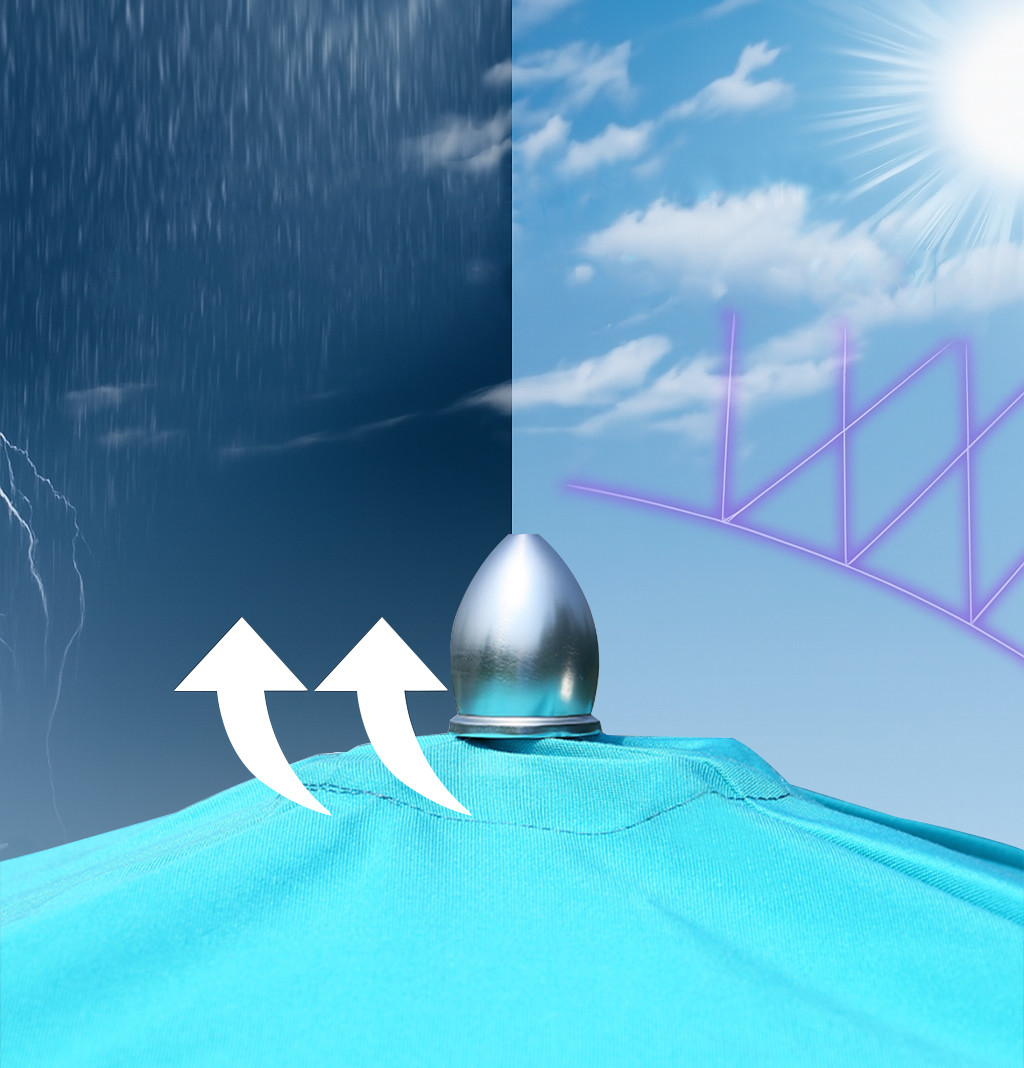
This effect is often enhanced by a physical design feature: the vented or double canopy. These umbrellas have an overlapping flap at the top. This design serves two purposes:
- Heat Escape: It creates a chimney effect, allowing hot air to rise and escape efficiently.
- Wind Resistance: When a strong gust of wind hits the umbrella, it can flow through the vent instead of being caught by the canopy, which prevents the umbrella from flipping inside out or being lifted from its base.
Common Breathable vs. Waterproof Umbrella Materials: A Detailed Look
Now that we understand the science, let's explore the specific materials used to make umbrella canopies. Each has a unique profile of strengths, weaknesses, and ideal applications.
Polyester: The Versatile All-Rounder among Umbrella Materials
Polyester is arguably the most common fabric used for umbrellas, from compact travel models to sprawling patio shades. Its popularity is due to a balanced blend of durability, resistance to environmental factors, and cost-effectiveness.
Affordability and basic water resistance
As a synthetic fiber, polyester is naturally hydrophobic, meaning it repels water. It resists stretching, shrinking, and sagging when wet, which helps the umbrella maintain its shape. Untreated polyester offers good water resistance for light showers, but it isn't completely waterproof. For anything more than a drizzle, it relies on a backing coat to keep you dry.
Enhancing polyester's waterproof capabilities
To achieve true waterproof performance, polyester canopies are almost always treated. A polyurethane (PU) coat on the underside is the standard method, effectively sealing the fabric. A DWR finish on the surface is also common to aid water run-off. This combination makes polyester a reliable and affordable waterproof material for the vast majority of rain umbrellas.
Nylon: Lightweight Performance in Breathable vs. Waterproof Umbrella Materials
Nylon was the original fabric of choice for modern foldable umbrellas and remains a popular option, especially where lightweight strength is a priority.
Strength, flexibility, and quick-drying properties
Nylon is an incredibly strong and lightweight fiber for its density, and it has a higher strength-to-weight ratio than polyester. It’s also very flexible and dries quickly. These properties make it ideal for high-quality compact and travel umbrellas where minimizing weight and size is essential. Like polyester, it requires a coating (like PU or silicone) to be fully waterproof.
Potential for shrinkage and humidity effects
One downside of nylon is its tendency to absorb a small amount of water, which can cause it to stretch or sag slightly when wet. While this is often minimal in well-constructed umbrellas, it's a factor that manufacturers must account for in the canopy's design. It is also typically more expensive to produce than polyester, which is why it is often found in more performance-oriented products.
Pongee: The Premium Choice for Durable Umbrella Materials
If you've ever held a high-end umbrella and noticed how the fabric felt softer and the water seemed to "jump" off the surface, you were likely experiencing pongee. Pongee is a high-density fabric woven from polyester fibers, but with a finer thread and a tighter weave.
Smooth texture and excellent water resistance
The key feature of pongee is its high-density construction. This tight weave creates a surface that is naturally highly water-resistant, causing rain to bead up and roll off instantly. This means the umbrella not only keeps you dry but also shakes dry almost immediately after use, so you don't bring a dripping mess indoors. It has a soft, luxurious feel and a matte finish, compared to the slight sheen of standard polyester or nylon.
Often found in higher-end breathable vs. waterproof umbrella materials
Due to its higher manufacturing cost and superior performance, pongee is the fabric of choice for premium rain umbrellas. Brands that prioritize durability, feel, and performance—like our Foris Hortus line—often utilize pongee for its excellent water-shedding properties and refined appearance. It combines the durability of polyester with a level of water repellency that requires less reliance on secondary coatings.
| Material Comparison | Primary Use | Waterproofing Method | Key Advantages | Key Disadvantages |
|---|---|---|---|---|
| Polyester | Everyday Rain & Patio Umbrellas | PU Coating, DWR | Affordable, durable, resists shrinking | Lower breathability, requires coating |
| Nylon | Compact & Travel Umbrellas | PU or Silicone Coating, DWR | Very strong and lightweight, quick-drying | More expensive, can stretch when wet |
| Pongee | High-End Rain Umbrellas | High-density weave, DWR | Excellent water repellency, soft feel, shakes dry | Higher cost |
| Acrylic | Premium Patio & Outdoor Umbrellas | Tightly woven, DWR | Excellent UV/fade resistance, breathable, durable | High initial cost |
| Olefin | Mid-to-High-End Patio Umbrellas | Tightly woven, DWR | Good UV/fade resistance, stain resistant, eco-friendly | Less soft than acrylic |
Acrylic and Olefin: Advanced Breathable vs. Waterproof Umbrella Materials for Outdoors
When it comes to outdoor umbrellas that must endure sun, rain, and environmental pollutants for years, polyester and nylon fall short. This is where advanced synthetic fabrics like acrylic and olefin excel.
UV resistance and fade resistance in these robust materials
The primary enemy of an outdoor umbrella isn't rain—it's the sun. UV radiation breaks down fabric fibers and fades colors, making an umbrella look old and worn long before its time. Both acrylic and olefin offer superior resistance to these effects. Brands like Sunbrella have built their reputation on the legendary fade-resistance of their solution-dyed acrylic fabrics. These materials are designed to maintain their vibrant color and structural integrity after years of sun exposure. They are also highly resistant to mold, mildew, and staining.
Considering solution-dyed options for longevity
The secret to this longevity is the "solution-dyeing" process. In standard dyeing, the color is applied to the surface of the finished fiber. In solution-dyeing, the pigment is mixed into the liquid polymer before the fiber is even created. This means the color is an integral part of the fiber through and through, like a carrot, rather than just on the surface like a radish. This makes the color exceptionally fast and resistant to fading from sun, cleaning, and chemicals. If you're investing in a long-term outdoor umbrella for your patio or garden, choosing a solution-dyed acrylic or olefin canopy is the best way to ensure lasting beauty and performance.
Beyond Just Rain: Other Factors Influencing Breathable vs. Waterproof Umbrella Materials
A great umbrella does more than just block water. Its fabric must also protect from the sun, stand up to wear and tear, and be easy to maintain.
UV Protection and Colorfastness
For patio and beach umbrellas, sun protection is a primary function. The ability of a fabric to block ultraviolet radiation is measured by its UPF (Ultraviolet Protection Factor) rating. A fabric with a UPF of 50 allows only 1/50th (or 2%) of UV radiation to pass through it.
How different breathable vs. waterproof umbrella materials block harmful rays
The UPF of a fabric is determined by its composition, weave density, and color.
- Solution-dyed acrylic and olefin are champions of UV protection, often achieving UPF 50+ ratings. Their dense weave and stable fibers are excellent at blocking harmful rays.
- Polyester and nylon can also offer good UV protection, but this can degrade over time as the fabric is exposed to the sun. Look for specific UPF ratings from the manufacturer. Darker colors generally absorb more UV rays than lighter colors, offering better protection.
Colorfastness, or a fabric's ability to resist fading, is directly related to this. As mentioned, solution-dyed fabrics offer the highest level of colorfastness, ensuring your patio umbrella won't look bleached and faded after a single season.
Durability and Longevity of Umbrella Materials
An umbrella is a functional tool that faces mechanical stress from opening and closing, as well as environmental stress from wind and rain. The durability of its canopy is paramount.
Assessing fabric weight and resistance to wear and tear
Fabric durability is often indicated by its weight, measured either in denier (the mass in grams of 9,000 meters of the fiber) or grams per square meter (GSM). A higher denier or GSM number generally indicates a thicker, stronger, and more durable fabric. For example, a heavy-duty patio umbrella might use a 250 GSM fabric, while a lightweight travel umbrella might use a 75D polyester.
Tear strength and abrasion resistance are also crucial. Look for fabrics with a ripstop weave, which incorporates thicker reinforcement threads in a crosshatch pattern to prevent small tears from spreading.
Maintenance and Care for Your Umbrella Fabric
Proper care can significantly extend the life of your umbrella's canopy, preserving both its waterproof and aesthetic qualities.
Tips for preserving the integrity of breathable vs. waterproof umbrella materials
- Always Allow to Dry Open: Never store a wet umbrella closed. This traps moisture and is the number one cause of mildew growth and can even lead to rust on the frame. If you can, let it dry fully open. If space is limited, leave it loosely open in a well-ventilated area.
- Clean a Dirty Canopy: Dirt and debris can abrade the fabric and compromise the DWR coating. For most fabrics, a simple cleaning with a soft brush and a solution of mild soap and lukewarm water is effective. Avoid harsh detergents or bleach unless the manufacturer specifically states it is safe (as is often the case with solution-dyed acrylics).
- Refresh the Water Repellency: If you notice your umbrella is starting to "wet out" (the fabric becomes saturated instead of beading water), the DWR coating has likely worn off. You can restore it using a spray-on DWR treatment, available at most outdoor gear stores.
- Store Properly: For large patio umbrellas, use a protective cover when not in use for extended periods. This shields the canopy from UV rays, dirt, and moisture, dramatically increasing its lifespan.
Making Your Choice: Which Breathable vs. Waterproof Umbrella Materials are Right for You?
With a thorough understanding of the different breathable vs. waterproof umbrella materials and their properties, you can now make an educated decision tailored to your specific needs.
Matching Umbrella Materials to Your Needs
The ideal umbrella material is a direct reflection of its intended use. There is no one-size-fits-all answer; the key is to match the fabric's performance to your lifestyle and environment.
Daily commute vs. heavy weather protection
- For the Urban Commuter: If your primary need is a compact, lightweight umbrella for dashing between the office and the train, your priorities are portability and quick-drying performance. A high-quality pongee fabric is an excellent choice. It's lightweight, shakes dry instantly, and is durable enough for daily use. A coated nylon umbrella is another great, lightweight option.
- For Stormy Weather and High Winds: If you live in an area with frequent, heavy downpours and strong winds, durability and absolute waterproofness are a must. Look for a robust umbrella with a PU-coated polyester or pongee canopy, a sturdy frame, and ideally, a vented canopy design to manage wind gusts.
- For the Sun-Drenched Patio or Garden: For an outdoor umbrella that will live in your backyard, the biggest challenges are UV degradation and heat build-up. A solution-dyed acrylic or olefin canopy is the superior investment. Their unmatched fade resistance, high UPF rating for sun safety, stain resistance, and breathability will provide years of comfortable, beautiful shade. Look for one with a substantial vent for optimal airflow.
Budget Considerations and Value in Umbrella Materials
Price is always a factor, but it's important to consider value over the lifetime of the product, particularly with something as functional as an umbrella.
Finding the balance between cost and performance in breathable vs. waterproof umbrella materials
- Entry-Level (Under $20): These umbrellas are typically made from basic, thin polyester with a minimal waterproof coating. They offer temporary protection but often lack durability and may fail in strong wind or heavy rain. They are a fine choice for an emergency umbrella to keep in a glove box but are not a long-term solution.
- Mid-Range ($20 - $50): This is the sweet spot for many quality rain umbrellas. Here you will find well-made umbrellas using thicker polyester, high-density pongee, or durable nylon. The frames are more robust, and the waterproof coatings are more reliable. This is where you find the best balance of cost and daily-use performance.
- Premium ($50+ for rain umbrellas, $200+ for patio umbrellas): At this level, you are paying for superior materials and construction. For rain umbrellas, this means high-end pongee or silnylon fabrics, reinforced frames (often with fiberglass), and ergonomic handles. For patio umbrellas, this price point gives you access to top-tier solution-dyed acrylic or olefin canopies, heavy-duty aluminum or wood frames, and advanced features like tilt mechanisms and vented tops. While the initial cost is higher, these products are an investment in long-term performance, durability, and aesthetics.
Investing in a quality umbrella from a trusted brand like Foris Hortus means you are not just buying a tool to stay dry; you are purchasing a reliable piece of equipment designed to perform when you need it most.
Frequently Asked Questions (FAQ)
1. What is the most waterproof umbrella material? For pure waterproof performance, a fabric like Silnylon (silicone-coated nylon) or a heavy polyester with a thick, high-quality polyurethane (PU) coat is technically the most impervious to water. However, for a rain umbrella, a high-density pongee fabric is often considered the best "functional" choice. While technically a woven polyester, its incredibly tight weave and smooth surface make it so hydrophobic that water beads and rolls off immediately. This means the umbrella not only keeps you perfectly dry but also shakes almost completely dry, which is a significant practical advantage.
2. What is the real difference between "waterproof" and "water-resistant"? The difference lies in the level and duration of protection. A water-resistant fabric can handle light rain for a short period. Its tightly woven fibers or a light DWR coating cause water to bead up, but with sustained exposure or pressure (like heavy rain), water will eventually saturate the fabric and seep through. A waterproof fabric creates a complete barrier. Thanks to a membrane or a substantial coating like PU, it can withstand heavy, prolonged rain without letting any moisture penetrate. This performance is often measured by a hydrostatic head test. For a rain umbrella, you should always look for waterproof materials.
3. How can I make my old umbrella waterproof again? Over time, the factory-applied Durable Water Repellent (DWR) finish on an umbrella wears off due to abrasion, dirt, and sun exposure. When this happens, the fabric will start to "wet out" or get saturated. You can easily restore this by first cleaning the canopy thoroughly with a mild, non-detergent soap and water to remove any dirt. Once it's completely dry, you can apply a DWR restoration spray, which is widely available at outdoor and sporting goods stores. Lay the umbrella open and spray the exterior evenly, then let it cure for the time recommended by the product manufacturer. This will bring back the water-beading performance.
4. Is a vented or double canopy umbrella really better in the wind? Absolutely. A vented canopy is one of the most effective design features for preventing umbrella damage in windy conditions. When a strong gust of wind hits a solid canopy, it creates immense pressure that can bend or break the ribs, or even flip the entire canopy inside out. The vent allows that wind to pass safely through the top of the umbrella, neutralizing the pressure and significantly increasing its stability. This feature is essential for large patio umbrellas and a highly recommended feature for rain umbrellas used in windy climates.
5. What does the UPF rating on an umbrella mean, and how high should it be? UPF stands for Ultraviolet Protection Factor, and it measures how effectively the fabric blocks harmful UVA and UVB radiation from the sun. The rating indicates what fraction of the sun's rays can penetrate the fabric. For example, a UPF 50 fabric allows only 1/50th of the UV radiation to reach your skin. For any umbrella intended for sun protection, you should look for a UPF rating of 30 or higher. A rating of UPF 50+ is considered excellent and is the highest level of protection. Solution-dyed acrylics and olefins used in high-quality patio umbrellas often carry this top rating.
6. I need a new patio umbrella. Is it worth paying more for a solution-dyed acrylic canopy? If your patio umbrella will be exposed to significant sunlight, then yes, it is absolutely worth the investment. The primary failure point for standard patio umbrellas (often made of polyester) is not rain damage, but sun damage. Within one or two seasons, a polyester canopy can fade dramatically and become brittle from UV exposure. A solution-dyed acrylic fabric, on the other hand, is specifically engineered for this environment. Because the color pigment is part of the fiber itself, it retains its color and strength for many years, even in intense sun. It also offers superior resistance to mold and stains. While the initial cost is higher, its vastly superior longevity means you won't need to replace it every couple of years, making it a better value in the long run.
Conclusion
As we've seen, the world of breathable vs. waterproof umbrella materials is remarkably diverse and technical. The fabric of an umbrella is far from just a style choice; it is the core of its performance. From the budget-friendly versatility of coated polyester to the premium, water-shedding feel of pongee, and onward to the incredible outdoor resilience of solution-dyed acrylic, each material offers a distinct set of advantages tailored for a specific purpose.
Ultimately, the best umbrella material for you depends entirely on what you value most. Do you need lightweight portability for city life, absolute storm-proof protection for harsh weather, or lasting, breathable shade for your outdoor living space? By understanding the crucial differences in waterproofing, breathability, UV resistance, and durability, we hope you now feel more confident in your ability to choose a high-quality umbrella from a trusted partner like Foris Hortus—one that will serve you faithfully and effectively, rain or shine. Now, we encourage you to share what you've learned or leave a comment with your own experiences with different umbrella materials