Understanding Commercial Cantilever Umbrella Types: A Buyer's Guide
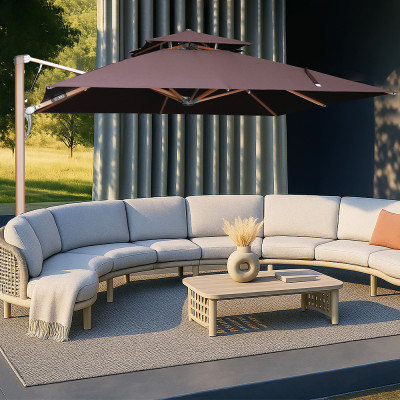
As a professional dedicated to elevating outdoor environments, I've observed that commercial cantilever umbrellas are not merely shade providers. They are transformative elements, crucial for defining the atmosphere, enhancing guest comfort, and ultimately, boosting revenue for businesses. Unlike their traditional center-pole counterparts, the various commercial cantilever umbrella types offer unmatched flexibility. They create open, uncluttered spaces beneath their canopies, making them the perfect solution for a wide range of commercial settings, from the sprawling grounds of luxury resorts to the bustling sidewalks of urban cafes. At Foris Hortus, we understand that selecting the right shade solution is a significant investment in your business's aesthetic and functional appeal.
This guide will walk you through everything you need to know about commercial cantilever umbrellas, empowering you to make a choice that brings both style and practicality to your space.
Key Takeaways
- Design Advantage: Cantilever umbrellas offer unobstructed space by design, with a side-post mount allowing for flexible and open seating arrangements.
- Durability is Key: Commercial-grade models are built with robust materials like marine-grade aluminum and weather-resistant fabrics to withstand public use and diverse weather conditions.
- Versatility in Types: From single-post designs for smaller patios to multi-canopy quad umbrellas for large terraces, there's a type to fit every commercial need.
- Smart Investment: Choosing the right size, base, fabric, and operating mechanism is crucial for ensuring safety, longevity, and a positive return on investment.
What Makes Commercial Cantilever Umbrella Types Stand Out?
The rising popularity of commercial cantilever umbrellas in upscale hospitality and business environments isn't a coincidence. Their unique design and robust construction offer a series of advantages that traditional umbrellas simply cannot match. From maximizing usable space to promising long-term durability, these umbrellas are engineered for performance in demanding commercial settings.
Design and Functionality
The ingenuity of a cantilever umbrella lies in its offset design. The entire support structure is positioned to the side, liberating the area directly beneath the canopy. This fundamental difference is the source of its superior functionality and aesthetic appeal.
Unobstructed Space
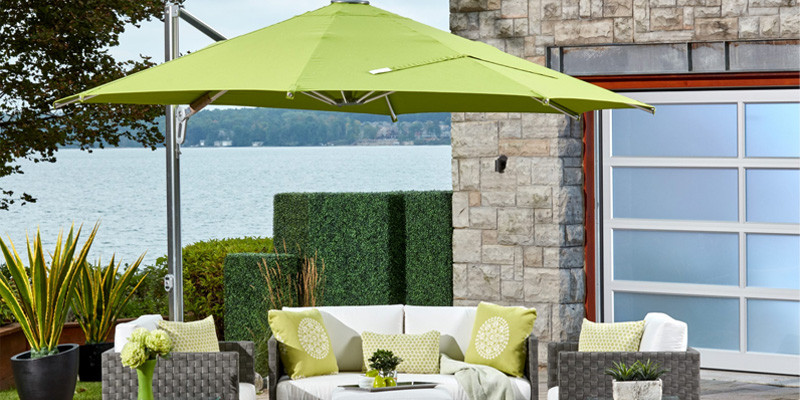
The most significant advantage of a commercial cantilever umbrella is the creation of an open and unobstructed space. With the pole and base set off to the side, you are free to arrange furniture, plan walkways, or design lounge areas without a central pole dictating the layout. This is particularly beneficial for restaurants and cafes, where maximizing seating capacity directly impacts revenue. It allows for large, single tables or flexible seating configurations that can adapt to different group sizes, enhancing the guest experience by providing a clear, open, and more sociable environment.
Adjustability (360-degree rotation, tilt, height)
Modern commercial cantilever umbrellas are marvels of engineering, offering a remarkable degree of adjustability. Many high-quality models feature a 360-degree rotation capability, often operated by a simple foot pedal or crank mechanism. This allows staff to effortlessly pivot the canopy throughout the day, tracking the sun's movement to provide continuous and targeted shade for guests without moving the heavy base.
Furthermore, advanced tilt functions allow the canopy to be angled against lower-angled morning or afternoon sun, and even provide a degree of privacy or protection from wind and rain. Some premium models also offer height adjustments, making them versatile enough to accommodate different furniture setups, from low-slung lounge chairs to high-top bar tables. This multi-axis adjustability ensures optimal shade and comfort at all times of the day.
Durability and Commercial-Grade Construction
A commercial umbrella is an investment that must withstand the rigors of daily public use and variable weather. This is where commercial-grade construction becomes non-negotiable. Manufacturers of high-quality cantilever umbrellas, like Foris Hortus, prioritize robust materials and engineering to ensure longevity and safety.
Materials: Aluminum vs. Wood Frames
The frame is the backbone of any umbrella, and its material composition is a critical determinant of its strength and lifespan.
| Material | Pros | Cons | Best For… |
|---|---|---|---|
| Aluminum | Lightweight, rust-proof, strong, and requires minimal maintenance. Often powder-coated for extra protection and color options. | Can be more expensive upfront. Lower-quality aluminum may be less durable. | Most commercial settings, especially in coastal or humid climates, due to its corrosion resistance and high strength-to-weight ratio. |
| Wood | Offers a classic, natural aesthetic that complements certain decors. | Requires regular maintenance (sealing) to prevent rot, warping, or insect damage. Can be heavier and less resistant to high winds than aluminum. | Aesthetically driven venues in dry, stable climates where the classic look is a priority over low-maintenance durability. |
For most commercial applications, marine-grade or commercial-grade aluminum is the superior choice. It provides the best combination of strength, weather resistance, and low maintenance, ensuring the umbrella remains a safe and attractive feature for years to come.
Weather Resistance: UV, Wind, and Water Protection
A commercial umbrella's primary function is to protect against the elements, and this requires a holistic approach to weather resistance.
- Wind Resistance: Commercial cantilever umbrellas are engineered with features to manage wind. This includes robust frames, secure mounting options, and sometimes vented canopies that allow wind to pass through, reducing stress on the structure. While no umbrella should be left open in severe storms, commercial models are tested to withstand moderate to high winds, a crucial feature for safety and durability.
- UV Protection: The canopy fabric is the first line of defense against harmful ultraviolet radiation. High-quality commercial umbrella fabrics are rated for their Ultraviolet Protection Factor (UPF). Reputable fabrics can block up to 98% of UV rays, protecting both guests and the outdoor furniture underneath from sun damage.
- Water Protection: Commercial canopies are typically made from solution-dyed acrylics or other high-performance materials that are treated to be highly water-resistant. They are designed to repel water, keeping guests dry during unexpected light showers and preventing the growth of mold and mildew on the fabric itself.
Exploring the Diverse Commercial Cantilever Umbrella Types
Once you appreciate the inherent advantages of the cantilever design, the next step is to explore the various types available. The right choice will depend on the size of your space, your coverage needs, and your operational requirements. From single units to massive multi-canopy structures, there is a cantilever solution for almost any commercial environment.
Single Cantilever Umbrellas
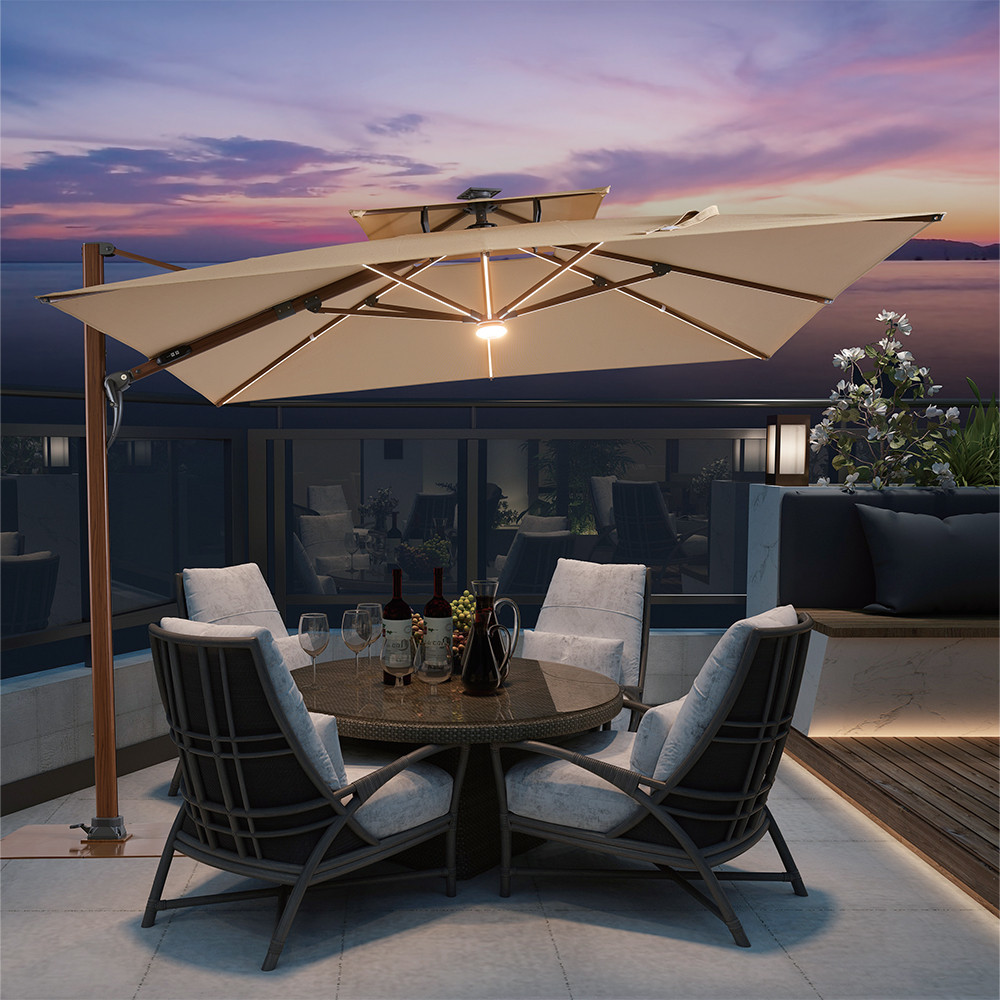
The single cantilever, or offset umbrella, is the most common type and serves as the foundation for its larger counterparts. It consists of a single canopy supported by one mast and arm, positioned to the side. These are incredibly versatile and are an excellent choice for a variety of applications, including shading a single large dining table, a pair of lounge chairs, or a designated "relax zone" by a pool. Their self-contained nature makes them easy to position and integrate into existing layouts, providing significant shade coverage ranging from 8 to 13 feet in diameter or square.
Double Cantilever Umbrella Types
A double cantilever umbrella, also known as a dual-canopy umbrella, utilizes a single central mast to support two separate canopies. This clever design dramatically increases the shaded area while minimizing the ground-level footprint. You get twice the coverage with only one base to manage. This makes them an ideal solution for long, rectangular spaces, such as covering a row of tables along a restaurant wall or shading multiple sets of lounge chairs on a hotel terrace. The two canopies can often be operated independently, offering flexible shade control.
Quad Cantilever Umbrella Types
For maximum coverage from a single point, the quad cantilever umbrella is the ultimate solution. This impressive structure features a single, heavy-duty central mast that supports four distinct canopies, creating a massive shaded area. Often modular in design, these systems are perfect for large, open-air venues like resort poolsides, event spaces, and expansive restaurant patios. A quad system can effectively create a large, shaded "room" outdoors, capable of covering multiple dining tables or a full lounge setting. The ability to cover up to 700 square feet or more with just one central pole is a game-changer for commercial space planning.
Octagonal, Square, and Rectangular Commercial Cantilever Umbrella Types
The shape of the canopy impacts both the aesthetic and the functional coverage of the umbrella.
- Octagonal: The classic umbrella shape, offering a traditional and symmetrical look. It casts a round shadow, which is ideal for covering round tables and creating a soft, inviting ambiance.
- Square: A modern and efficient choice, square canopies provide excellent coverage. Their straight edges are perfect for aligning side-by-side to cover larger areas with minimal gaps. They cast a square shadow, making them highly efficient for shading square tables or defined seating areas.
- Rectangular: Similar to square canopies, rectangular options are designed for efficiency, specifically for covering long dining tables, rectangular lounge settings, or rows of seating. When used in a double cantilever setup, two rectangular canopies can create a very large and uniformly shaded area.
Choosing the right shape is a matter of matching the umbrella to the area and furniture you intend to cover for the most efficient use of shade.
Key Considerations When Choosing Commercial Cantilever Umbrella Types
Selecting the perfect commercial cantilever umbrella involves more than just picking a color and style. It's a strategic decision that impacts safety, functionality, and your return on investment. A thorough evaluation of your specific needs and environment is essential to making a choice that will serve your business well for years.
Sizing and Coverage for Optimal Shade
The first rule of sizing is to choose an umbrella that extends beyond the area you want to shade. For a dining table, the canopy should ideally be about two feet wider than the table on all sides to ensure everyone remains shaded as the sun moves.
- Measure Your Space: Accurately measure the length and width of the patio, deck, or seating area.
- Map Out Furniture: Consider your furniture layout. Are you covering one large table, multiple small ones, or a lounge area?
- Factor in Sun Movement: Remember the sun isn't stationary. A larger canopy provides a greater margin of error, keeping your guests comfortable for longer periods.
A common mistake is underestimating the size needed. It's often better to opt for a slightly larger umbrella to guarantee complete and effective coverage.
Base and Stability Requirements
The base is arguably the most critical safety component of a cantilever umbrella. Due to the offset design, the physics involved require a substantial and secure base to counteract the weight of the canopy and the force of the wind.
- Freestanding Bases: These are heavy, often fillable with sand or water, and can weigh hundreds of pounds when full. They offer portability, but their large footprint must be accounted for in your layout.
- In-Ground Mounts: This involves cementing a mounting tube directly into the ground. It provides the most stability and a clean, zero-footprint finish, making it ideal for permanent installations.
- Surface Mounts: These involve bolting a base plate directly onto an existing concrete slab or a specially constructed footing. This is a very secure option when a permanent location is desired but in-ground installation isn't feasible.
Always follow the manufacturer's recommendation for base weight, as an undersized base can lead to a dangerous tipping hazard, especially in windy conditions.
Fabric Options for Commercial Cantilever Umbrella Types
The fabric of the canopy is more than just a decorative element; it's a high-performance material responsible for shade, UV protection, and weather resistance.
UV-Resistant and Fire-Retardant Fabrics
For commercial applications, fabrics like solution-dyed acrylics are the industry standard. During the solution-dyeing process, the color pigment is added to the fiber before it's spun into yarn, making the color an integral part of the fabric. This process makes the fabric exceptionally resistant to fading from UV exposure. Look for fabrics with a high UPF rating (UPF 50+ is excellent) to ensure maximum sun protection for your patrons.
In many commercial settings, particularly those involving cooking or public assembly, fire-retardant fabrics may be required by local building codes. These fabrics are treated to resist ignition and self-extinguish when the flame source is removed, adding an important layer of safety.
Color and Branding Opportunities
The umbrella canopy is a large, visible canvas that can be used to enhance your brand's presence. Leading manufacturers offer a wide array of fabric colors to match your existing decor, from neutral tones that create a sophisticated ambiance to bold colors that make a statement. Furthermore, many suppliers, including Foris Hortus, offer custom printing services. You can add your company's logo, name, or other branding elements directly onto the canopy or valance, turning your shade investment into a powerful marketing tool.
Ease of Operation and Maintenance
In a busy commercial environment, equipment must be easy for staff to operate. Modern cantilever umbrellas have come a long way from cumbersome, difficult-to-open designs.
- Lift Mechanisms: Look for crank-lift systems, which are common and user-friendly. Some premium models may feature telescoping or gas-assisted lifts that make opening and closing the largest umbrellas nearly effortless.
- Rotation and Tilt: Ensure the mechanisms for rotating the mast and tilting the canopy are intuitive and don't require excessive force. Foot pedals for rotation are a particularly popular and ergonomic feature.
- Maintenance: A well-designed umbrella will be easy to maintain. This includes easily replaceable parts, simple cleaning procedures, and straightforward instructions for off-season storage.
Budget and Return on Investment
Commercial cantilever umbrellas represent a significant initial investment compared to residential or market umbrellas. However, it's crucial to view this as a long-term investment in your business. A high-quality umbrella can last for many years, while a cheaper alternative may need to be replaced after only a season or two.
The return on investment (ROI) comes in many forms:
- Increased Seating: Expanding usable outdoor seating directly increases potential revenue.
- Enhanced Guest Experience: Comfortable, shaded guests stay longer, order more, and are more likely to return and leave positive reviews.
- Brand Enhancement: A stylish, high-quality outdoor space elevates your brand's image.
- Reduced Maintenance Costs: Investing in a durable, low-maintenance product saves money and labor over its lifespan.
Aesthetics and Integration with Existing Decor
Finally, the umbrella must look the part. It should be a seamless extension of your property's design and architecture. Consider the frame's finish (e.g., brushed aluminum, anthracite powder-coat), the canopy's color, and the overall shape of the umbrella. A sleek, modern square cantilever might be perfect for a contemporary hotel, while a more classic octagonal shape in a natural tone could be ideal for a rustic winery patio. The goal is to choose an umbrella that not only performs its function but also enhances the overall aesthetic of your space.
Maintaining Your Commercial Cantilever Umbrella Types for Longevity
Investing in a high-quality commercial cantilever umbrella from a trusted brand like Foris Hortus is the first step. The second, equally important step is implementing a consistent maintenance routine. Proper care will not only keep your umbrellas looking pristine but also significantly extend their functional lifespan, protecting your investment and ensuring the continued safety and comfort of your guests.
Regular Cleaning Practices
Outdoor umbrellas are constantly exposed to dust, pollen, bird droppings, and pollution. Regular cleaning prevents these from becoming set-in stains and preserves the fabric's appearance and performance.
- Routine Brushing: At least once a week, use a soft-bristle brush to gently sweep away loose dirt and debris from the canopy. Do this when the fabric is dry.
- Spot Cleaning: Address spills and stains immediately. Blot (don't rub) liquid spills. For most stains, a simple solution of mild soap (like dish soap) and lukewarm water is effective. Apply the solution with a soft brush, let it soak in briefly, and then rinse thoroughly with clean water.
- Deep Cleaning: Once or twice a season, give the canopy a more thorough cleaning. You can do this with the canopy on the frame. Hose the fabric down, apply a mild soap and water solution, gently scrub the entire surface, and then rinse completely to remove all soap residue. Allow the canopy to air dry fully before closing it.
- Frame Cleaning: Wipe down the frame and mast with a soft, damp cloth to remove dust and grime. This keeps mechanisms clean and prevents abrasive particles from damaging the finish.
Proper Storage in Inclement Weather
No commercial umbrella is invincible. Knowing when to close it is key to preventing damage.
- Windy Conditions: Always close umbrellas when winds become strong. While commercial umbrellas have a high wind tolerance, leaving them open in gales is a major cause of damage to the frame, arms, or tilting mechanism. Adhere to the manufacturer's wind-speed guidelines.
- Winter/Off-Season Storage: If your business closes its outdoor area for the winter, it's best to store your umbrellas properly. Clean the umbrella thoroughly, ensure it is completely dry, and then retract it and cover it with a protective cover. If possible, storing the umbrella indoors in a dry, sheltered location is ideal.
Protective Covers and Accessories
Protective covers are an essential accessory, not a luxury.
- Daily Protection: Using a cover overnight protects the canopy from morning dew, bird droppings, and UV radiation even when the umbrella is closed. This simple step can dramatically prolong the life and color of the fabric.
- Material: Choose a cover made from a durable, breathable, and water-resistant material. This protects the umbrella from rain while preventing condensation and mildew from forming underneath.
- Fit: Ensure the cover is the correct size for your umbrella. A proper fit will be easy to put on and take off and will provide complete protection from top to bottom.
By integrating these simple maintenance practices into your staff's regular duties, you can ensure your commercial cantilever umbrellas remain a beautiful, functional, and safe asset for your business for many seasons to come.
Frequently Asked Questions (FAQ)
Q: How much wind can a commercial cantilever umbrella handle? A: This varies by model, but high-quality commercial cantilever umbrellas are generally rated to withstand winds of 20-30 MPH when properly installed with the recommended base. Always check the manufacturer's specifications and close the umbrella in higher winds.
Q: What is the best material for a cantilever umbrella canopy? A: Solution-dyed acrylic fabric is widely considered the best choice for commercial use. It offers superior fade resistance, UV protection (UPF 50+), and water resistance, ensuring long-lasting performance and appearance.
Q: Can I print my logo on the umbrella? A: Absolutely. Most reputable suppliers, including Foris Hortus, offer custom printing services, allowing you to add your logo or branding to the canopy, turning your shade solution into a marketing tool.
Ultimately, investing in the right commercial cantilever umbrella types can significantly elevate any outdoor commercial space, offering a powerful combination of comfort, style, and practicality. They are a testament to how smart design can solve practical problems, transforming patios, terraces, and poolsides into more usable and profitable areas.
By carefully considering the various types, from single to quad canopies, and paying close attention to critical features like materials, sizing, base stability, and ease of maintenance, I am confident that any business can find the perfect cantilever umbrella solution. Making a well-informed choice will not only meet your unique needs but will also profoundly enhance your patrons' experience, encouraging them to linger longer and return often. We hope this guide empowers you to invest wisely in the comfort and appeal of your outdoor space.
We invite you to share this guide with others who may find it useful and to share your own experiences with commercial outdoor spaces in the comments below