How to Choose a Commercial Umbrella
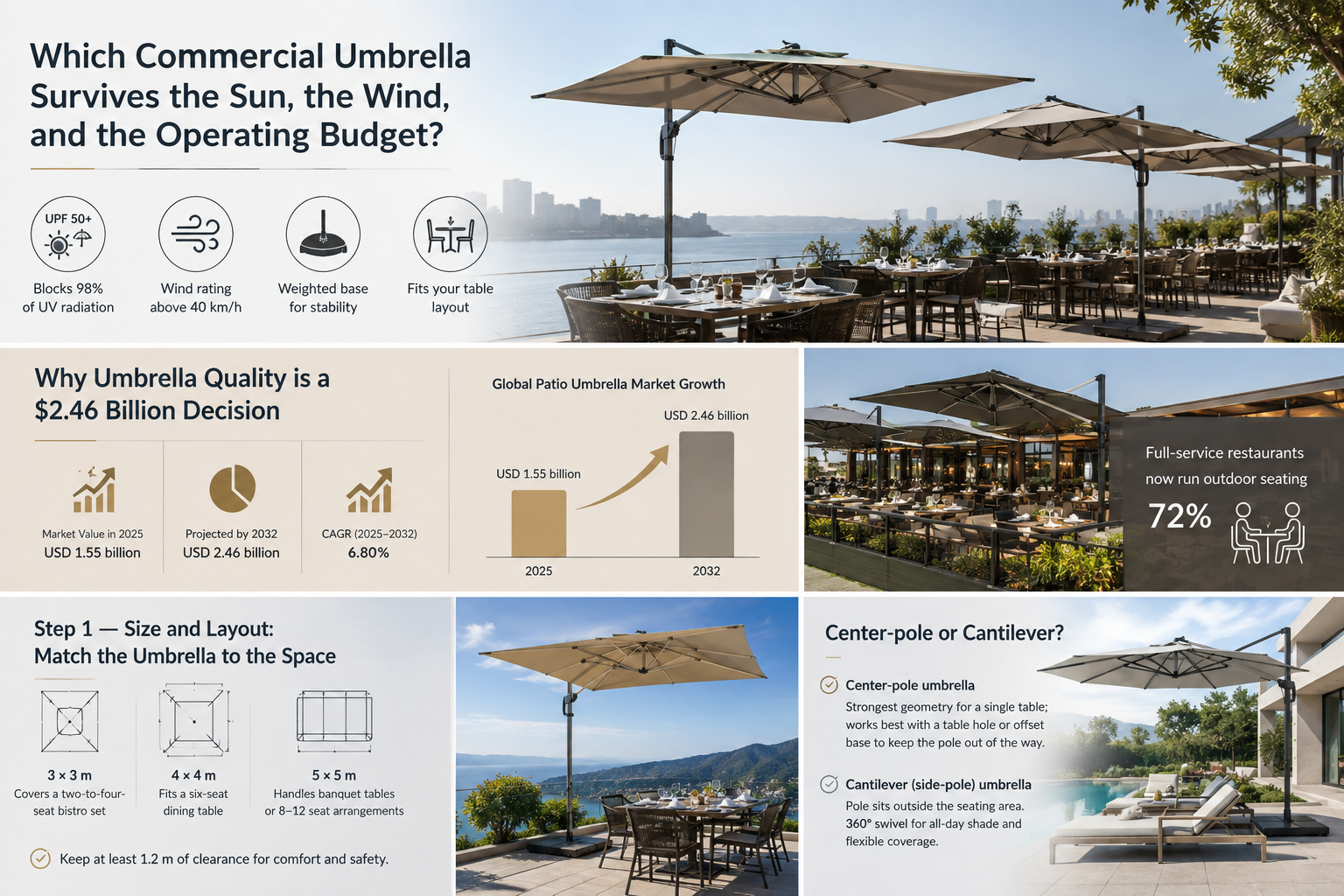
Patio operators ask the same question every season: which commercial umbrella survives the sun, the wind, and the operating budget? The short answer is measurable. A commercial-grade sun umbrella is defined by four numbers: a UPF 50 canopy that blocks 98% of UV radiation, a wind rating above 40 km/h backed by a weighted base, a footprint that fits your table layout, and features that add service hours instead of labor. This guide walks through each decision with data from wind-tunnel tests, peer-reviewed field studies, and industry market reports, so your next purchase is an investment rather than a gamble.
Why umbrella quality is a $2.46 billion decision
The global patio umbrella market was valued at USD 1.55 billion in 2025 and is projected to reach USD 2.46 billion by 2032, a compound annual growth rate of 6.80% (Fairfield Market Research, 2025). A separate forecast from Dataintelo puts the 2025 market at USD 1.82 billion and the 2034 market at USD 3.14 billion, a 6.3% CAGR, with North America accounting for 38.7% of global revenue. Within that market, cantilever umbrellas are the fastest-growing segment at 8.7% CAGR, because operators need shade without a pole blocking the table.
What these numbers tell a buyer: outdoor seating is no longer seasonal decoration, it is a revenue line. When a venue installs 4 to 12 commercial umbrellas at once, fabric and frame choices compound into thousands of dollars of difference over a five-year service life. That is why the rest of this guide focuses on specs you can verify, not adjectives you cannot.
Step 1 — Size and layout: match the umbrella to the space
Measure before you buy. A 3×3 m canopy comfortably covers a two-to-four-seat bistro set, a 4×4 m canopy fits a six-seat dining table, and a 5×5 m canopy handles banquet tables or 8–12 seat arrangements. Keep at least 1.2 m of clearance between the canopy edge and walkways or heat sources, and set the pole so the canopy clears standing guests at 2.2–2.4 m.
Center-pole or cantilever?
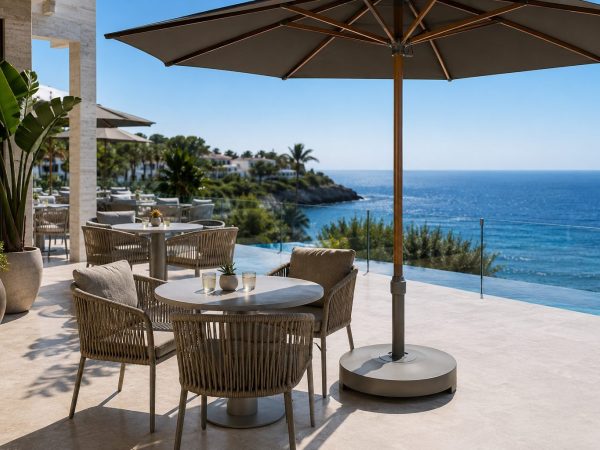
- Center-pole umbrella — the strongest geometry for a single table; works best with a table hole or an offset base that keeps the pole out of the legroom.
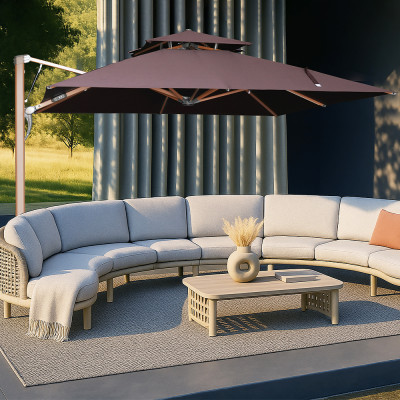
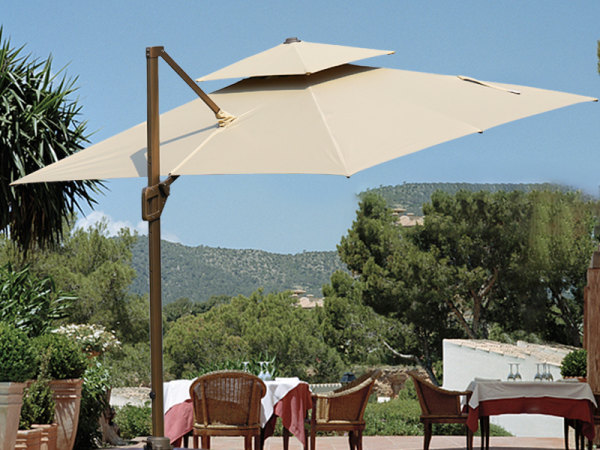
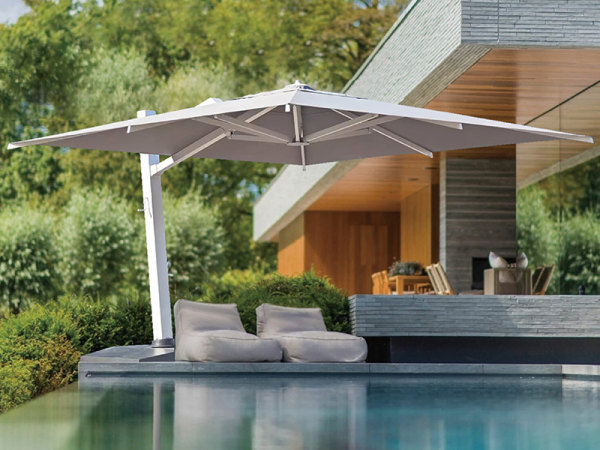
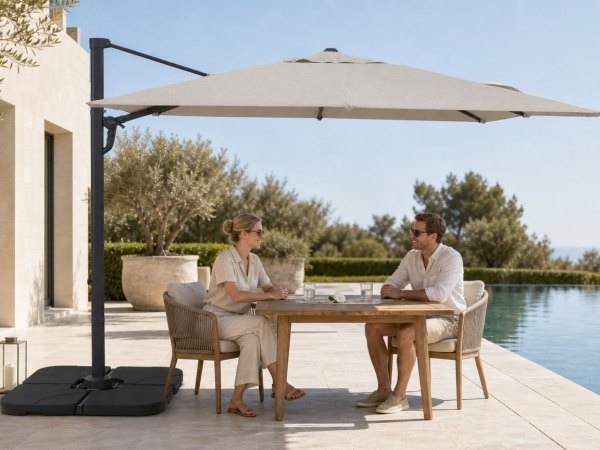
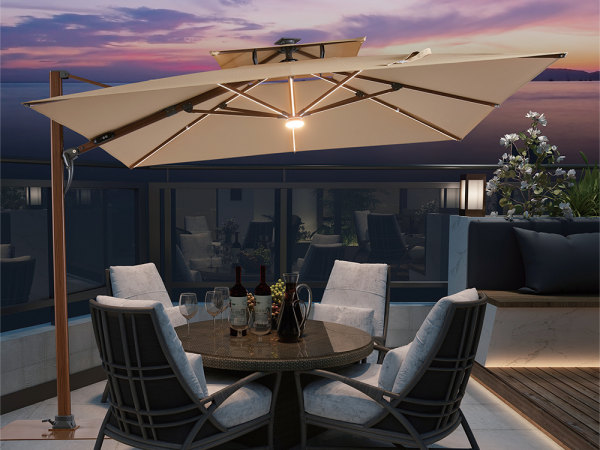
- Cantilever (side-pole) umbrella — the pole sits outside the seating area. With a 360° swivel, one unit covers morning coffee, midday lunch, and sunset dinner by rotating the canopy instead of moving the furniture.
Related reading
- A Complete Guide to Outdoor Umbrella Types & Key Features for Stylish Shading – complete guide to outdoor umbrella types.
- What are the Essential Outdoor Umbrella Types & Features You Need to Know? – essential outdoor umbrella types.
- Heavy Duty Commercial Umbrellas: What Makes One Heavy Duty – heavy duty commercial umbrellas.
- How to Drive Traffic and Sales: The Bestseller Secret of Outdoor Umbrellas – how to choose a commercial umbrella.
Frequently Asked Questions (FAQ)
1. What size commercial umbrella do I actually need?
For a dining table, the rule of thumb is a 9 foot canopy for a 48 inch round or square table, giving roughly 24 inches of overhang per seat. For a four-lounger pool bay, a 3 x 3 m square or a 3 x 4 m rectangular canopy covers it. Size the canopy to the zone, not to the price band.
2. How do I know which umbrella type to choose?
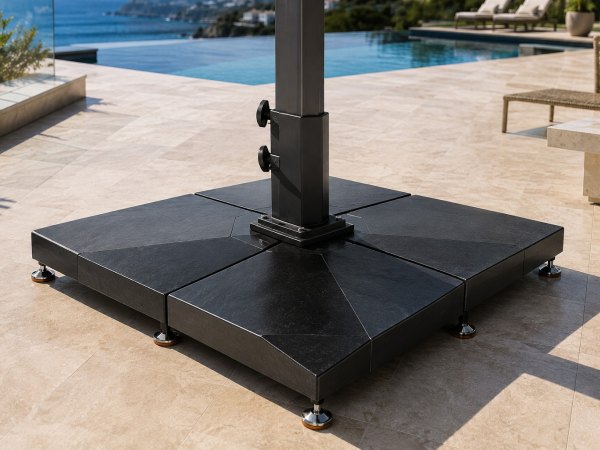
Start with the base and the footplate. A cantilever gives you an unobstructed floor area and needs a large, heavy, fixed base and cannot be moved easily. A center pole is cheaper, more stable, and can stand in a table. Most sites end up running both for exactly that reason.
3. What should a commercial umbrella specification include?
Canopy size and shape, fabric specification including UV rating and coating, pole diameter and material, rib material and section, opening mechanism, base mass and mounting method, wind rating, and the spare parts and warranty position. Anything less and you are comparing products that may not be comparable.
4. Does a commercial umbrella need a UV rated canopy?
For a hospitality terrace, yes. A solution-dyed acrylic with a UPF 50+ rating protects guests, delays fading and lasts far longer than a polyester canopy, which is why the fabric choice usually decides the service life of the whole product rather than the frame.
5. How do I compare two commercial umbrella quotations properly?
Put them in the same template. Fill in canopy size, fabric, pole diameter, rib material, mechanism, base mass, wind rating and warranty for each, and then compare line by line. Two quotations that look similar on price usually differ on fabric and rib section, which is where the service life sits.