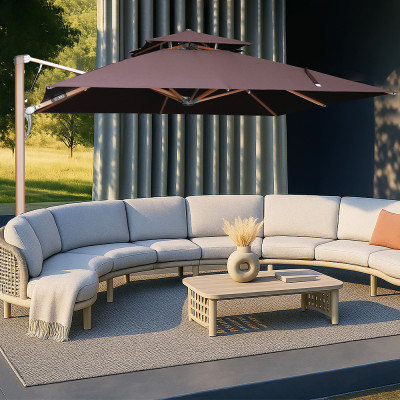
Guide to Giant Patio Umbrella Essentials: Completing Your Commercial Outdoor Setup
As we expand our commercial outdoor spaces, we often seek elements that offer both functionality and aesthetic appeal. One such essential item that significantly enhances customer experience and provides crucial protection is the giant patio umbrella. Adding quality outdoor umbrellas can lead to a more than 75% increase in customer satisfaction and boost restaurant revenue by up to 30%. This guide will delve into the critical aspects of selecting, maintaining, and even customizing a giant patio umbrella for commercial use, ensuring your outdoor setup is not only inviting but also resilient for your business, a worthwhile investment from our brand, Foris Hortus.
Key Takeaways
Choosing the perfect giant patio umbrella for a commercial setting involves a detailed evaluation of several key factors to ensure it meets the demands of a high-traffic environment and provides a return on investment. Here’s a summary of the critical points covered in this guide:
- Size and Shape: The first step is to measure your space. The umbrella canopy should extend approximately two feet beyond the table or area it's shading to provide adequate coverage. A 9-foot umbrella is suitable for a 48-inch table, while larger tables may require an 11-foot or even bigger custom size. The shape—round, square, or rectangular—should complement your table shapes and layout to maximize shade and visual harmony.
- Canopy Fabric: The fabric is crucial for durability and guest protection. Solution-dyed acrylics like Sunbrella are the industry standard, offering superior resistance to fading, mildew, and stains. Olefin is another excellent, durable, and more budget-friendly option known for its strength and colorfastness. Both materials provide significant UV protection, a key feature for guest comfort and safety.
- Pole and Frame Durability: Commercial umbrellas demand robust construction. Poles are typically 1.5 to 2 inches thick and made from materials like powder-coated aluminum, fiberglass, or wood. Aluminum offers a great balance of strength and rust resistance, making it a popular choice. Fiberglass provides excellent flexibility, which is ideal for windy conditions as the ribs can bend without breaking.
- Opening Mechanisms: Ease of use is vital for daily operations. Crank lifts are user-friendly and common for larger umbrellas. Pulley systems are also effective for heavy canopies, using leverage to simplify opening. For maximum efficiency in commercial settings, telescoping masts allow the umbrella to be closed over tables without moving furniture.
- Base and Stability: A heavy, appropriate base is non-negotiable for safety. The required weight increases with canopy size: a 9-10 foot umbrella needs a 55-70 lb base, while umbrellas 11 feet or larger demand a base of 100 lbs or more. In-ground or surface mounts offer a permanent, highly secure solution for windy locations.
- Wind Resistance: Features like vented canopies are essential for managing wind. Vents allow air to pass through, reducing the lifting force that can cause damage. A robust frame with flexible fiberglass ribs also contributes significantly to windproof performance.
- Customization and Branding: Customizing your umbrellas with your logo and brand colors turns a functional item into a powerful marketing tool. It enhances brand visibility and creates a cohesive, professional look for your outdoor space.
By carefully considering these elements, businesses can select a giant patio umbrella that not only provides essential shade and comfort but also enhances the aesthetic appeal and durability of their commercial outdoor setup, ultimately contributing to a better customer experience and a stronger brand identity.
Choosing the Perfect Giant Patio Umbrella for Commercial Use: Key Considerations
When selecting a giant patio umbrella for a commercial space, the stakes are higher than for a residential backyard. These umbrellas must endure constant daily use, varying weather conditions, and meet the expectations of paying customers. Commercial-grade umbrellas are fundamentally different from their residential counterparts; they feature larger canopies (7 to 11 feet or more), thicker poles (1.5" to 2" diameter), tougher, UV-resistant fabrics, and more robust operating mechanisms. This initial investment in quality pays dividends in longevity, safety, and customer satisfaction, with many businesses seeing a return on their investment within a year. Over 62% of consumers report a preference for dining at establishments that offer shaded outdoor seating.
Size and Shape That Matters for Your Commercial Space
The first step in choosing an umbrella is to assess your space and needs. You should begin by measuring the area you want to shade to determine how many umbrellas are required and what size they should be.
Sizing Your Umbrella: A general rule of thumb is to select an umbrella canopy that extends at least two feet beyond the edge of the table it is covering to ensure ample shade.
Here's a quick guide for matching table and umbrella sizes:
- 30" to 36" tables: A 7-foot umbrella is typically sufficient.
- 48" round or square tables: A 9-foot umbrella is recommended.
- 60" round or square tables: An 11-foot umbrella provides the best fit.
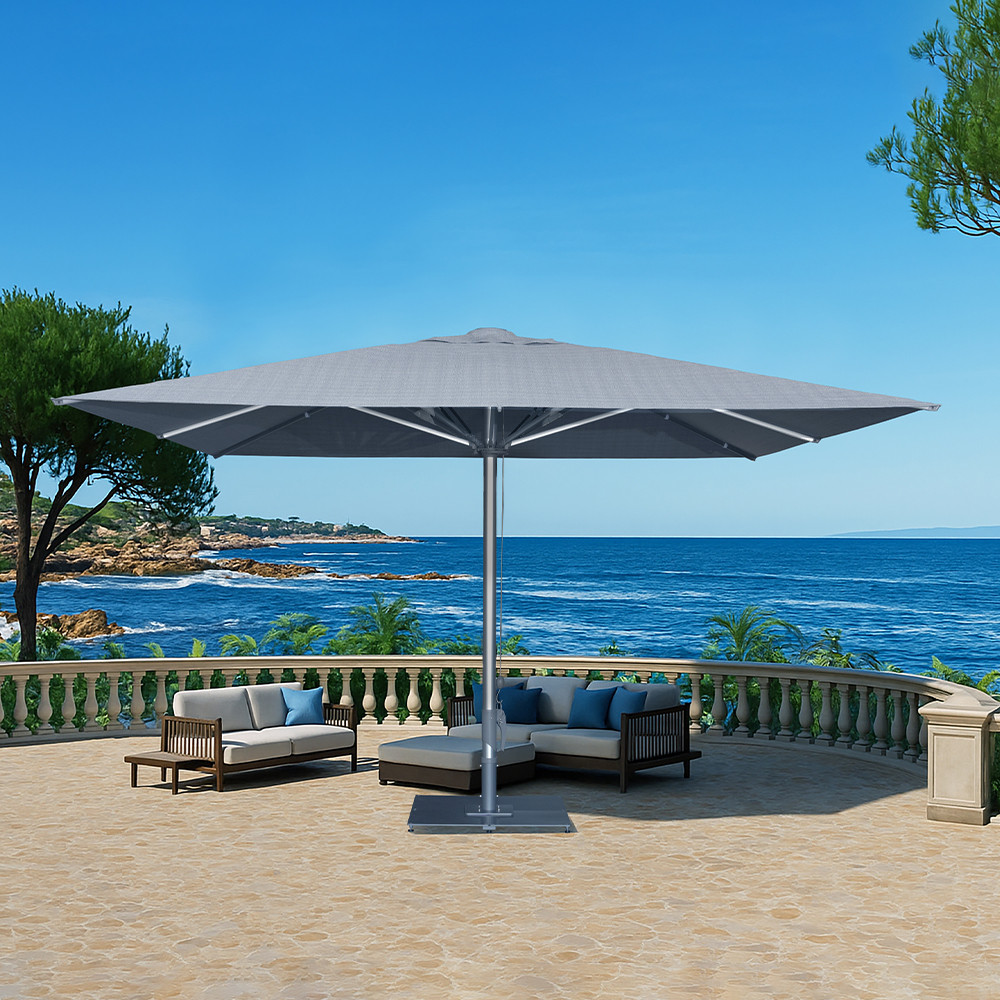
- Multiple or long tables: For larger, more open terraces or poolside areas, giant umbrellas spanning 13 to 20 feet can cover multiple tables at once, offering a flexible and cost-effective alternative to permanent structures.
A simple size-to-shade-area conversion can also be helpful:
- 6 ft. - 6.5 ft. umbrella: Shades up to 40 sq. ft.
- 7.5 ft. - 8 ft. umbrella: Shades up to 50 sq. ft.
- 9 ft. - 10 ft. umbrella: Shades up to 75 sq. ft.
- 11 ft. umbrella: Shades up to 95 sq. ft.
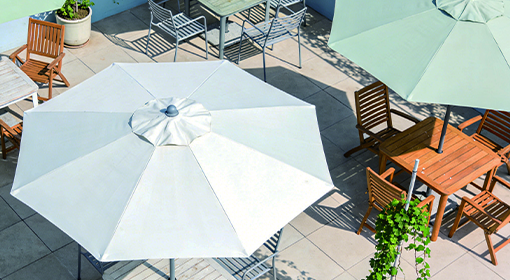
Choosing the Right Shape: The shape of the canopy affects both aesthetics and functionality.
- Round/Octagon: This classic shape is perfect for shading round dining tables and creating a traditional, balanced look.
- Square: Square umbrellas provide even, symmetrical coverage, making them ideal for square tables or for clustering multiple seating arrangements together.
- Rectangular: Best suited for long dining tables or rows of seating, rectangular canopies offer maximum coverage for linear layouts common in restaurants.
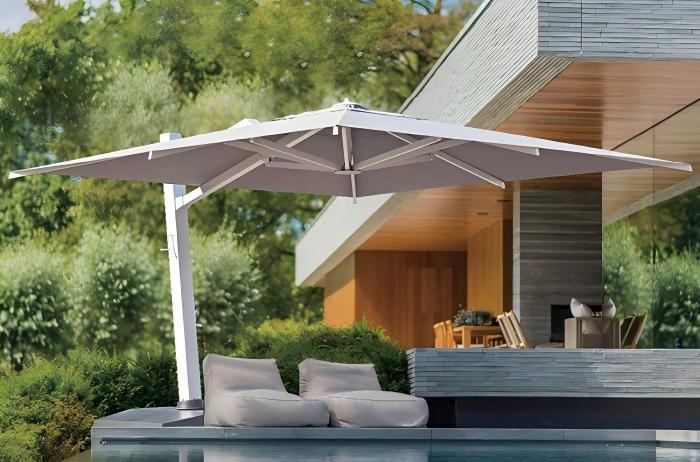
Beyond traditional market umbrellas, consider cantilever (or offset) models. These have a side-post design that provides unobstructed shade, which is perfect for lounge areas or large tables where a center pole would be in the way.
Material Matters: Canopy Fabric and Pole Durability for a Giant Patio Umbrella for Commercial Use
Durability is a defining feature of commercial-grade umbrellas, setting them apart from residential models. This resilience comes from the high-quality materials used in their construction, from the canopy fabric down to the pole and ribs.
Canopy Fabrics: The First Line of Defense The canopy must withstand sun, rain, and dirt while retaining its color and strength.
- Solution-Dyed Acrylic (e.g., Sunbrella®): This is the industry gold standard for a reason. The color is added to the fibers before they are woven, making the fabric exceptionally resistant to fading from UV exposure. Sunbrella fabric is also known for its resistance to stains and mildew, making it easy to maintain a clean and professional appearance. Its quality is so recognized that it's often recommended by the Skin Cancer Foundation for sun protection.
- Olefin (Polypropylene): A highly durable and budget-friendly synthetic fiber, Olefin is known for its strength, colorfastness, and resistance to moisture and mildew. It is lightweight, dries quickly, and stands up well to abrasion, making it another excellent choice for high-traffic commercial use.
- Polyester (e.g., Pacifica™): While generally more affordable, high-quality polyester specifically designed for outdoor use can be a viable option. Look for fabrics like Pacifica, which are treated to hold color up to four times longer than traditional polyester and offer good durability.
| Fabric Type | UV Resistance | Fade Resistance | Mildew Resistance | Price Point |
|---|---|---|---|---|
| Solution-Dyed Acrylic | Excellent | Excellent | Excellent | Premium |
| Olefin | Very Good | Very Good | Excellent | Mid-Range |
| Polyester (High-Grade) | Good | Good | Good | Budget-Friendly |
Pole and Frame: The Backbone of Stability The frame supports the canopy and must be strong enough to handle both daily use and challenging weather. The pole diameter for a commercial umbrella is typically between 1.5 to 2.5 inches for stability.
- Aluminum: This is the most popular material for commercial umbrella frames. It's lightweight, strong, and naturally rust-resistant. When powder-coated, its resilience against corrosion and wear is significantly enhanced, making it ideal for almost any environment.
- Fiberglass: The defining characteristic of fiberglass is its flexibility. The ribs of a fiberglass umbrella can bend in high winds without snapping, which is a major advantage in windy locations. It is also completely immune to rust and rot, offering incredible durability.
- Wood: Wooden frames, often made from teak or bamboo, offer a classic, sophisticated aesthetic. However, they require more maintenance to prevent weather damage and can be more susceptible to breaking in strong winds compared to aluminum or fiberglass.
At Foris Hortus, we prioritize materials that offer the best combination of longevity and performance, ensuring your investment is a lasting one.
Opening Mechanisms and Additional Features for Ease of Use
Smooth and efficient operation is crucial in a busy commercial setting where staff may need to open and close multiple umbrellas daily.
Common Lift Systems:
- Crank Lift: This is a very common and user-friendly mechanism. A simple turn of a rotating handle opens or closes the canopy, requiring minimal effort. It's an excellent choice for large umbrellas where manual lifting would be difficult. However, the internal components can wear over time.
- Pulley Lift: Ideal for large, heavy canopies, a pulley system uses a rope and wheel to provide leverage, making it easier to raise the umbrella. The user then secures the canopy in place with a pin. This design is simple and durable, with fewer complex parts to break.
- Push-Up Lift: This is a straightforward manual system where you push the central hub up the pole until it locks with a pin. It's reliable and simple, often favored for its lack of complex parts like ropes or cranks.
Advanced Features for Commercial Efficiency:
- Telescoping Masts: A game-changer for restaurants, this feature allows the umbrella's mast to extend upwards as it closes, enabling the canopy to clear the tables and chairs below. This saves staff significant time and effort, as furniture doesn't need to be moved during setup and breakdown.
- Tilting Mechanisms: To provide continuous shade as the sun moves, a tilt function is invaluable. This can be a simple push-button, a collar tilt operated near the crank, or a more advanced auto-tilt.
- 360-Degree Rotation: Primarily found on cantilever umbrellas, this allows the canopy to be rotated to block the sun from any angle without moving the heavy base.
- Smart Features: The latest innovations include electric, one-touch open/close systems, sometimes operated by remote control, offering the ultimate in convenience for luxury commercial settings.
Choosing the right combination of features depends on your budget, the size of the umbrellas, and the specific needs of your staff and space.
Securing Your Giant Patio Umbrella for Commercial Use: Preventing Wind-Related Issues
An open patio umbrella is like a large sail, making it incredibly vulnerable to wind. A sudden gust can turn a valuable asset into a safety hazard, capable of damaging furniture or injuring guests. For any commercial establishment, securing umbrellas is not just a matter of protecting your investment; it's a critical safety responsibility. Fortunately, with the right base, strategic placement, and proper handling, you can significantly mitigate these risks.
Enhancing Base Stability for Your Giant Patio Umbrella for Commercial Use
The base is the single most important component for keeping your umbrella grounded and stable. An undersized base is a recipe for disaster. The weight required depends heavily on the umbrella's size, its placement (freestanding vs. through a table), and the typical wind conditions of your location.
Base Weight Guidelines: The industry-standard rule is to have at least 10 pounds of base weight for every foot of the umbrella's canopy diameter.
- 7-8 ft Umbrella: Minimum 40-50 lb base. For windy areas, 60-70 lbs is better.
- 9-10 ft Umbrella: Minimum 65-75 lb base. Recommended weight is 80-100 lbs.
- 11-12 ft Umbrella or larger: Minimum 100-130 lb base, with 150-200+ lbs needed for very large or cantilever models.
Important Considerations:
- Freestanding vs. In-Table: An umbrella placed through a sturdy patio table benefits from the table's added support, allowing for a slightly lighter base. However, a freestanding umbrella relies entirely on its base and requires a heavier weight to remain stable—often 20-30% more than the in-table equivalent.
- Cantilever Umbrellas: Due to their offset design, cantilever umbrellas are more susceptible to wind and require significantly heavier bases, often starting at 180-200 lbs for a 10-foot model.
- Base Types:
- Solid Bases: Made of cast iron, steel, or concrete, these are heavy and reliable.
- Fillable Bases: These plastic bases are moved easily when empty and then filled with sand or water. Sand is denser and provides more weight for the same volume.
- Mounts: For the highest level of security in commercial settings, in-ground or surface-mounted bases that bolt directly to the patio or deck are the most reliable solution. Many commercial umbrellas from Foris Hortus are designed with poles that can be bolted to a heavy base for maximum security.
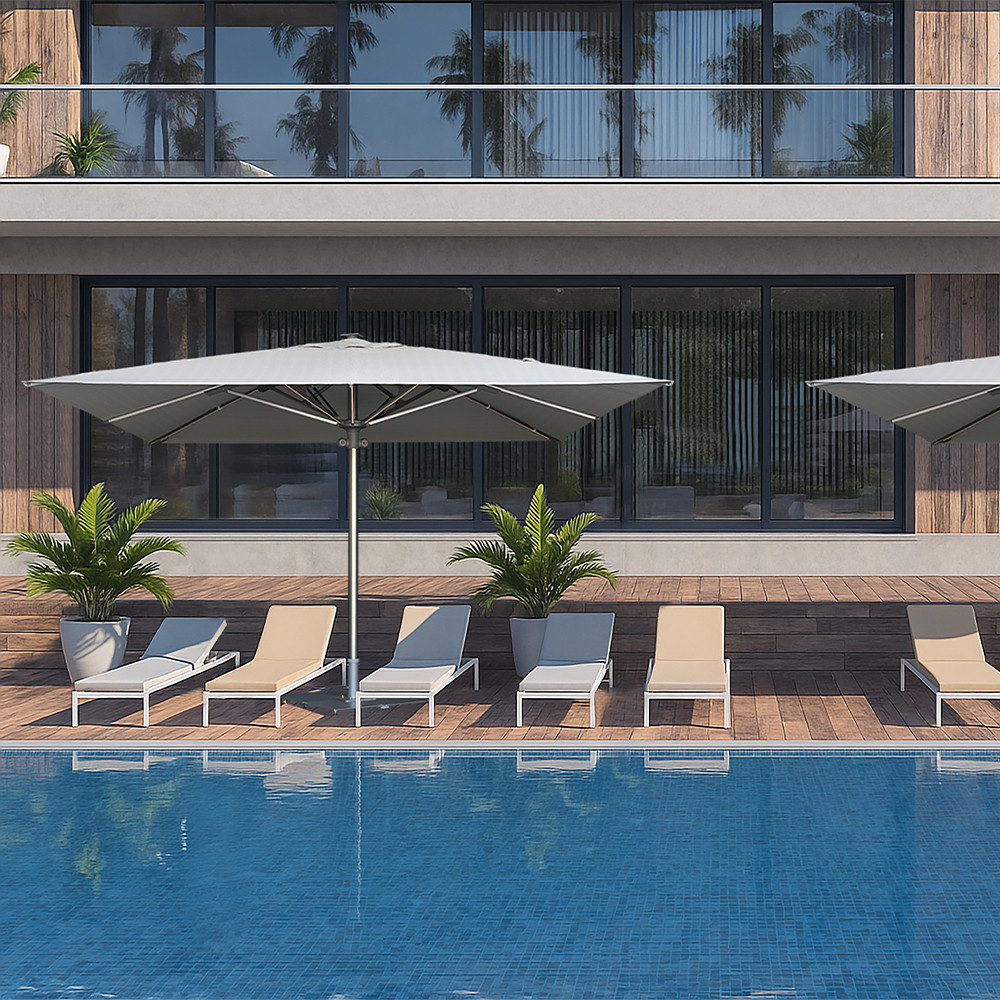
Strategic Canopy Management in High Winds
Beyond the base, how and when you use your umbrella plays a vital role in preventing wind-related incidents.
Essential Practices:
- Close When Not in Use: This is the simplest and most effective habit. A closed umbrella presents a much smaller surface area for the wind to catch. This should be a standard closing procedure for any commercial establishment.
- Monitor Weather Conditions: Staff should be trained to close umbrellas when wind speeds exceed 20 mph. Even umbrellas rated for high winds have their limits, and it's always better to be cautious.
- Use the Tie Strap: When closed, the canopy should be tightly secured with the built-in ties to prevent the wind from catching and unfurling it. For added security during storms, consider wrapping the canopy with extra straps or ropes.
- Inspect Regularly: Periodically check for any signs of wear and tear, such as loose bolts, bent ribs, or small tears in the fabric, as these can compromise the umbrella's structural integrity in wind.
The Importance of Vented Canopies: A crucial design feature for wind management is the vented canopy. These vents are flaps in the fabric at the top of the umbrella that allow wind to pass through instead of getting trapped underneath, which is what causes the lifting "sail" effect. This pressure release is vital for stability and can prevent the umbrella from inverting or tipping over in a gust. For any commercial application in a location prone to wind, a vented or double-vented canopy is a non-negotiable feature.
By combining a sufficiently heavy base with proactive canopy management and choosing designs with wind-resistant features, you can ensure your giant patio umbrellas remain a safe and valuable part of your outdoor commercial setup.
Investing in Quality: Wind-Resistant Giant Patio Umbrellas for Commercial Use
For a commercial establishment, a patio umbrella is more than just a shade provider; it's a long-term asset that must perform reliably day after day. Investing in a high-quality, wind-resistant model from the start saves money on frequent replacements and protects against the liability of a weather-related failure. Quality is defined by superior materials, thoughtful engineering, and a strong manufacturer warranty.
The Importance of Material and Manufacturing in Windproof Design
A truly wind-resistant umbrella is a sum of its parts, each engineered to handle stress and reduce wind load.
Flexible Ribs: This is arguably the most critical component for wind resistance. While aluminum is strong, fiberglass ribs are the top choice for windy environments. Fiberglass is a reinforced plastic that is exceptionally flexible and durable. When a strong gust of wind hits the canopy, fiberglass ribs can bend and flex without snapping, then return to their original shape. This ability to absorb wind forces makes them far less prone to breaking compared to more rigid materials like wood or even standard aluminum. In contrast, metal ribs that bend often stay bent, and wood is prone to cracking under pressure.
Reinforced and Vented Canopy: The canopy fabric must be tough, but its design is equally important. Look for reinforced rib pockets, where the canopy attaches to the ribs, to prevent tearing. A vented canopy is essential to allow wind to pass through, reducing the upward pressure that can cause the umbrella to lift or flip inside out. Some high-wind models feature a double-vent design for even greater stability.
Durable Frame Materials: While the ribs handle flexibility, the main pole and hubs must provide rigid support. Powder-coated aluminum is an excellent choice for its combination of strength, light weight, and rust resistance. Steel offers superior strength but is heavier and must be well-coated to prevent rust. The strongest commercial umbrellas are specifically engineered with heavy-duty frames and components designed to last in demanding environments.
Understanding Guarantees and Warranties for Your Giant Patio Umbrella for Commercial Use
A strong warranty is a manufacturer's vote of confidence in their own product. In a commercial setting, it's a crucial part of your purchasing decision.
What to Look For:
- Frame Warranty: Commercial umbrellas should have a multi-year warranty on the frame, hubs, and lift mechanism. A 3-year warranty is good, while some premium brands offer 5 or even 10 years on structural components. This covers manufacturer's defects in materials and workmanship.
- Fabric Warranty: High-quality canopy fabrics, like those from Sunbrella, often come with a separate, extensive warranty against fading. This can range from 5 to 10 years and is a key indicator of the fabric's durability and colorfastness.
- Availability of Replacement Parts: A reputable commercial supplier like Foris Hortus will offer replacement parts. If a rib breaks or a canopy gets damaged, being able to repair the umbrella is far more cost-effective than replacing the entire unit.
What's Not Usually Covered:
- Wind Damage: This is the most important exclusion to be aware of. Nearly all manufacturer warranties explicitly exclude damage caused by wind, adverse weather, or acts of nature. This is why selecting a wind-resistant design and operating the umbrella responsibly (i.e., closing it in high winds) is so critical.
- Normal Wear and Tear: Fading not covered by a specific fabric warranty, minor corrosion on steel parts, and damage from misuse or accidents are not typically covered.
By carefully inspecting the materials, build quality, and warranty details, you can invest confidently in a giant patio umbrella that is built to last, providing both shade and peace of mind for your business.
Customizing Your Giant Patio Umbrella for Commercial Use: Branding Opportunities
Beyond their functional benefits of providing shade and comfort, giant patio umbrellas offer a vast canvas for powerful branding and marketing. For businesses like restaurants, hotels, and cafes, a custom-printed umbrella transforms a practical necessity into a highly visible advertisement, reinforcing brand identity and enhancing the overall aesthetic of your outdoor space.
Personalizing Your Commercial Outdoor Space with Branded Umbrellas
Customization allows you to create a cohesive and professional look that attracts customers and makes your establishment instantly recognizable.
Increased Brand Visibility: A large, branded umbrella acts as a mobile billboard. Your logo, printed in vibrant, fade-resistant colors, can be seen from a distance, drawing the eyes of passersby and helping patrons easily locate your business. When used consistently, it builds brand recognition and reinforces your market presence.
Creating a Cohesive Aesthetic: Custom umbrellas allow you to align your outdoor decor with your corporate identity. By using your brand's specific color palette, fonts, and taglines, you create a polished and intentional atmosphere that extends your indoor branding to the outside. This consistent visual language tells customers that you pay attention to detail.
Cost-Effective Marketing: Compared to other forms of advertising, branded umbrellas offer a high return on investment. They are a durable, long-lasting promotional tool that works for you every day, rain or shine. This long-term exposure makes them a smart and affordable marketing investment for businesses of all sizes.
Enhanced Customer Experience: A well-designed, attractive outdoor space makes customers feel welcome and valued. High-quality, branded umbrellas contribute to a premium feel that can elevate the guest experience and build customer loyalty.
Ordering Process and Lead Times for Custom Giant Patio Umbrellas for Commercial Use
Bringing your branded umbrella vision to life is a straightforward process, but it's important to plan ahead.
The Design Process:
- Consultation: The process typically starts with a consultation with the supplier. You will discuss your needs regarding size, shape, frame material, and fabric.
- Artwork Submission: You will provide your logo or other graphics in a high-resolution vector format (e.g., .AI, .EPS).
- Digital Mock-up: The manufacturer will create a digital proof or mock-up showing how your branding will look on the umbrella. This allows you to approve the design, colors, and placement before production begins.
Printing Methods:
- Screen Printing: This is a common method used for simpler logos with a few solid colors. It's durable and cost-effective for larger orders.
- Full-Color Digital Printing: For complex graphics, photographs, or full-canopy designs, digital or dye-sublimation printing is used to create vivid, fade-resistant images.
Lead Times:
- Customization takes time. Once the design is approved, production and printing can take several weeks. Lead times vary by manufacturer and the complexity of the order, so it's essential to inquire about the timeline early in your planning process.
- Ordering well in advance of your busy season is crucial to ensure your custom umbrellas arrive when you need them.
At Foris Hortus, we specialize in helping businesses create unique, high-quality custom umbrellas. From design mock-ups to final delivery, we guide you through the process to ensure your branding stands out and your investment serves you for years to come.
Frequently Asked Questions (FAQ)
1. What makes a "commercial-grade" umbrella different from a residential one? Commercial-grade umbrellas are engineered for heavy, daily use in public spaces. They feature more robust construction, including thicker poles (typically 1.5-2 inches in diameter), stronger and often more flexible ribs (like fiberglass), and more durable, UV-resistant canopy fabrics such as solution-dyed acrylics. They are also designed with heavier bases and stronger lift mechanisms to withstand constant operation and harsher weather conditions.
2. How do I choose the right size and shape for my patio? First, measure the area you need to shade. A good rule is to choose an umbrella canopy that extends about two feet beyond the table on all sides. For example, a 48-inch table is best served by a 9-foot umbrella. The shape should complement your furniture; round umbrellas for round tables, and square or rectangular umbrellas for corresponding table shapes to maximize coverage and create a cohesive look.
3. What is the best material for a commercial umbrella frame? Powder-coated aluminum and fiberglass are the top choices for commercial umbrellas. Aluminum offers an excellent balance of being lightweight, strong, and rust-resistant. Fiberglass is prized for its flexibility; its ribs can bend in strong winds without breaking, making it ideal for windy locations. While wood offers a classic look, it is generally less durable and requires more maintenance.
4. How heavy does the umbrella base need to be? The base weight is critical for safety and stability. The rule of thumb is 10 pounds of base weight for every foot of the umbrella's diameter in calm conditions. For example, a 9-foot umbrella needs at least a 90-pound base. This requirement increases significantly for freestanding umbrellas (not supported by a table) and in windy areas, where bases can weigh 100 to 200 pounds or more, especially for large cantilever models.
5. What is a vented canopy, and why is it important? A vented canopy has one or more openings at the top, which are covered by an overlapping layer of fabric. These vents allow wind to pass through the umbrella instead of getting trapped underneath, which greatly reduces the "sail effect" that can cause an umbrella to lift, tip over, or invert. For any commercial setting, especially in breezy locations, a vented canopy is an essential feature for wind management and safety.
6. Does the warranty cover wind damage? Almost universally, no. Manufacturer warranties typically cover defects in materials and workmanship but specifically exclude damage from wind, storms, or other acts of nature. This is why selecting a wind-resistant design with features like fiberglass ribs and a vented canopy, using a proper base, and following safe operating practices (like closing the umbrella in high winds) is so important.
7. Can I put my company's logo on a commercial umbrella? Absolutely. Customizing umbrellas with your brand's logo and colors is a highly effective marketing strategy. It increases brand visibility, creates a professional and cohesive look for your outdoor space, and acts as cost-effective advertising. Most commercial umbrella suppliers, including Foris Hortus, offer customization services with various printing options to match your brand identity.
By carefully considering these factors, we can confidently select and maintain a giant patio umbrella for commercial use that not only withstands the elements but also significantly elevates the overall appeal and functionality of our outdoor areas. Investing in a high-quality, well-secured, and potentially customized giant patio umbrella for commercial use is a smart decision for any business looking to optimize its outdoor setup and provide an exceptional experience for its patrons. With a Foris Hortus umbrella, you are not just buying shade; you are investing in durability, style, and a lasting impression for your brand. Encourage your guests to share their comfortable outdoor experiences and let our umbrellas be the backdrop to their memorable moments.