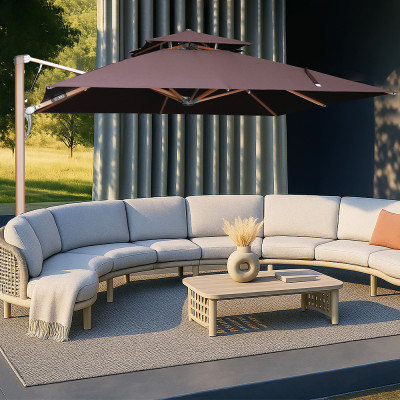
The Best Outdoor Umbrella Brands: What the Leading Names Get Right
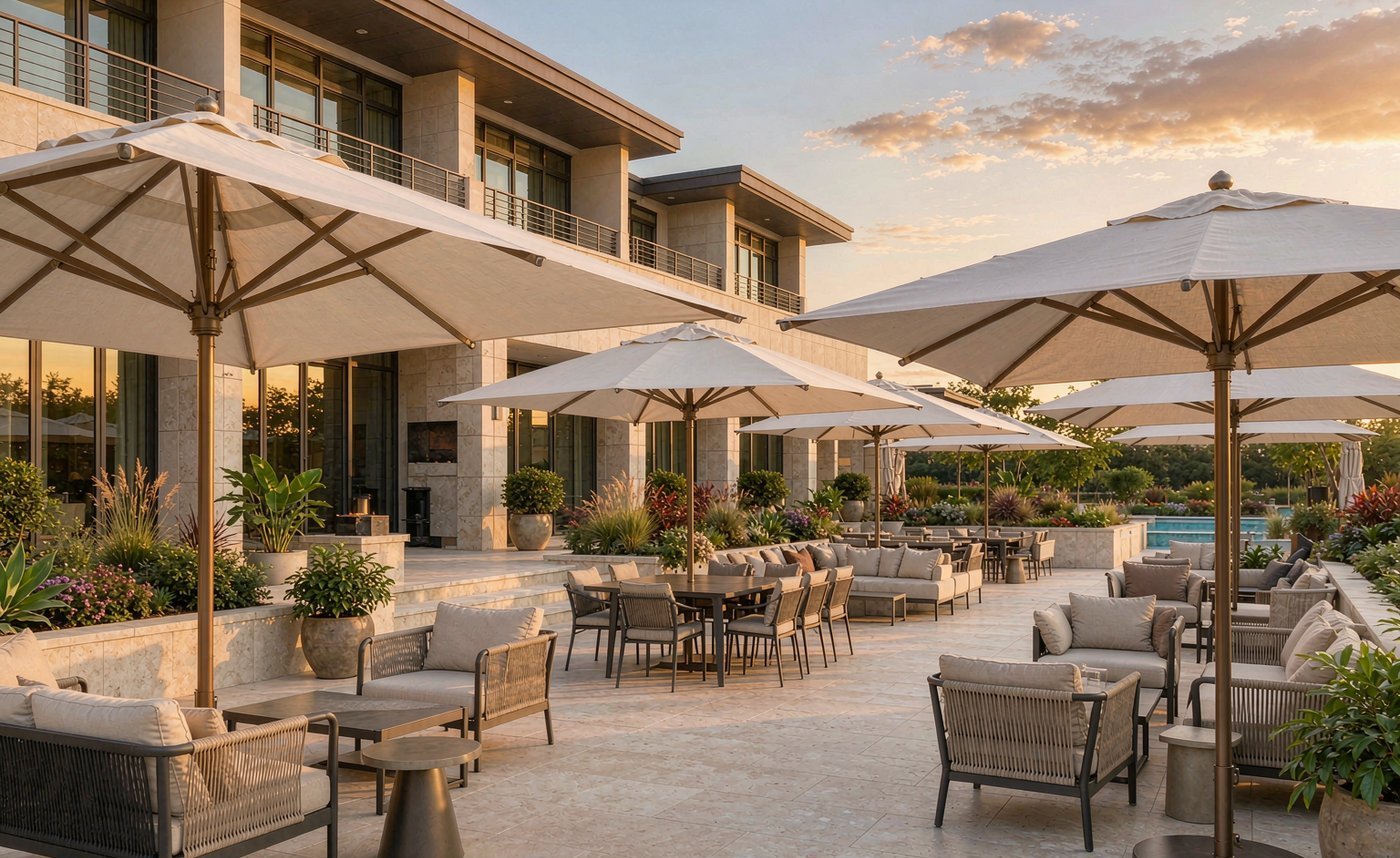
Two outdoor umbrellas can look almost identical from across a terrace. Same canopy size, similar colours, similar aluminium frames, even a similar price on the tag. Yet their performance, durability and day-to-day usability can be completely different.
The real differences are rarely visible from a distance. They live in the pole construction, the rib thickness, the hub design, the opening mechanism, the fabric, the base and the connection details. A good outdoor umbrella is more than a canopy — it is a complete structural system.
This article does not simply rank the best outdoor umbrella brands. Instead, we look closely at four names buyers frequently compare — TUUCI, Treasure Garden, Glatz and Bambrella — and pull out what they actually get right. More importantly, we translate that into the engineering details that decide whether an umbrella performs for one season or ten, so you can apply the same lens to any commercial outdoor umbrella you are evaluating.
How We Look at Outdoor Umbrella Brands
Rather than producing a league table, we score each brand against five dimensions. A premium outdoor umbrella brand does not have to win on all five — different brands have different strengths, and different buyers need different things.
Engineering
Frame construction, pole strength, rib design, hub, joints.
Usability
Opening, closing, rotation, tilt, daily operation.
Materials
Aluminium, stainless steel, bamboo, fabric, coatings.
Design
Traditional, contemporary, architectural, natural.
Commercial Value
Customization, range, parts, hospitality use, OEM/ODM.
TUUCI — When an Outdoor Umbrella Becomes Architecture
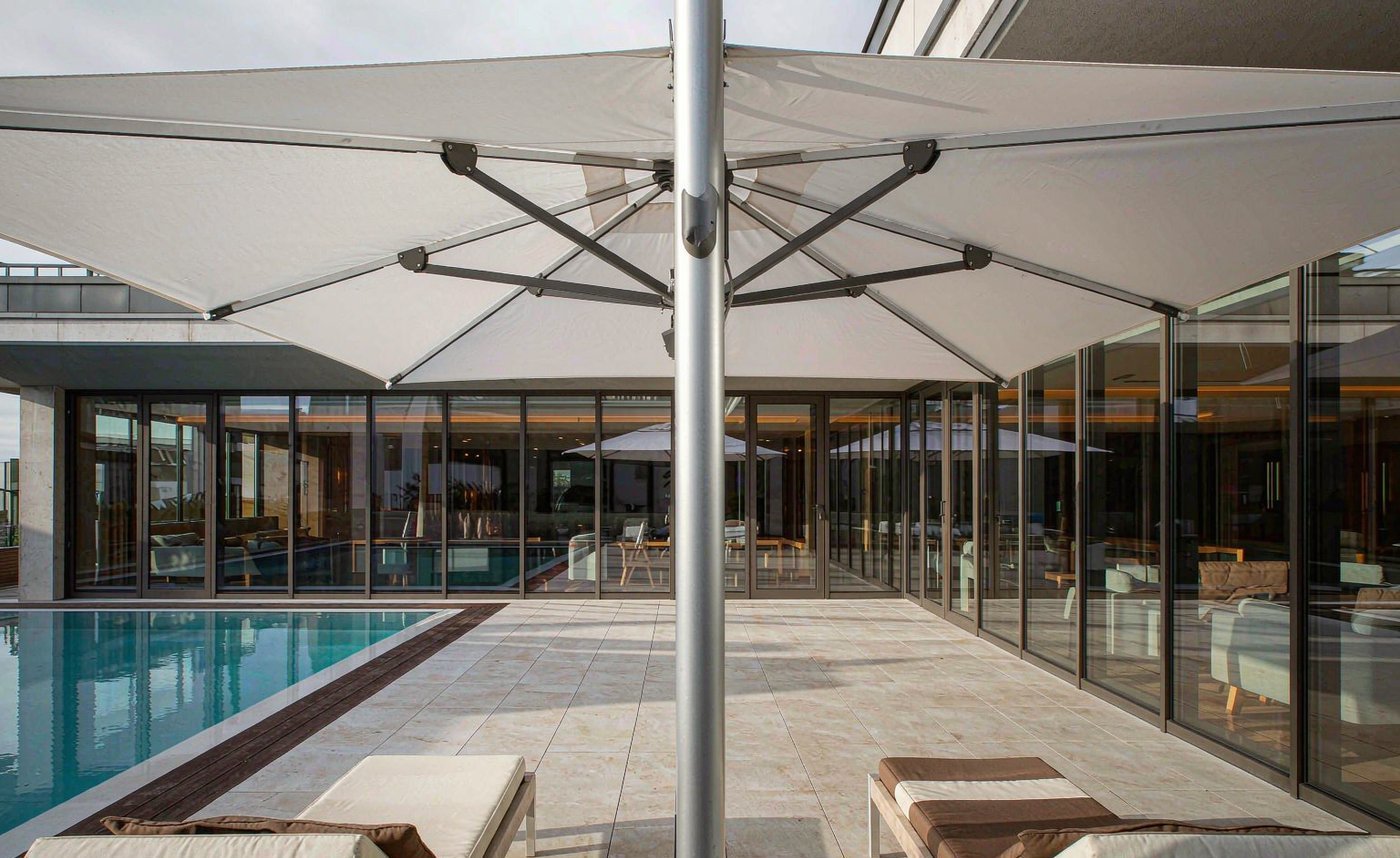
TUUCI sits at the top end of the market, serving premium shade, hospitality, resort, commercial and architecturally designed outdoor spaces. Its positioning is less "patio furniture" and more "outdoor structure."
What Makes TUUCI Different?
1. Structural Engineering
TUUCI builds with aluminium construction, reinforced connections and large-format canopies. The key question a buyer should take away is not "how thick is the pole?" but why does structural engineering matter more as the umbrella gets larger? The bigger the canopy, the more sail area catches wind, and the more load travels through every joint. Engineering is what keeps a 4-metre canopy stable that would rip a lightweight frame apart.
2. Architectural Appearance
Clean lines, a strong vertical mast and a large canopy let these umbrellas sit comfortably beside contemporary buildings — poolside at hotels, on restaurant terraces, in designed public spaces.
3. Customization
Size, shape, finish, fabric, accessories and lighting can all be specified, which is why architects and resort developers specify the brand repeatedly.
What Buyers Can Learn From TUUCI
A commercial umbrella can be part of the architecture rather than simply an accessory. If your project is a landmark space, the frame is a design decision, not a commodity.
Treasure Garden — The Strength of Product Breadth
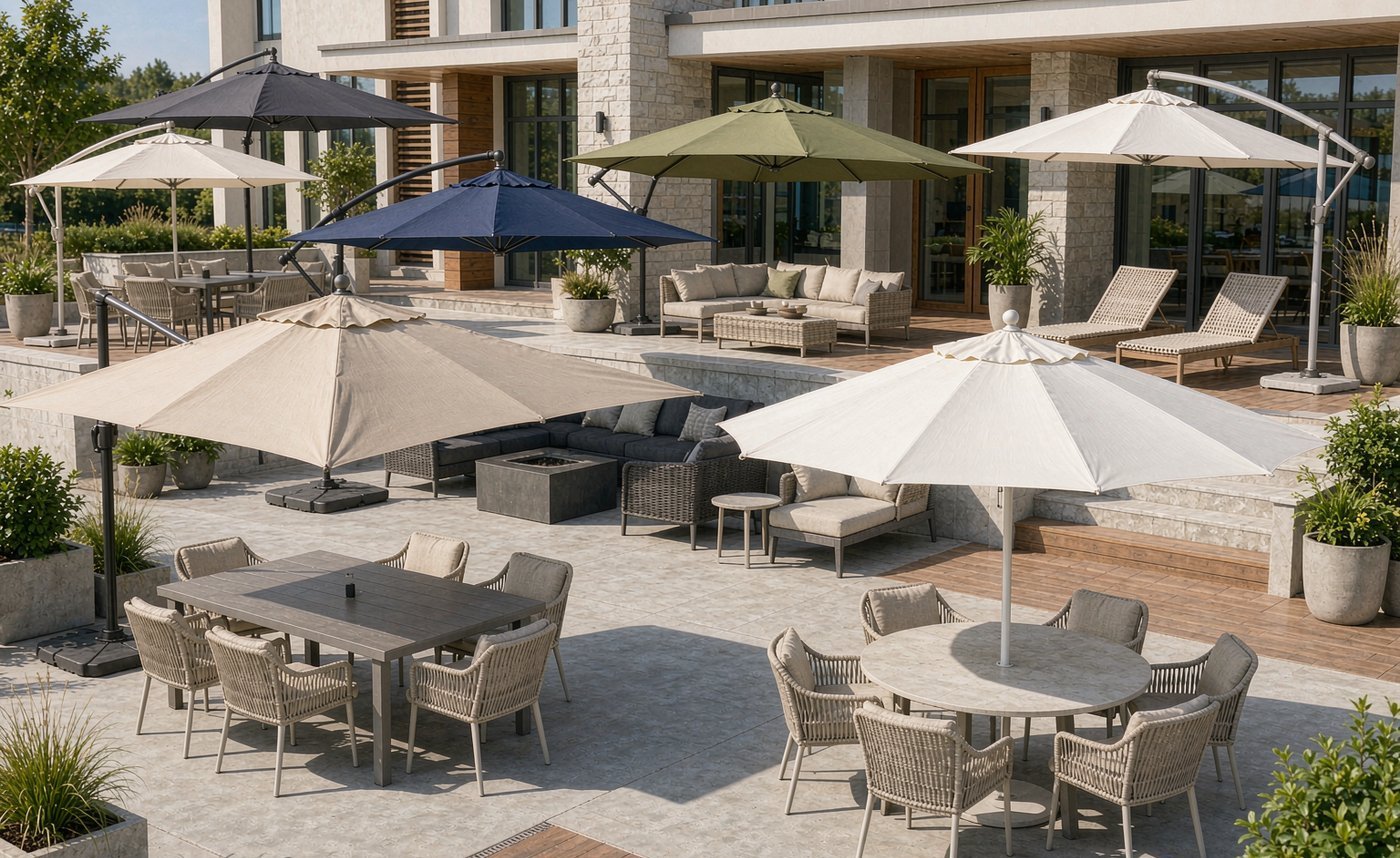
Treasure Garden offers a different definition of "premium" from TUUCI. Not bigger + stronger + more expensive, but more choices + more applications + a more complete product ecosystem.
From Market Umbrellas to Cantilevers
The catalogue spans centre-pole umbrellas, tilt umbrellas, cantilevers, specialty shapes, bases, lighting and accessories. A buyer is rarely stuck choosing between "too basic" and "too bespoke."
Why Product Breadth Matters to Buyers
Homeowners
More choice means a better fit for the exact patio.
Hospitality
Different zones — entrance, pool, dining — can use different products while keeping one supplier.
Retailers / Distributors
A complete SKU ladder is far easier to merchandise and stock than a single hero product.
What Buyers Can Learn From Treasure Garden
A strong outdoor shade supplier does not necessarily sell one perfect umbrella. It provides the right umbrella for different applications — a principle that matters as much for a custom outdoor umbrella programme as for a single purchase.
Glatz — European Engineering Meets Everyday Usability
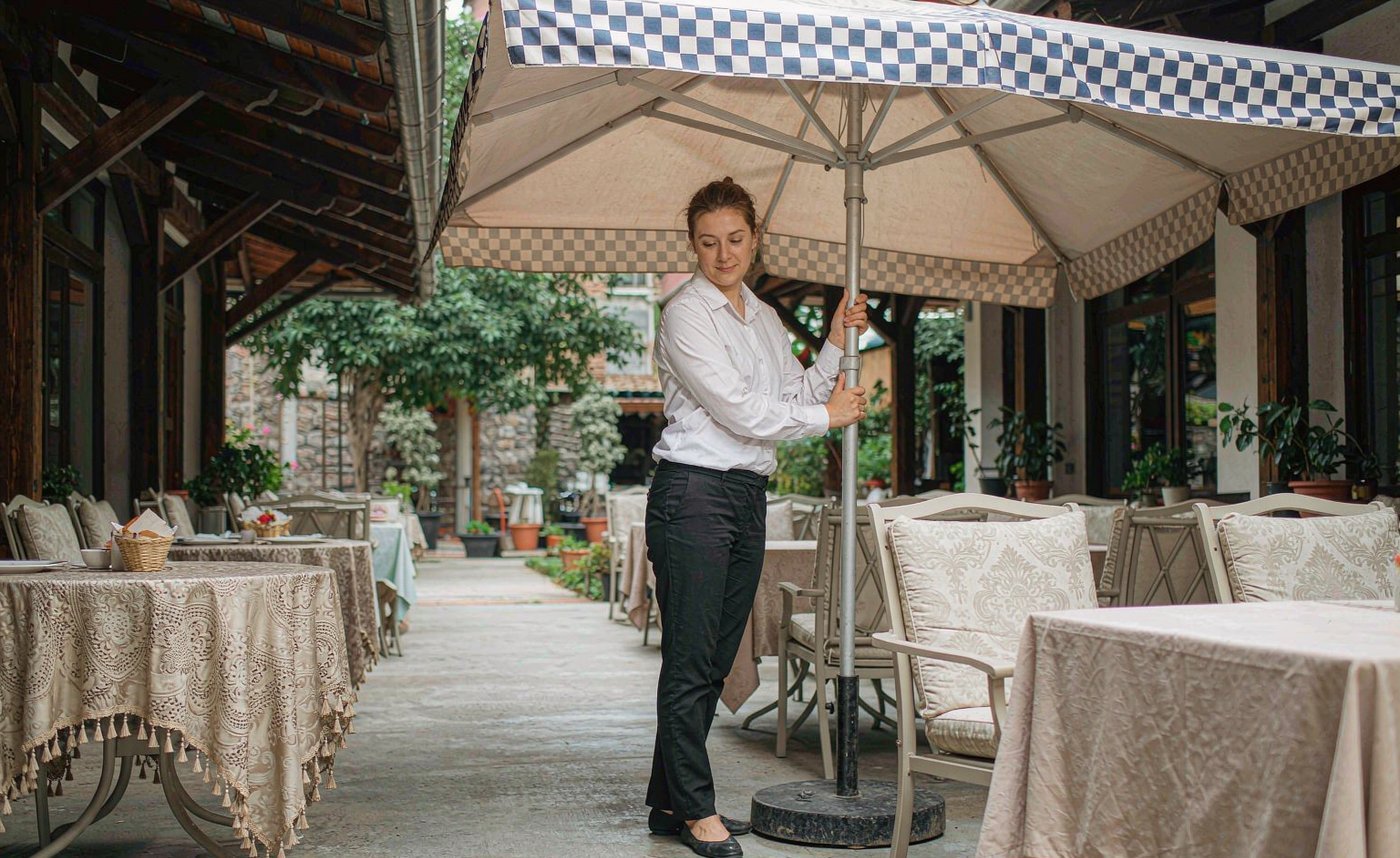
Glatz shifts the conversation from raw strength to experience. A product that is very heavy, hard to open, hard to close and awkward to adjust is not a good product, even if the frame is strong.
The Importance of Daily Operation
Think about a real hospitality day: staff open umbrellas in the morning, adjust position as the sun moves at midday, re-position in the afternoon, and secure or store them in the evening and before bad weather. Every one of those steps is repeated across a season. Friction compounds.
What Should Buyers Look At?
Crank, pulley, joint, tilt mechanism, rotation, handle and locking system. None of these are "details" in a commercial setting — they are the difference between an umbrella staff enjoy using and one they avoid.
What Buyers Can Learn From Glatz
Good engineering should make the product easier to use, not simply more complicated. This is exactly where a smooth opening mechanism — covered later — earns its place.
Bambrella — Strength With a Distinctive Material Identity
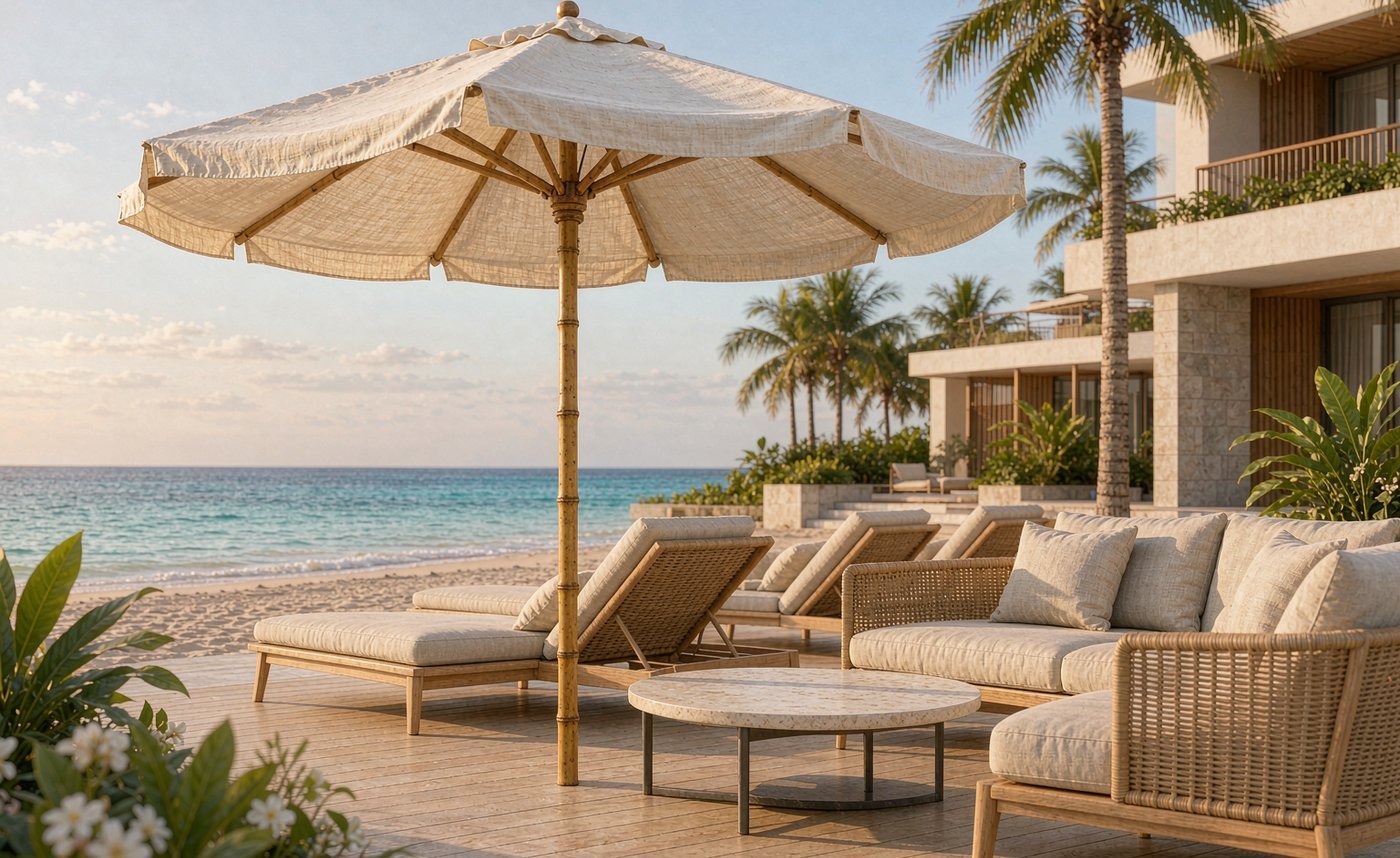
Bambrella builds with bamboo, giving it a warm, natural visual character that is clearly different from industrial aluminium.
Why Bamboo?
Natural appearance, a warm visual character, and a look that sits comfortably in resorts and lifestyle settings rather than stark commercial decks.
Material as a Design Language
The point is not "bamboo is best." It is that materials communicate where a product belongs: aluminium reads contemporary and architectural; bamboo reads natural, resort and lifestyle; dark metal reads modern and commercial. Specifying the wrong material for the venue is a silent mismatch.
Strength and Natural Appearance
Bambrella pairs bamboo with stainless-steel structural components and pulley systems for commercial use — proving natural looks and commercial performance are not mutually exclusive.
What Buyers Can Learn From Bambrella
Commercial performance does not have to result in an industrial-looking product. That idea — that material is a message — is one of the most useful frames in this whole article.
What These Leading Brands Have in Common
Strip the branding away and the leading names agree on three things.
1. They Don't Treat the Umbrella as Just a Canopy
The best products are a system: canopy + frame + ribs + hub + mechanism + base. None of those is an afterthought.
2. They Design for Specific Applications
Different buyers need different priorities. The table below maps application to what actually matters.
| Application | What matters most |
|---|---|
| Residential garden | Design + ease of use |
| Restaurant | Durability + daily operation |
| Hotel | Design + durability |
| Resort | Large coverage + aesthetics |
| Garden centre | Range + price + reliability |
| Commercial project | Engineering + customization |
3. They Think About the Entire Product System
Base, cover, lighting, replacement components, fabric and accessories are all part of the offer — because a frame that lasts ten years is worthless if the part that fails is unavailable.
The Real Difference Is Underneath the Canopy
Pole Construction
Wall thickness drives structural rigidity, deflection under load, wind loading and long-term durability. But the honest statement is: thickness is one factor. Profile geometry, alloy, diameter, connection design and the overall structure matter just as much. A 2.0 mm pole in a well-engineered profile can outperform a careless 2.5 mm one. Quality commercial poles are typically 6063-T5 aluminium with a wall of 2.0–3.0 mm and a diameter of roughly 38–64 mm (1.5–2.5 in), supported by 8–12 ribs.
For manufacturers such as Foris Hortus outdoor umbrellas, these structural details are considered during product development rather than treated simply as marketing specifications.
Hub & Connections
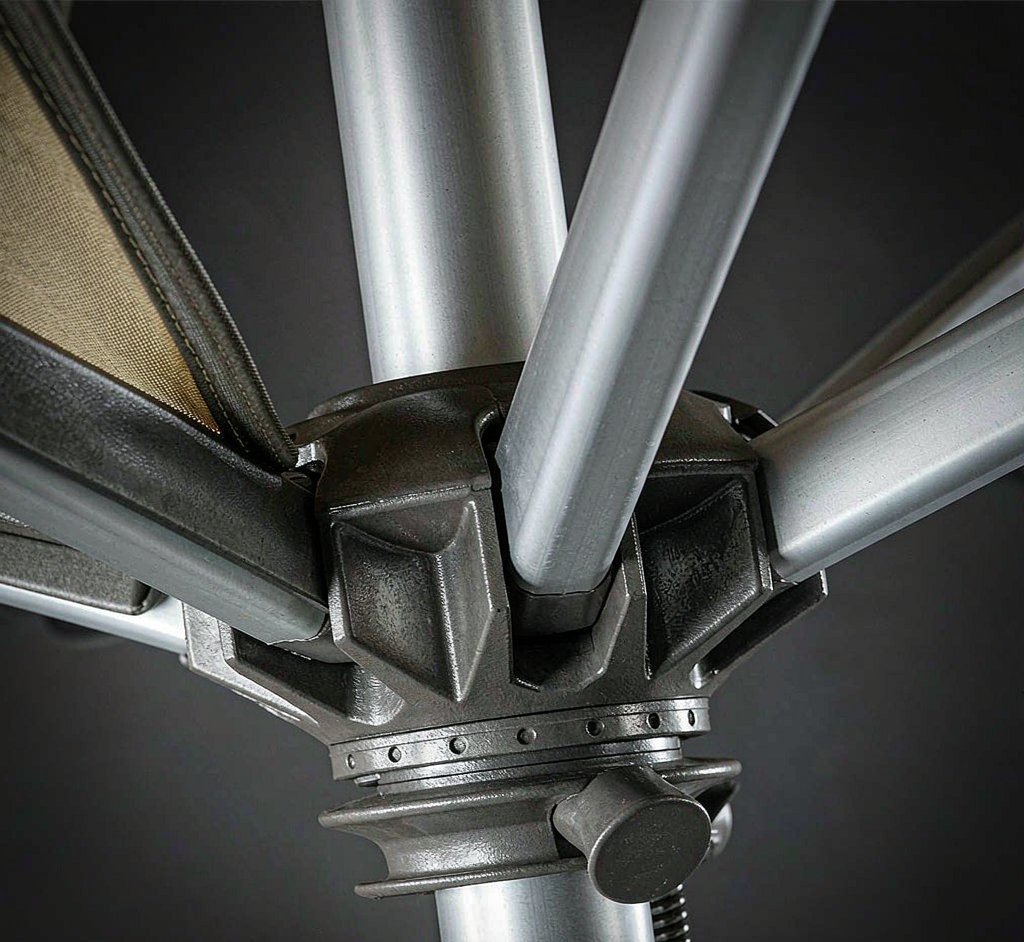
The hub is where every rib meets the mast. Reinforced, corrosion-resistant connections here prevent the most common catastrophic failure: not a bent rib, but a ripped joint. This is why leading brands engineer the hub as a component, not a stamped bracket.
Why the Ribs Matter More Than Most Buyers Think
What Happens When Wind Hits the Canopy?
Wind loads the canopy → the ribs carry it → the hub distributes it → the pole transfers it → the base resists it. Every stage depends on the one before it. Weak ribs turn a breeze into a torn canopy.
Why Rib Design Matters
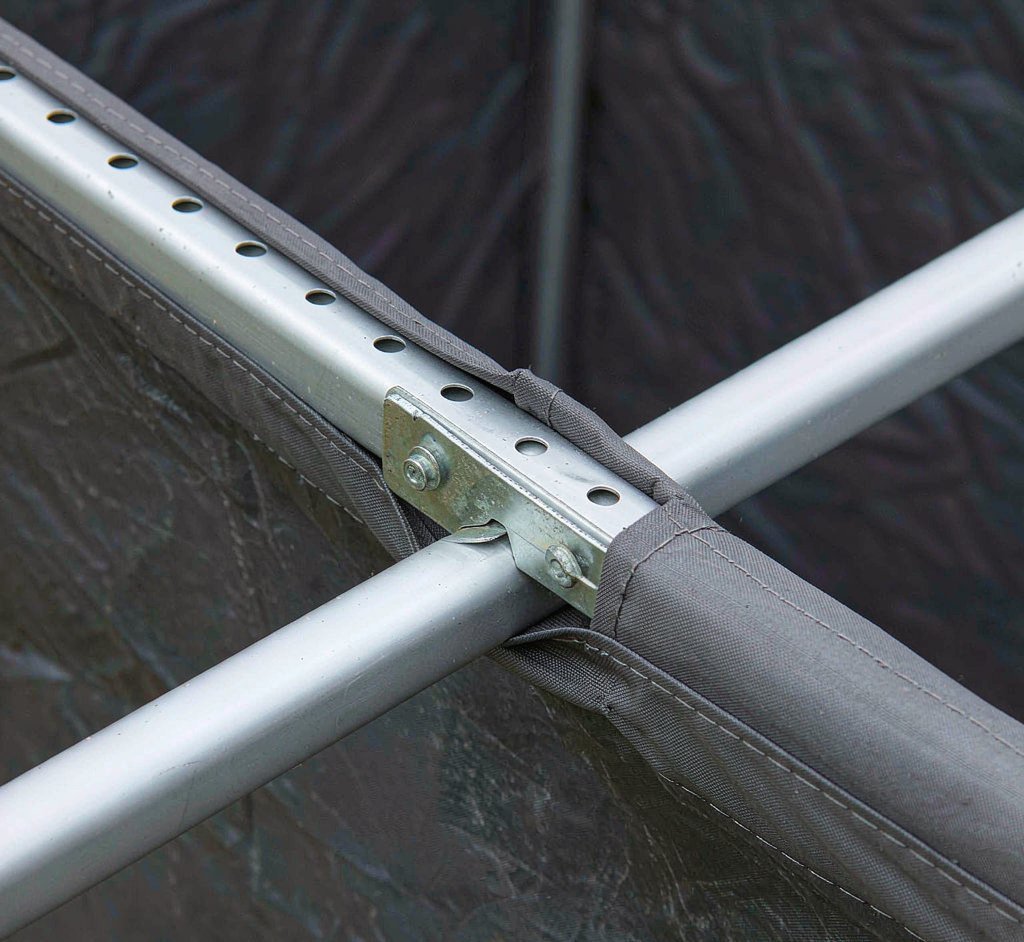
Rib thickness, rib profile, rib spacing, rib flexibility, rib connection, canopy pocket and joint strength all decide how the load travels. Fibreglass ribs, for example, flex and return rather than bend and stay bent — a real advantage in gusty sites.
Thicker Doesn't Always Mean Better
A good rib needs the right balance between rigidity and flexibility. Over-thicken it and weight, cost, mechanism load and manufacturing difficulty all rise. The right question is: is the rib engineered for the intended canopy size and application?
The Opening Mechanism Is More Important Than It Looks
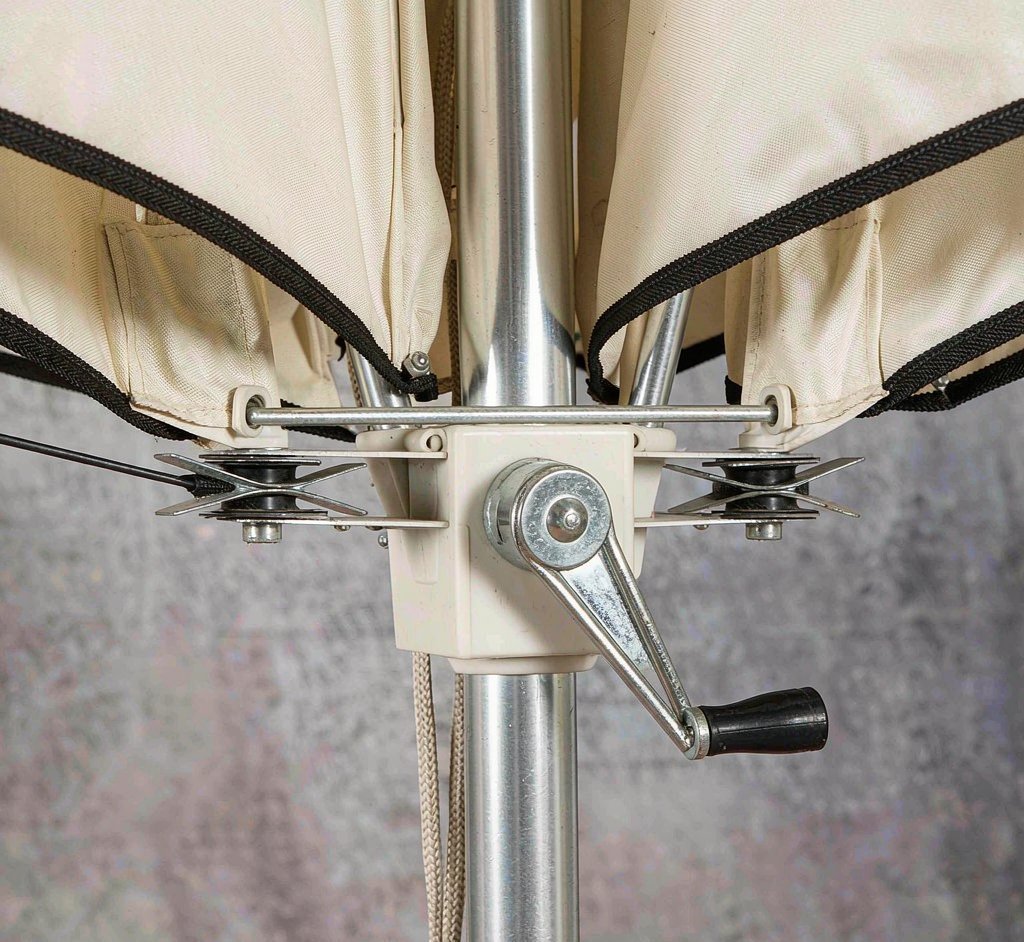
Common Systems
Push-up, crank, single pulley, double pulley and gas-assisted systems each suit different sizes. As the canopy grows, opening force and friction grow with it.
Why Larger Umbrellas Need Better Mechanisms
A smooth opening mechanism is not a convenience — for a 3–4 m commercial canopy it determines whether staff open the umbrella every day or leave it closed. Some Foris Hortus double-pulley umbrella models use double-pulley systems to make larger canopies easier and smoother to operate. The principle is what matters: reduce the force and friction a big canopy creates.
Don't Forget the Canopy Fabric
A frame may last many years, but the fabric is the component most exposed to sun, rain and wear. UV resistance, colour fastness, water resistance, breathability, stitching, canopy pockets and replacement availability all matter — and good brands design for replaceability, not planned obsolescence.
| Fabric type | UV protection | Colour fastness | Typical lifespan | Weight |
|---|---|---|---|---|
| Solution-dyed acrylic | UPF 50+ (blocks ~98% UV)* | Grade 4–5 after 1000h (AATCC 16); minimal change after 2000h (ISO 105-B02) | 5–10+ years | 270–300 g/m² |
| Olefin | UPF 80+* | Good, dye-integrated | ~5 years | 180–210 g/m² |
| Piece-dyed polyester | UPF lower; ~200–300 UV hours | Grade 2–3 after 500h (AATCC 16); fades after ~800h (ISO 105-B02) | 1–3 years | 160–220 g/m² |
*UPF ratings per WHO / Skin Cancer Foundation guidance (UPF 50 blocks 98% of UV; the Skin Cancer Foundation Seal requires UPF 30+). Colour-fastness figures from AATCC Test Method 16 and ISO 105-B02 test regimes.
The Base Is Part of the Umbrella System
A strong umbrella on an undersized base is still an unstable system. Match the base to canopy size, pole height, wind exposure and surface — fixed versus portable, commercial versus residential. Heavy-duty commercial bases commonly run 80–120 lb (36–54 kg), and most manufacturers recommend closing any umbrella once wind reaches about 20–24 mph (Beaufort 4–5).
| Factor | Why it matters |
|---|---|
| Canopy size | Larger sail area = more uplift and leverage on the base. |
| Pole height | Taller mast = longer lever arm in gusts. |
| Wind exposure | Open rooftops need more hold-down than sheltered courtyards. |
| Surface | Decking, pavers and grass each change fixing options. |
| Fixed vs portable | Permanent installs can use heavier, hidden ballast. |
Which Outdoor Umbrella Is Right for You?
For Residential Gardens
Comfort + aesthetics + ease of use. A tilt and a smooth crank turn a small patio into a usable room.
For Restaurants & Cafés
Daily operation + durability + low maintenance. Staff will open and close it constantly, so the mechanism and frame must survive it.
For Hotels & Resorts
Design + large coverage + brand consistency. A uniform umbrella language across pools, terraces and gardens reads as intentional.
For Garden Centres & Retailers
Range + margin + reliability + customization + MOQ. The question is rarely "which umbrella is the most luxurious?" but "which umbrella offers the right combination of retail appeal, reliability and commercial value?" For a retailer or distributor, working with an experienced outdoor umbrella supplier or outdoor umbrella OEM turns a single SKU into a programme.
Where Does Foris Hortus Fit?
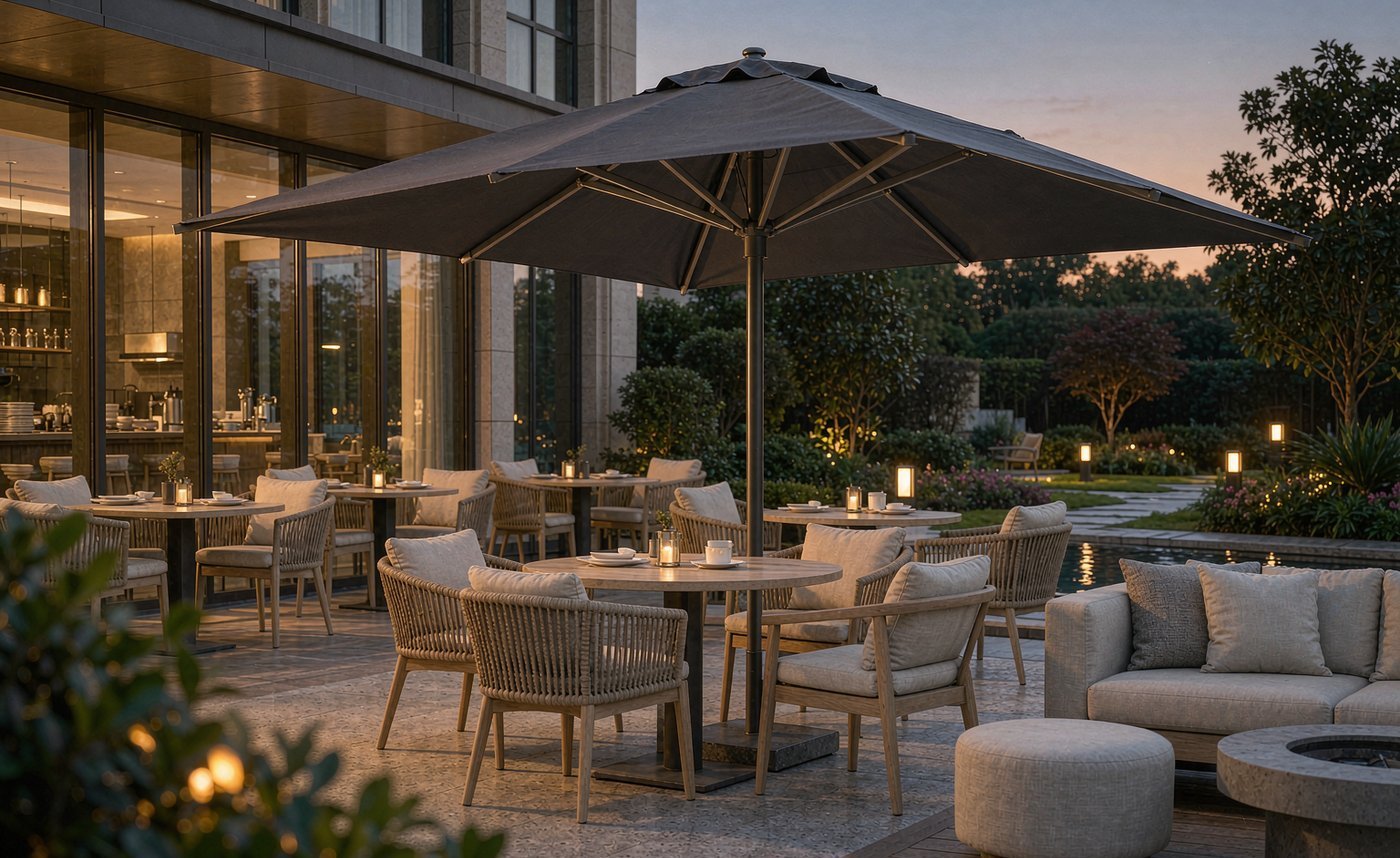
Between entry-level patio umbrellas and highly specialised architectural shade systems, there is a significant middle ground: well-engineered, customizable, commercially practical and contemporary in design. That is the space Foris Hortus occupies. The brand develops a full outdoor umbrella range that pairs structural detail — pole, ribs, hub, double-pulley operation — with the commercial realism garden centres, hotels and restaurant groups actually need, including OEM and ODM support.
A Practical Approach to Outdoor Shade
Structural Design
Pole, ribs and hub are engineered as a system, not separate parts.
Smooth Operation
Double-pulley, crank and considered mechanisms keep large canopies easy to live with.
Commercial Applications
Restaurant, hotel, garden-centre and residential use cases are all supported with appropriate bases and finishes.
OEM & ODM
Dimensions, fabric, colour, branding, structure and accessories can be specified for chain and project buyers — the kind of flexibility a custom outdoor umbrella programme requires.
8 Questions to Ask Before Buying an Outdoor Umbrella
- What is the pole made from, and what is its wall thickness?
- How thick and strong are the ribs, and what profile are they?
- What opening mechanism does it use — push-up, crank, single or double pulley?
- Can components (ribs, hub, fabric, base) be replaced?
- What fabric is used, and what is its UPF and colour-fastness rating?
- Is the base correctly matched to the canopy size and site?
- Is it designed for residential or commercial use?
- Can the supplier customize the product — the question that matters most for B2B buyers.
The Best Outdoor Umbrella Is the One That Fits the Application
Revisiting the four names: TUUCI stands for architectural engineering; Treasure Garden for product breadth; Glatz for engineering plus usability; Bambrella for material identity plus strength. Foris Hortus brings practical engineering, customization and commercial value to the high-demand middle of the market.
There is no single best outdoor umbrella for every environment. The right umbrella is the one whose structure, materials, mechanism and design are appropriate for the way it will actually be used.
Specifying shade for a project? Talk to Foris Hortus.
If you are sourcing commercial outdoor umbrellas for a garden centre, hospitality project or outdoor furniture collection, the fastest route to the right balance of performance, design and cost is to work directly with an experienced outdoor umbrella manufacturer. Tell us your venue type, canopy sizes and branding needs, and our team will return a tailored configuration and lead time.
Sources & Further Reading
- TechSci Research, Global Outdoor Furniture Market – Size, Share & Forecast 2024–2030: USD 23.13 bn (2024) → USD 32.65 bn (2030), CAGR 5.95%.
- Furniture Business Insights, Outdoor Furniture Market Size & Share Analysis: USD 53.27 bn (2024) → USD 81.44 bn (2032), CAGR 5.50%.
- World Bank, Urban population (% of total), 2024: ~58%.
- WHO / Skin Cancer Foundation: UPF 50 blocks ~98% of UV; Seal requires UPF 30+.
- AATCC Test Method 16 & ISO 105-B02: solution-dyed acrylic vs piece-dyed polyester colour-fastness regimes.
- MakeItFrom.com material data: bamboo tensile strength 115–370 MPa; 6061-T6 aluminium 310 MPa.
- Ghavami et al., studies on bamboo tensile-to-weight ratio: bamboo 2.77 vs aluminium 1.79.
- North Queensland cluster RCT, Cancers (2023), 25 childcare centres, 3.5 years: UPF 30–50+ clothing covering ≥ half the body → 24.3% fewer new melanocytic nevi.
- Industry wind-rating practice: premium commercial umbrellas wind-tunnel tested to 100–120 km/h (Beaufort 10); standard ~50 km/h; quality poles 6063-T5, wall 2.0–3.0 mm.