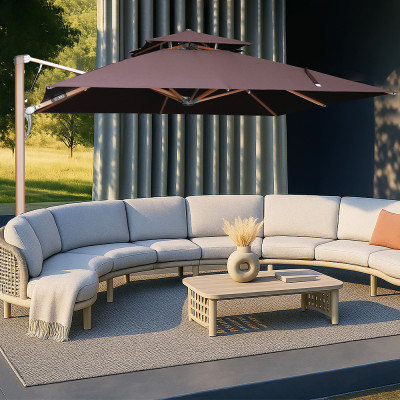
What to Look For in a Commercial Patio Umbrella for High Wind Coastal Areas
As someone who has seen the challenges of maintaining beautiful and functional outdoor spaces, I understand that selecting the right commercial patio umbrella for high-wind coastal areas is a critical decision. This isn't merely about providing shade; it's about making a strategic investment that guarantees guest comfort, enhances your establishment's appeal, and withstands the relentless force of nature. At Foris Hortus, we believe in providing solutions that are both elegant and enduring.
Commercial patio umbrellas are engineered specifically for demanding, high-traffic environments and are constructed to last, setting them apart from their residential counterparts. This comprehensive guide will navigate you through the essential features, materials, and considerations to ensure your commercial patio umbrella stands defiant against coastal gales, delivering lasting value and peace of mind.
The umbrella, a term originating from the Latin word "umbra," meaning "shade" or "shadow," has journeyed through history, evolving from a simple sunblock into a sophisticated and indispensable structure for outdoor commercial venues. This is especially true for businesses nestled in the beautiful yet challenging high-wind regions along our coasts.
Key Takeaways
Choosing a commercial patio umbrella for a windy coastal location requires careful consideration of specific features designed for durability and stability. Here are the most critical points to keep in mind:
- Fabric is Key: Opt for solution-dyed acrylic or polyester fabrics like Sunbrella or Olefin. These materials are exceptionally resistant to fading from sun exposure and are strong enough to handle significant wind stress.
- Venting is Non-Negotiable: A single or double wind vent in the canopy is essential. Vents allow wind to pass through, reducing pressure on the canopy and frame, which prevents the umbrella from lifting or being damaged.
- Frame Material Matters: Fiberglass ribs offer the best flexibility and are less likely to snap or bend permanently in strong gusts compared to aluminum. For the pole, thick-gauge, powder-coated aluminum provides a strong, corrosion-resistant backbone.
- A Heavy Base is the Foundation: Never underestimate the importance of the base. For freestanding umbrellas, use a very heavy base (100 lbs or more, depending on canopy size) or a fillable base with sand or water.
- Mounting for Maximum Security: For ultimate stability in the windiest areas, fixed mounting options are superior. In-ground mounts, which concrete the pole base into the ground, or deck/surface mounts bolted directly to a solid structure, provide the most secure foundation.
- Prioritize Simplicity: While features like tilting and 360-degree rotation are convenient, they can introduce weak points in the frame. For high-wind environments, a robust, non-tilting umbrella often provides better long-term durability.
Unpacking the Anatomy of a Resilient Commercial Patio Umbrella for High Wind Coastal Areas
A commercial patio umbrella is more than just a style statement; it's a structural element engineered for performance. In high-wind coastal zones, where salty air and strong gusts are a daily reality, not just any umbrella will do. True wind resistance comes from a synthesis of intelligent design, robust materials, and steadfast anchoring systems. Understanding the anatomy of a wind-resistant umbrella is the first step in making a wise purchase for your hotel, resort, or restaurant. The frame, canopy, and hardware must all work in harmony to defy the elements.
Canopy Innovations: Fabric and Vents that Defy the Wind
The canopy is an umbrella's first line of defense against both sun and wind. For commercial use in coastal areas, its design and material are paramount. It must resist fading under intense UV exposure, repel saltwater, and manage powerful wind gusts without tearing or causing the umbrella to become a dangerous projectile.
The Power of Solution-Dyed Fabrics
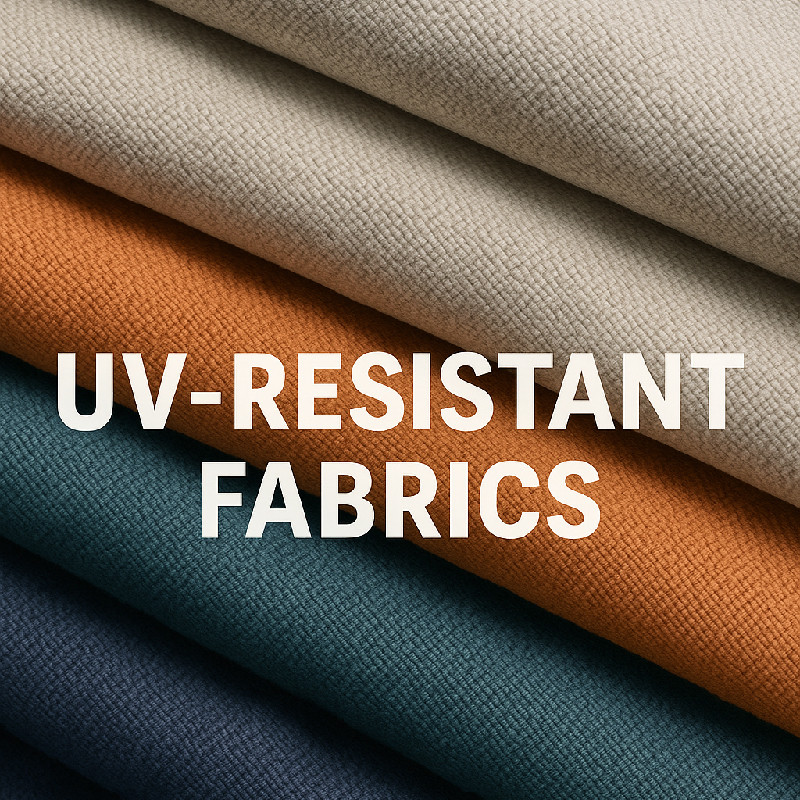
Not all outdoor fabrics are created equal. The longevity and appearance of your umbrella canopy hinge on the type of fabric used and, just as importantly, the dyeing process. For demanding commercial environments, solution-dyed fabrics are the undisputed champion.
Unlike traditional piece-dyed fabrics where color is applied only to the surface, the solution-dyeing process infuses color pigment into the very core of the fibers before they are spun into yarn. This means the color is integral to the fiber itself, granting exceptional resistance to fading from sun exposure and wash-out from rain.
Here's a comparison of the most common high-performance fabrics:
| Fabric Type | Key Characteristics | Best For |
|---|---|---|
| Solution-Dyed Acrylic (e.g., Sunbrella®) | Considered the gold standard for outdoor textiles, offering superior fade and UV resistance (blocking up to 98% of harmful rays), excellent water resistance, and a soft, breathable feel. It is also highly resistant to mold and mildew and can even be cleaned with bleach. | High-end commercial venues, coastal areas with intense sun, and any application where longevity and retaining vibrant color are top priorities. |
| Solution-Dyed Polyester (e.g., Terylast, Obravia®) | A strong mid-tier option that offers a great balance of cost and quality. It is more affordable than acrylic, provides good UV protection and water resistance, and has improved color retention compared to standard polyester. | Businesses looking for a durable, fade-resistant option that is more budget-friendly than premium acrylics. |
| Olefin (Polypropylene) | Known for its strength, stain resistance, and excellent water resistance, making it quick to dry and highly resistant to mildew. While its color and texture options may be less varied than acrylic, it holds color well and offers great durability. | Humid climates or poolside locations where moisture and mildew are a primary concern. |
In our experience at Foris Hortus, investing in a premium solution-dyed acrylic fabric like Sunbrella pays dividends over the long term. Under the harsh conditions of coastal sun and salty air, its ability to retain color and structural integrity for up to a decade is a significant advantage over polyesters, which may only last a couple of years in the same environment.
The Role of Wind Vents in a Commercial Patio Umbrella
A solid, non-vented canopy acts like a sail in the wind, catching gusts and creating immense upward pressure that can lead to the umbrella tipping over, flipping inside out (inverting), or suffering catastrophic frame damage. This is where wind vents become one of the most crucial safety and stability features.
A vented umbrella features a double-canopy design, with openings that allow air to flow through the structure. This simple but ingenious feature accomplishes several things:
- Pressure Equalization: By allowing wind to pass through the vents, the pressure differential between the top and bottom of the canopy is significantly reduced. This dramatically improves stability and prevents the "balloon effect" that causes umbrellas to lift off the ground.
- Increased Stability: With less resistance, the entire structure—from the ribs to the pole and base—is subjected to far less stress during windy conditions, reducing the risk of bending or breaking.
- Improved Comfort: Vents also provide a pathway for hot air trapped under the canopy to escape, promoting better air circulation and creating a cooler, more comfortable environment for your guests on warm days.
For most commercial applications, a single-vented canopy is a minimum requirement. However, for high-wind coastal regions, double-vented or even three-tiered canopies are highly recommended. These designs offer even greater airflow, making them exceptionally stable in gusty conditions. The layered aesthetic also adds a touch of elegance to the umbrella's design.
Robust Framework: Poles and Ribs Built for Coastal Extremes
If the canopy is the sail, the framework is the mast and rigging. In a high-wind environment, the pole and ribs bear the brunt of the forces exerted on the canopy. A weak frame will quickly bend, snap, or corrode, rendering the umbrella useless and unsafe. For this reason, investing in superior frame materials is not just a recommendation; it is a necessity for coastal applications. From the main pole that provides vertical strength to the ribs that give the canopy its shape and the smaller hardware that holds it all together, every component must be chosen for maximum resilience.
Material Matters: Aluminum vs. Fiberglass for Commercial Patio Umbrellas
The two dominant materials for high-performance commercial umbrella frames are aluminum and fiberglass, each offering distinct advantages. Wood can be a beautiful option but is generally less suited for high-wind coastal areas as it can rot or snap and requires more maintenance.
For the Pole: The central pole is the backbone of the umbrella. For this component, heavy-gauge, powder-coated aluminum is the superior choice. Look for poles with thick walls (e.g., .080 inches or greater) that resist bending. A powder-coated finish is crucial as it creates a durable barrier against moisture and salt, preventing the corrosion and rust that can plague lesser metals. Marine-grade aluminum offers an even higher level of corrosion resistance due to its specific alloy composition. While some manufacturers offer full fiberglass poles, which are non-conductive and rust-proof, heavy-duty aluminum generally provides the best combination of rigidity, strength, and corrosion resistance for the main support structure.
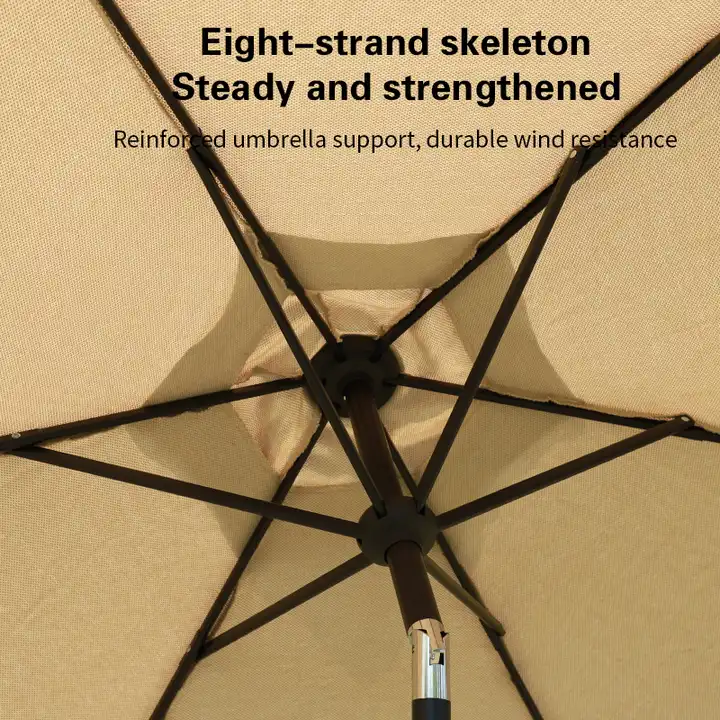
For the Ribs: The ribs provide the shape of the canopy and are under constant tension, especially in windy conditions. This is where fiberglass truly shines.
- Flexibility: Unlike aluminum, which can bend and stay bent, or steel, which can snap, fiberglass ribs are designed to be flexible. They can bend under a strong gust of wind and then return to their original shape without breaking. This "flex and forgive" characteristic makes them significantly more durable and four to five times longer-lasting than metal or wood ribs.
- Durability: Fiberglass is non-corrosive, impervious to rust and rot, and resistant to the harsh effects of salt air, making it the ideal rib material for coastal environments.
- Lightweight Strength: Pound for pound, fiberglass is tougher than sheet metal yet is also lightweight, reducing the overall top-heaviness of the umbrella.
Many of the best commercial umbrellas combine these materials, using a heavy-duty aluminum pole for unshakable core strength and flexible fiberglass ribs to absorb wind stress.
Here is a quick comparison of frame materials for commercial umbrellas:
| Material | Best For | Pros | Cons |
|---|---|---|---|
| Fiberglass | Ribs | Extremely flexible (bends, doesn't break), non-corrosive, lightweight, highly durable. Lasts 4-5x longer than other materials. | Higher initial cost. |
| Aluminum | Pole | Strong and rigid, lightweight, corrosion-resistant (especially when powder-coated or marine-grade), affordable. | Can bend permanently under extreme force if not thick enough. |
| Wood | Aesthetics | Classic, natural appearance. | Can rot, warp, or snap in coastal conditions; requires regular maintenance. Not ideal for high wind. |
| Steel | Budget | Strong and budget-friendly. | Prone to rust if not properly treated, lacks flexibility. |
Hubs and Other Resilient Components
While poles and ribs are the main event, the smaller ancillary parts, often called hardware, are just as critical for long-term durability. In a commercial-grade umbrella, these components are never an afterthought.
- Hubs and Runners: The hub is the part at the top of the umbrella where the ribs connect, and the runner is the piece that slides up and down the pole to open and close the canopy. On high-quality umbrellas, these are made from heavy-duty molded nylon or solid resin, which are impact-resistant and won't become brittle over time.
- Finials and End Tips: The finial is the decorative cap that sits atop the umbrella, and the end tips (or pockets) are where the canopy attaches to the end of each rib. Solid resin finials and reinforced, multi-layer canopy pockets ensure these common failure points are fortified against wind stress.
- Hardware: All connecting hardware, including screws, bolts, and pulley system components, should be made of stainless steel. This material offers superior strength and is highly resistant to the corrosive effects of salt and moisture, ensuring smooth operation for years.
When selecting an umbrella from a provider like Foris Hortus, always inquire about these "minor" components. Their quality is a tell-tale sign of a truly commercial-grade product built to last.
Seamless Operation: Lift, Tilt, and Rotation for a High Wind Commercial Patio Umbrella
A well-built commercial umbrella should not only be strong but also easy for your staff to operate. Features that provide adjustability—such as lifting, tilting, and rotation—can enhance guest comfort by allowing shade to be repositioned as the sun moves. However, in high-wind coastal areas, these convenience features must be evaluated through the lens of durability, as every moving part can potentially become a weak point.
Choosing the Right Lifting Mechanism for Your Commercial Patio Umbrella
The lifting mechanism is what allows staff to open and close the umbrella. For a commercial setting, the system must be reliable, easy to use, and robust enough to handle frequent operation. There are three primary types to consider.
| Lift Mechanism | Description | Best For | Pros & Cons |
|---|---|---|---|
| Manual Push-Up & Pin | The most basic system. Staff manually push the central hub up the pole until the canopy is open, then insert a pin through the pole to lock it in place. | High-traffic commercial settings where ultimate durability is the priority. | Pros: Most durable option with the fewest moving parts, reducing points of failure. Low maintenance. Cons: Can be physically demanding to open, especially on larger umbrellas. |
| Pulley & Pin | A rope and pulley system assists with raising the heavy canopy. The user pulls the rope to open the umbrella and secures it with a pin. | Large and heavy commercial umbrellas where some mechanical assistance is needed. | Pros: The pulley provides mechanical advantage, making it easier to lift heavy canopies. Very reliable and durable. Cons: The rope can be a potential hazard if not properly secured and may wear over time. |
| Crank Lift | A handle on the pole is turned to open and close the umbrella via an internal cord system. Crank lifts are very user-friendly. | Residential use or commercial settings with lower wind-risk where ease of use is paramount. | Pros: Easiest to operate, requires minimal physical effort. Cons: Most complex mechanism with internal cords that can stretch, tangle, or break with heavy commercial use, especially if over-cranked. Adds a potential failure point in high-wind environments. |
Recommendation for High-Wind Areas: For most coastal businesses, simplicity equates to longevity. A pulley and pin or a manual push-up system is highly recommended. These mechanisms are significantly more durable and have fewer components that can fail under the stress of high winds compared to a crank system. While a crank lift offers convenience, it is often the first part to break on a commercial umbrella and can be costly to repair.
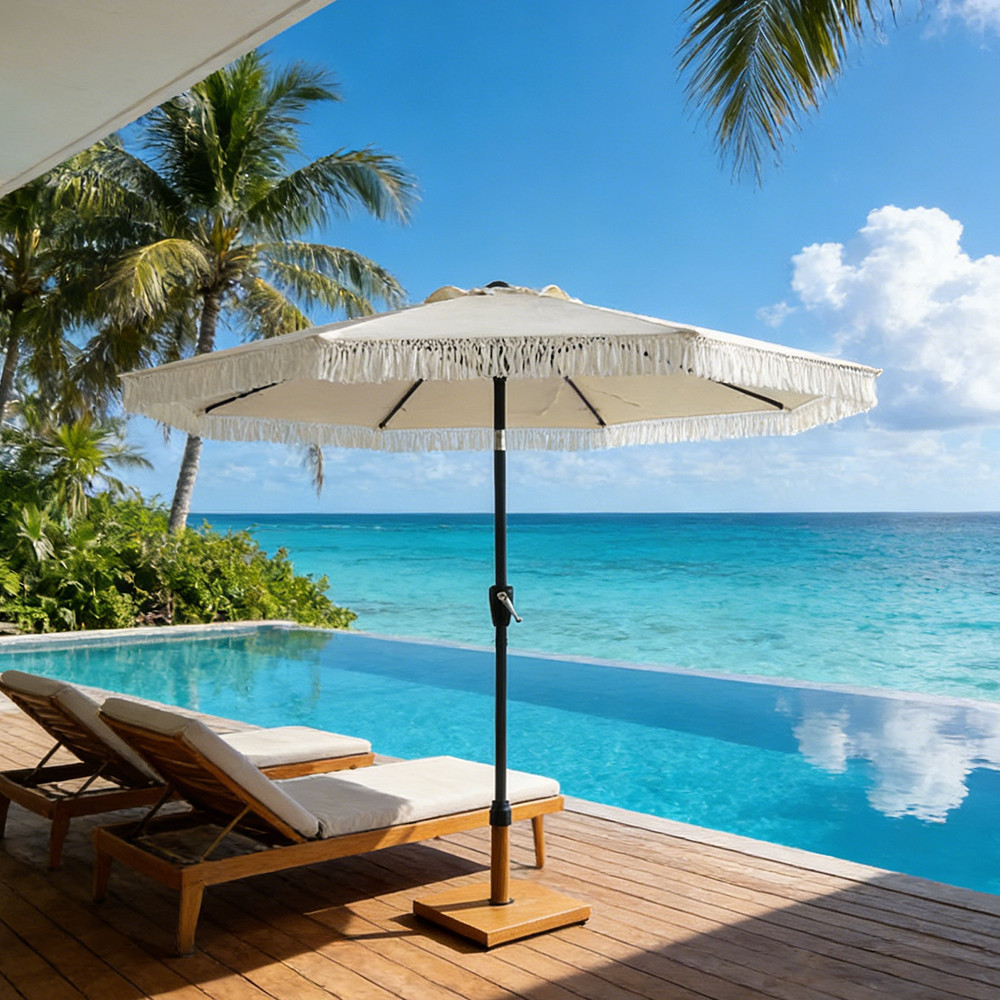
The Advantage of Tilting and 360-Degree Rotation in High Wind Coastal Areas
The ability to adjust the angle and direction of the canopy can dramatically improve an umbrella's utility, allowing for continuous shade as the sun arcs across the sky.
Tilting Mechanisms: A tilt feature allows the canopy to be angled, blocking low-angle morning or afternoon sun. Common types include push-button tilts (simple, but can wear out) and crank tilts (more precise but also more complex). However, for high-wind coastal areas, a tilting mechanism is generally discouraged. Angling the canopy creates an uneven surface that can catch the wind like a sail, putting immense stress on the pole, ribs, and tilt joint itself. This significantly increases the risk of damage. In these environments, it is safer to prioritize a stronger, fixed frame and move the umbrella itself if needed.
360-Degree Rotation: This feature is most commonly found on cantilever (offset) umbrellas. A mechanism at the base allows the entire mast and canopy assembly to rotate a full 360 degrees, often with the press of a foot pedal. This is incredibly useful, as a single umbrella can be repositioned to shade multiple areas—such as a dining set and a nearby lounge area—throughout the day without moving the heavy base.
- Cantilever vs. Center Pole in Wind: Center-pole umbrellas are inherently more stable in wind due to their symmetrical design and central point of gravity. Cantilever umbrellas, with their offset design, are more susceptible to wind forces and require much heavier bases or permanent mounting to achieve stability.
Verdict for Coastal Use: While 360-degree rotation on a cantilever umbrella offers fantastic flexibility, it must be paired with an exceptionally robust frame and a securely mounted base to be viable in a coastal setting. For the absolute best wind performance, a non-tilting, center-pole umbrella remains the most structurally sound option. If you opt for a cantilever model from a trusted brand like Foris Hortus, ensure it is specifically rated for high winds and installed correctly. And remember the number one rule of commercial umbrellas: if winds become severe, or when the umbrella is not in use, it should always be closed and secured.
The Foundation of Stability: Selecting the Ideal Base for Your Commercial Patio Umbrella in High Wind Coastal Areas
An umbrella is only as stable as its foundation. In high-wind coastal areas, the base is arguably the most critical component for ensuring safety and preventing your investment from becoming a "tumbling Mary Poppins poltergeist" in the first gust of wind. Underestimating the base weight is the single most common and dangerous mistake. An inadequate base will allow the umbrella to tip, causing potential injury to guests and damage to property.
Freestanding Bases: Weight and Mobility Considerations for Commercial Patio Umbrellas
A freestanding base is a movable weight that allows the umbrella to stand on its own, offering flexibility in placement. Even if an umbrella is placed through a hole in a patio table, it still requires a properly weighted base for support. The table itself is not sufficient to secure an umbrella against wind.
How to Determine the Right Weight: The golden rule for selecting a base weight is to plan for a minimum of 10 pounds of base weight for every foot of the umbrella's canopy diameter. For windy coastal areas, you should increase this recommendation significantly.
- Baseline Calkculation:
Canopy Diameter (ft) x 10 = Minimum Base Weight (lbs) - High-Wind Adjustment: Add at least 20-50% more weight to the baseline calculation for coastal or open, windy locations. For freestanding umbrellas, always err on the side of a heavier base.
Here is a general guide for freestanding, center-pole umbrellas in windy locations:
| Canopy Diameter | Through-Table Minimum Base Weight | Freestanding Minimum Base Weight (Windy Area) |
|---|---|---|
| 7.5 ft | 50 lbs | 90+ lbs |
| 9 ft | 75 lbs | 110+ lbs |
| 11 ft | 95 lbs | 130+ lbs |
| 13 ft | 110+ lbs | 150+ lbs |
Note on Cantilever Umbrellas: Due to their offset design, cantilever umbrellas require substantially heavier bases. An 11-foot cantilever model may need a base weighing 220 lbs or more to remain stable.
Types of Freestanding Bases:
- Solid Bases: Made from materials like solid steel, granite, or pre-filled concrete, these are heavy, durable, and ready to use. They often have a sleek, low-profile design ideal for fitting under tables.
- Fillable Bases: These bases are made of high-density plastic or resin and are sold empty to reduce shipping costs. They are filled on-site with water or, preferably, sand. Sand is denser and provides more weight for the same volume, offering better stability.
- Bases with Wheels: For heavy bases that need to be moved frequently, models with built-in wheels are a worthwhile investment, saving staff from back strain and preventing damage to patio surfaces.
Fixed Mount Options: Permanent Solutions for Commercial Patio Umbrellas
For the ultimate in wind resistance and stability, nothing beats a fixed mounting solution. These permanent or semi-permanent options anchor the umbrella directly to the ground or a structural surface, making them nearly impossible to tip over. They are the professional's choice for commercial venues in high-risk wind zones.
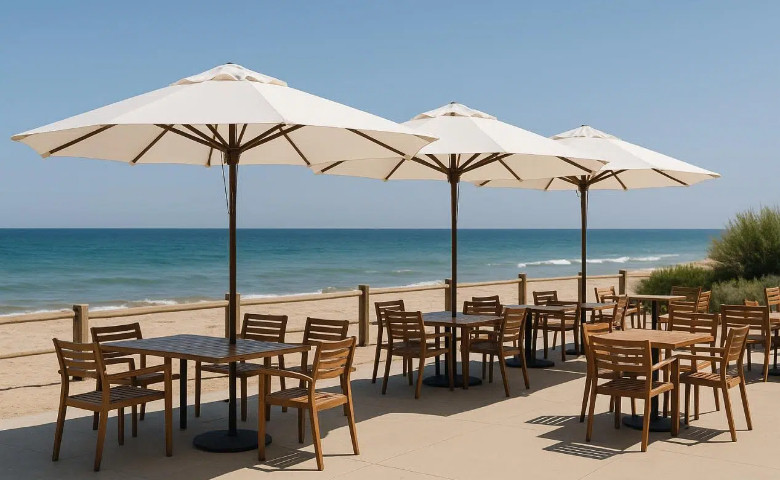
There are two primary types of fixed mounts:
In-Ground Mounts: This is the most secure option available. An in-ground mount involves setting a steel foundation sleeve into a hole and securing it permanently with concrete. The umbrella pole then fits into this sleeve. This creates an unshakable foundation that is perfect for permanent installations on restaurant patios, pool decks, or any area where the umbrella's position is fixed. The sleeve can often be capped when the umbrella is removed, leaving a flush, safe surface.
Surface Mounts: A surface mount uses a heavy-duty steel plate that is bolted directly onto an existing solid surface, like a concrete slab or a structurally sound wooden deck. For wood decks, the bolts should go all the way through and be secured with a backing plate underneath for maximum strength. This method provides exceptional stability while saving valuable floor space compared to a bulky freestanding base, making it a great semi-permanent solution for high-traffic areas.
For any commercial establishment in a high-wind coastal area, a provider like Foris Hortus would strongly recommend a fixed mount solution. While freestanding bases offer mobility, the peace of mind and superior safety provided by an in-ground or surface-mounted umbrella are invaluable in protecting your property and your patrons.
Maximizing Lifespan: Care and Accessories for Your Commercial Patio Umbrella in High Wind Coastal Areas
A high-quality commercial patio umbrella is a significant investment. To protect that investment and ensure it provides many years of reliable service, a proactive approach to care and maintenance is essential, especially in the demanding coastal environment. Salt, sand, sun, and humidity can take their toll, but with routine cleaning and the use of smart accessories, you can dramatically extend the life and appearance of your umbrellas.
Essential Cleaning and Maintenance for Commercial Patio Umbrellas
Performing regular inspections and cleanings will not only keep your outdoor spaces looking pristine but also allow you to catch small issues before they become major problems. A simple maintenance schedule is the key to longevity.
Routine Cleaning (Monthly):
- Brush and Rinse: Start by using a soft-bristle brush to sweep away any loose dirt, dust, cobwebs, or bird droppings from the dry canopy. If you can't remove the canopy, a vacuum cleaner can also be effective. Then, simply hose down the entire umbrella, from the top of the canopy to the base, with cool water. For premium fabrics like Sunbrella, this monthly rinsing is often enough to prevent grime from becoming deeply embedded.
- Frame Wipe-Down: Wipe down the pole and any exposed frame parts with a cloth and a solution of mild soap and water. This is crucial in coastal areas to remove salt deposits that can accelerate corrosion.
- Dry Completely: Always allow the umbrella to air dry completely in the open position before closing it. Trapping moisture can lead to mildew growth and unpleasant odors.
Spot or Deep Cleaning (As Needed): For more stubborn stains or mildew growth, a more thorough cleaning is required.
- Prepare a Cleaning Solution: Create a solution of mild soap (like a dishwashing liquid) and lukewarm water. A common recipe is about ¼ cup of soap per gallon of water. Avoid harsh detergents, which can damage the fabric's protective coating.
- Scrub and Soak: Apply the solution with a soft-bristle brush, gently scrubbing in a circular motion to lift stains. For tough spots, allow the solution to soak into the fabric for a few minutes.
- Rinsing: Thoroughly rinse the canopy with clean water until all soap residue is gone. Soap residue can attract more dirt if left on the fabric.
- Treating Mildew on Sunbrella: Though Sunbrella fabric itself resists mildew, it can grow on accumulated dirt. To treat it, use a solution of 1 cup of bleach and ¼ cup of mild soap per gallon of water. Let it soak for up to 15 minutes before scrubbing and rinsing thoroughly.
Annual Mechanical Inspection: At least once a year (e.g., at the beginning or end of the season), perform a full inspection of the umbrella's mechanical parts.
- Check all bolts and screws on the frame and base, tightening any that have become loose.
- Inspect the frame for any cracks or wear, especially around joints and bolt holes.
- For pulley systems, check the cord for any signs of fraying and replace if necessary.
- For crank systems, check for smooth operation and inspect the internal cord for wear.
Enhancing Functionality: Accessories for Your Commercial Patio Umbrella
The right accessories can protect your umbrella and extend its usability, turning your outdoor space into an all-day, all-evening destination.
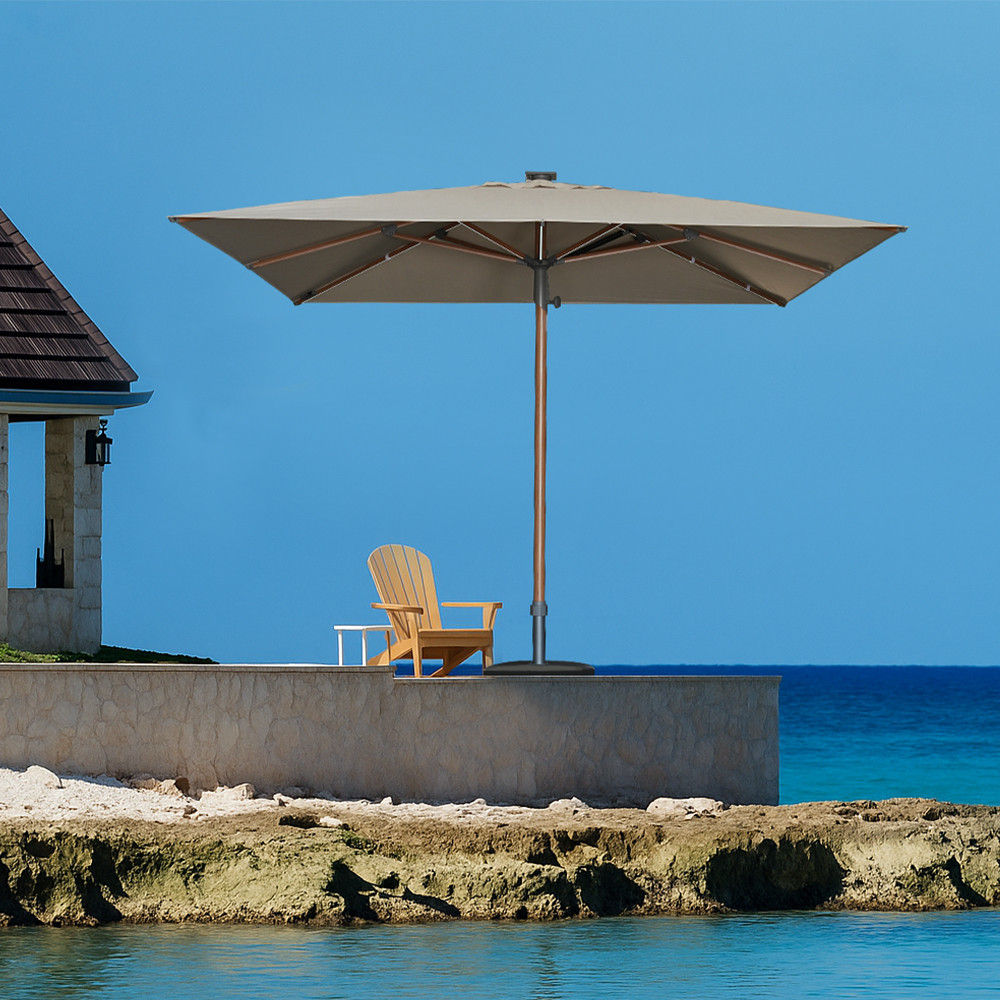
Protective Covers: This is the single most important accessory for extending the life of your umbrella. A high-quality, weather-resistant cover shields the closed umbrella from UV rays, rain, dirt, and bird droppings when not in use. This protection prevents fading, reduces cleaning frequency, and safeguards the frame from unnecessary exposure to the elements. Using a cover can extend the umbrella's lifespan by 3-5 years on average. Look for covers made of waterproof, UV-resistant fabric with features like zippers for easy use and vents to prevent moisture buildup.
Integrated Lighting: Extend your service hours and create an inviting evening atmosphere with umbrella lighting. Many commercial umbrellas, like those offered by Foris Hortus, have options for integrated LED light systems. These are often built directly into the ribs, providing a clean, professional look and pleasant, downward-cast light for guests. Other options include rechargeable, battery-powered, or solar-powered lights that clip onto the pole. LED lights are energy-efficient, have a long lifespan, and are durable enough for outdoor conditions.
Heating: For cooler coastal evenings or to extend the outdoor season, infrared heaters can be mounted to or used near commercial umbrellas. These heaters warm objects and people directly, rather than the air, making them highly effective for outdoor spaces. Always ensure that any heating element used is specifically designed for this purpose and is installed with safe clearances from the canopy fabric.
By combining a robust, well-chosen umbrella with a consistent maintenance schedule and smart accessories, you ensure your investment not only survives but thrives, providing a safe, comfortable, and beautiful setting for your guests for years to come.
FAQs (Frequently Asked Questions)
1. What wind speed can a commercial patio umbrella typically withstand? While this varies greatly by manufacturer and model, a high-quality commercial umbrella with a robust frame (like fiberglass ribs), a vented canopy, and a proper heavy base or fixed mount can often withstand sustained winds of 30-40 MPH. Some top-tier models, when permanently mounted, are even tested in wind tunnels to withstand gusts up to 75 MPH. However, it is always the safest and most recommended practice to close the umbrella when winds become uncomfortably strong or when it is not in use.
2. Are cantilever (offset) umbrellas a good choice for windy coastal areas? Cantilever umbrellas can be used in coastal areas, but with significant caveats. Because their support pole is on the side, they are naturally more susceptible to wind forces and act like a sail. If you choose a cantilever model, you must select a premium, commercial-grade product specifically engineered for wind resistance. More importantly, it must be paired with an exceptionally heavy base (often 200 lbs+) or, ideally, a permanent in-ground or surface mount to be secure. For maximum wind stability, a traditional center-pole umbrella is generally the safer choice.
3. What is the most important feature to look for in a wind-resistant umbrella? It's difficult to name just one, as it's the combination of features that creates a truly wind-resistant umbrella. However, if forced to choose the most critical elements, it would be a tie between wind vents in the canopy and a sufficiently heavy and secure base. Vents are non-negotiable as they allow wind pressure to escape, preventing the umbrella from lifting. The base is the anchor; without a proper foundation, even the best-built umbrella will tip over.
4. How do I clean saltwater and sand off my umbrella frame and canopy? Regular rinsing is key. At least once a week in a coastal setting, use a hose to spray down the entire umbrella with fresh water to wash away salt deposits and sand. Salt is corrosive and can damage the frame's finish and hardware over time. For a more thorough clean of the frame, use a soft cloth with a solution of mild soap and water. For the canopy, use a soft-bristled brush and a mild soap solution, then rinse completely and allow to air dry.
5. Is a protective cover really necessary? Absolutely. A protective cover is one of the easiest and most effective ways to extend the life of your umbrella. When the umbrella is closed, the cover protects the canopy fabric from constant UV exposure (which causes fading), rain, bird droppings, and dirt. It also protects the frame and mechanical parts from the elements. This keeps the umbrella looking newer for longer and reduces how often you need to perform deep cleanings.
Conclusion: Your Investment in Enduring Quality
Investing in the right commercial patio umbrella for high-wind coastal areas is a critical decision for any business operating in these beautiful yet demanding environments. As we've explored, it's a choice that goes far beyond simple aesthetics. By prioritizing durable, marine-grade materials like solution-dyed acrylics, flexible fiberglass ribs, and powder-coated aluminum frames, you are choosing longevity. By insisting on essential engineering features like double wind vents and robust, non-complex lift mechanisms, you are choosing safety. And by anchoring your investment with a sufficiently heavy base or a permanent mount, you are securing the comfort and well-being of your guests.
At Foris Hortus, we encourage you to remember that a well-chosen commercial umbrella is not an expense, but an asset. It protects your patrons from the elements, enhances the functionality and appeal of your valuable outdoor space, and ultimately delivers a significant return through improved guest experience and lasting performance. Make the smart choice to invest in quality that can stand up to the wind and stand the test of time.
We hope this guide has empowered you to make an informed decision. Share this article with fellow business owners in coastal regions, and feel free to leave your questions or experiences in the comments below