How Neglecting Patio Umbrella Care Impacts Longevity and Your Wallet
As a homeowner, I know the joy a beautiful patio umbrella brings to my outdoor space. At Foris Hortus, we believe it’s an essential element that provides shade, protection, and enhances the aesthetic of any backyard. However, I've also learned firsthand that neglecting its care can lead to significant headaches and unexpected expenses. A quality patio umbrella is an investment in your comfort and your home's appeal, but without proper maintenance, that investment can quickly turn into a liability.
This guide will explore the hidden expenses and shortened lifespan that come with inadequate patio umbrella maintenance, focusing on the true cost of neglect. We'll delve into how proper care can save you money, preserve the beauty of your outdoor oasis, and ensure your Foris Hortus umbrella remains a stunning centerpiece for years to come. By understanding the consequences of neglect, you can adopt a proactive approach that protects your wallet and keeps your patio looking its best.
Key Takeaways
- Environmental Damage: Constant exposure to sun, wind, and rain is the primary cause of wear, leading to faded fabrics, weakened frames, and the growth of mold or mildew. Neglect accelerates this process significantly.
- Financial Impact: The cost of neglect isn't just about aesthetics. It translates to tangible expenses for repairs—like torn canopies and broken ribs—or even complete replacement, which is often more expensive than routine maintenance.
- Proactive Care is Key: Simple, regular maintenance habits such as routine cleaning, proper seasonal storage with a protective cover, and frequent inspections can dramatically extend your umbrella's lifespan and prevent costly damage.
- Lifespan & Value: A well-cared-for patio umbrella can last for many years (5-10+), whereas a neglected one may only survive a season or two. Proper maintenance maintains not only its functionality but also its aesthetic value, ensuring your patio remains a pristine and inviting space.
The Hidden Cost of Neglecting Patio Umbrella Care: Accelerated Wear and Tear
One of the most immediate consequences of neglecting your patio umbrella is the rapid acceleration of wear and tear. What should be a durable, long-lasting fixture in your outdoor space can quickly succumb to the elements if left unprotected. This degradation isn't just cosmetic; it affects the structural integrity of the umbrella, leading to failures that could have been easily prevented.
Sun, Wind, and Rain: The Relentless Assault on Your Umbrella
Your patio umbrella is your first line of defense against the elements, but it pays a price for its service. Sun, wind, and rain launch a relentless assault that, over time, can cause significant damage.
Sun (UV Radiation): Prolonged exposure to direct sunlight is one of the biggest threats. The sun's ultraviolet (UV) rays are powerful and cause photodegradation, a process that breaks down the chemical bonds in fabric dyes. This leads to fading and discoloration, but the damage is more than skin deep. UV radiation also weakens the fabric's fibers, making them brittle and prone to tearing.
Wind: Strong gusts of wind pose a major risk, especially to an open umbrella. The canopy can act like a sail, putting immense stress on the frame, ribs, and tilt mechanism. This can lead to bent or broken ribs, a damaged pole, or even the entire umbrella toppling over, potentially causing damage to surrounding property or posing a safety hazard.
Rain and Moisture: While most patio umbrellas are designed to be water-resistant, they are not invincible. Prolonged exposure to rain can be detrimental. If an umbrella is left open, water can pool on the canopy, stretching the fabric and straining the frame. More importantly, if an umbrella is closed and stored while damp, it creates the perfect breeding ground for mold and mildew, which can cause unpleasant odors, stubborn stains, and fabric deterioration. Moisture can also lead to rust and corrosion on metal components of the frame, weakening its structure.
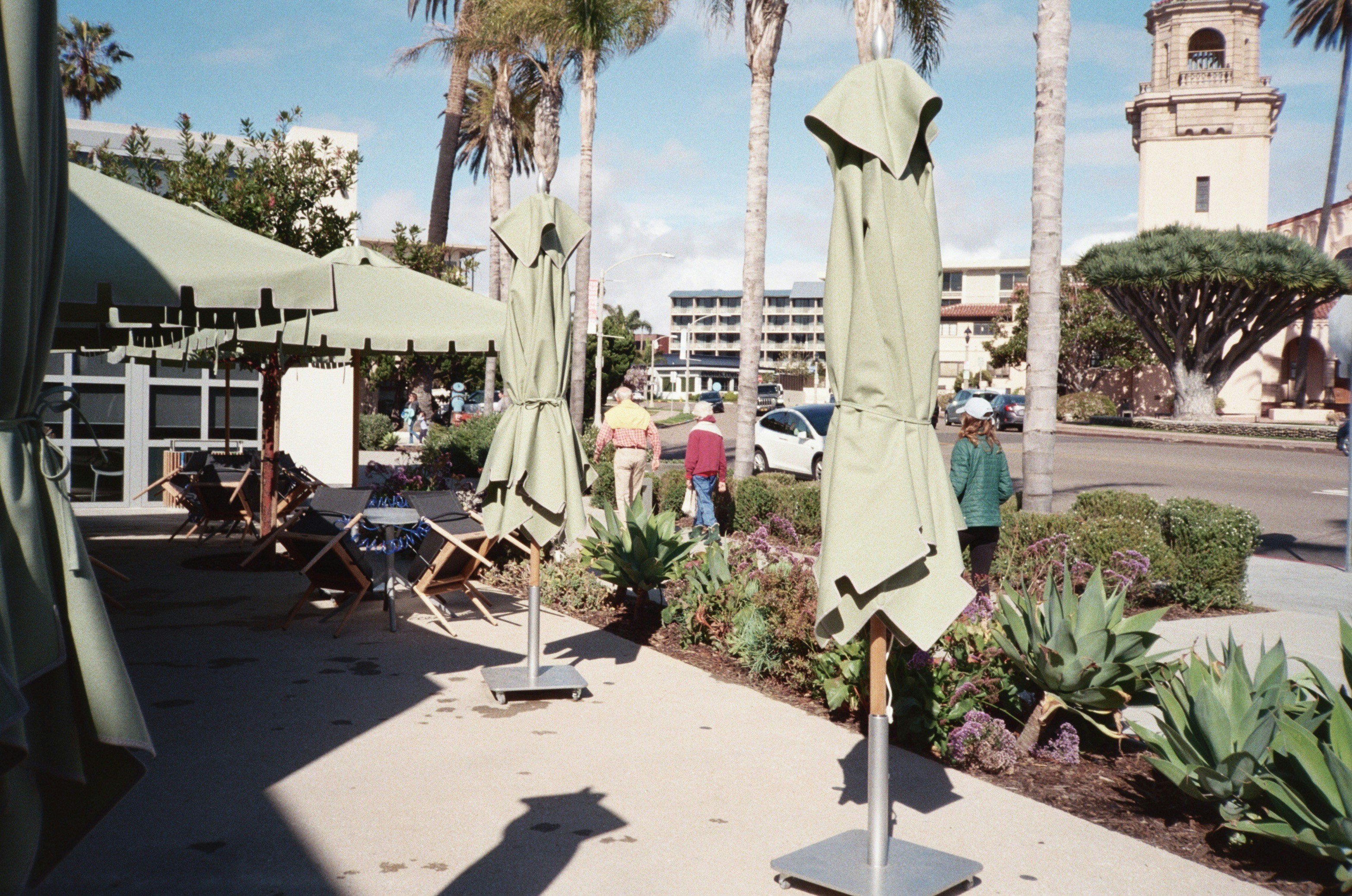
Closing your umbrella when it's not in use is a simple but crucial habit to protect it from these elements and significantly extend its lifespan.
Fading Fabrics and Brittle Frames: What Happens When You Don't Protect It
When you fail to protect your patio umbrella, the damage from the elements becomes visibly and structurally apparent. The vibrant, stylish addition to your patio can quickly become an eyesore.
A study from Kingston University in 2023 showed that continuous sun exposure can cause some umbrella canopies to lose up to 50% of their color and strength over three years, depending on the fabric quality. Darker colors like navy, black, and red are often more susceptible to fading because they absorb more UV radiation. This constant UV assault breaks down fabric fibers, leading to a brittle texture that tears easily. What was once a resilient canopy becomes fragile and weak.
The frame is not immune either. Metal frames, if not properly cared for, will begin to rust and corrode, especially when exposed to moisture. This rust not only creates unsightly stains but also weakens the metal, making the frame unstable and prone to collapse. Wooden frames can crack and splinter, while plastic components can become brittle and snap under pressure. This structural decay makes the entire umbrella unsafe and unreliable.
The Financial Burden: Understanding the Cost of Neglecting Patio Umbrella Care Through Repairs
The cost of neglecting your patio umbrella isn't just a matter of aesthetics; it has a direct and often surprising impact on your wallet. What starts as a small, ignored issue can escalate into a major repair bill or, even worse, the need for a complete replacement. A proactive approach to maintenance is always more cost-effective than a reactive one to repairs.
Common Repairs: From Ripped Canopies to Broken Ribs
An uncared-for umbrella is an accident waiting to happen. The combination of environmental stress and lack of maintenance leads to predictable points of failure. Some of the most common issues that require repair include:
- Ripped or Torn Canopies: This is one of the most visible signs of neglect. Damage often starts as a small tear caused by wind stress, falling debris, or weakened fabric from UV exposure, which then grows larger over time.
- Broken Ribs: The ribs provide the umbrella's structure, but they can bend or snap under the force of strong winds, especially if the umbrella is left open in a storm. Repairing a broken rib can be complex and, if not done properly, may result in repeated failures.
- Damaged Pole: A bent or broken main pole is a serious structural failure, often caused by the umbrella toppling over in the wind. While minor dents might be manageable, a significantly bent pole often requires a full replacement of the umbrella.
- Dysfunctional Crank or Tilt Mechanism: These moving parts are susceptible to wear and tear. Dirt, rust, and moisture can cause cranks to jam or tilt mechanisms to break, making it difficult or impossible to open, close, or adjust the umbrella.
Many of these issues can be fixed, but sourcing the correct parts and performing the repair can be time-consuming and expensive.
The Price Tag of Neglect: Repair vs. Replacement Costs
When faced with a broken umbrella, homeowners have to weigh the cost of repair against the price of a brand new one. While a single, minor repair might seem affordable, the costs can quickly add up. For example, replacing a canopy or a set of broken ribs can sometimes approach the cost of a new, budget-friendly umbrella.
| Damage Type | Estimated Repair Cost (DIY/Professional) | Estimated New Umbrella Cost | Considerations |
|---|---|---|---|
| Torn Canopy | $50 - $200+ (for replacement canopy) | $100 - $1,000+ | High-quality replacement fabrics can be expensive. For low-cost umbrellas, replacement is often more logical. |
| Broken Rib | $20 - $100 per rib (parts & labor) | $100 - $1,000+ | Can be a complex repair. If multiple ribs are broken, replacement is usually the better option. |
| Broken Crank/Tilt | $30 - $150+ | $100 - $1,000+ | Difficult to find exact matching parts. Labor can be intensive. |
| Bent Main Pole | Often not repairable | $100 - $1,000+ | A bent pole compromises the entire structure, making replacement the safest choice. |
A 2022 study found that homeowners replaced their patio umbrella canopies on average every 5 years due to wear and tear. However, this lifespan can be drastically shortened by neglect. Opting for repairs on a low-quality or severely damaged umbrella can be a poor investment, as other parts are likely to fail soon. In many cases, especially when multiple issues arise, replacing the entire unit with a quality product from a brand like Foris Hortus is the more sensible and cost-effective long-term solution.
Proactive vs. Reactive: Minimizing the Cost of Neglecting Patio Umbrella Care with Regular Maintenance
When it comes to your patio umbrella, an ounce of prevention is truly worth a pound of cure. Adopting a proactive maintenance routine is far more effective and less expensive than reacting to problems as they arise. Simple, consistent care can dramatically reduce the financial impact of neglect, extend the life of your umbrella, and keep it looking its best.
Routine Cleaning: A Simple Step to Long-Term Savings
Regular cleaning is one of the easiest and most impactful maintenance tasks you can perform. Dirt, pollen, bird droppings, and other debris don't just look unsightly; they can trap moisture and promote the growth of mold and mildew, which can permanently stain and degrade the fabric.
A simple cleaning routine can prevent this damage. Follow these steps at least once a month during peak season:
- Brush Off Debris: Start by using a soft-bristle brush to gently sweep away any loose dirt, leaves, or cobwebs. Doing this first prevents you from creating mud when you add water.
- Prepare a Cleaning Solution: In a bucket, mix a solution of mild soap (like dish soap or laundry detergent) with warm water. Avoid harsh chemical cleaners, as they can damage the fabric's color and water-resistant coating. The water temperature should not be excessively hot.
- Scrub Gently: Dip the soft brush into the soapy water and gently scrub the canopy in sections, using circular motions. Be sure to clean both the top and underside of the fabric.
- Rinse Thoroughly: Use a garden hose to rinse the canopy completely, ensuring all soap residue is removed.
- Air Dry Completely: Leave the umbrella open in a sunny, airy spot to air dry completely. Never close or store an umbrella while it is still damp, as this is a primary cause of mold and mildew.

Seasonal Storage and Protection: Safeguarding Your Investment
How you store your umbrella during the off-season or periods of inclement weather plays a major role in its longevity. Proper storage protects it from harsh winter conditions, moisture, and pests.
Using a Protective Cover: A high-quality, weatherproof umbrella cover is an essential accessory. Use it whenever the umbrella is not in use for an extended period. A cover provides crucial protection from:
- UV Rays: Shields the fabric from sun damage and fading even when the umbrella is closed.
- Moisture: Keeps the canopy dry from rain and dew, preventing mold and mildew.
- Dirt and Debris: Prevents the accumulation of dust, pollen, and bird droppings.
Off-Season Storage: For those in climates with harsh winters, it is best to store your umbrella indoors.
- Clean and Dry: Before storing, thoroughly clean and, most importantly, completely dry the umbrella. Storing a damp umbrella will almost certainly lead to mildew.
- Choose the Right Location: A dry, cool place like a garage, basement, or storage shed is ideal. Avoid areas with high humidity or extreme temperature fluctuations.
- Store Properly: If possible, store the umbrella upright to avoid putting stress on the frame. If you must store it horizontally, place it on a shelf to keep it off a potentially damp floor. Ensure nothing heavy is placed on top of it.
The Role of Inspections: Catching Problems Before They Escalate
Regular inspections allow you to identify and address small issues before they become major, costly problems. Perform a quick check every few weeks and a more thorough one at the beginning and end of each season.
Patio Umbrella Inspection Checklist:
| Component | What to Look For | Action |
|---|---|---|
| Canopy | Small holes, tears, fraying seams, or stubborn stains. | Patch small tears immediately with a fabric repair kit. Address stains promptly. |
| Frame & Ribs | Signs of rust or corrosion on metal parts, cracks in wood, bent ribs. | Clean off light rust and apply a rust-resistant sealant. If a rib is severely bent or broken, consider replacement. |
| Pole | Looseness, wobbliness, or visible damage. | Tighten any loose screws or bolts. Ensure the umbrella is secure in its base. |
| Mechanisms | Difficulty opening/closing the crank, stiff tilt function. | Lubricate moving parts with a silicone spray to ensure smooth operation. Check winch assemblies and cables annually. |
| Base | Cracks, instability, or insufficient weight. | Ensure the base is heavy enough for the umbrella's size and is on a flat, even surface. |
By catching a fraying cord, a spot of rust, or a loose bolt early, you can perform a simple, inexpensive fix that prevents a catastrophic failure down the road.
Beyond the Basics: Specialized Care to Reduce the Cost of Neglecting Patio Umbrella Care
While routine cleaning and proper storage form the foundation of good umbrella maintenance, sometimes you'll encounter more stubborn issues that require specialized attention. Addressing problems like deep-set mildew or knowing when a DIY fix is out of your depth can save you from bigger headaches and expenses.
Deep Cleaning Techniques for Stubborn Stains and Mildew
Despite your best efforts, mildew or tough stains from tree sap or bird droppings can sometimes appear. When a simple soap-and-water solution isn't enough, you may need to escalate your cleaning methods.
For Mold and Mildew: Mold and mildew thrive in damp, dirty conditions, so prompt removal is crucial to prevent fabric damage and potential health issues. For a more robust cleaning solution, you can create a mixture using bleach or vinegar.
- Bleach Solution: Mix about a cup of bleach and ¼ cup of mild soap per gallon of clean water.
- Vinegar Solution: For a less harsh alternative, mix equal parts white vinegar and water.
Application Process:
- Apply the solution to the affected areas using a spray bottle or a soft-bristle brush.
- Let the solution soak into the fabric for 15-20 minutes, but do not let it dry. This allows it to break down the stains.
- Gently scrub the area with a soft brush.
- Rinse the canopy thoroughly with a garden hose until all soap and cleaning solution residues are gone.
- Allow the umbrella to air dry completely in the sun, which can help kill any remaining mold spores.
Important Note: Always test cleaning solutions on an inconspicuous area of the fabric first to ensure it doesn't cause discoloration. Never use a pressure washer, as it can damage the fabric and reduce its lifespan.
For Other Stubborn Stains (Tree Sap, Grease): Identify the type of stain to choose the best treatment. For greasy stains, a degreasing dish soap might be effective. For other organic stains, pre-treating with a baking soda paste before general cleaning can help lift the stain.
Understanding When to Call in the Experts for Repairs and Parts
DIY repairs can be a great way to save money, but it's important to recognize your limits. Some repairs are complex and, if done incorrectly, can lead to further damage or safety risks.
It's time to call a professional or the manufacturer when you encounter:
- Major Structural Damage: A severely bent or broken main pole, or multiple broken ribs, often requires specialized tools or parts. Attempting to fix these without the right expertise can compromise the umbrella's structural integrity.
- Complex Mechanism Failures: If the internal workings of a crank or cantilever system are broken, disassembly and repair can be intricate. Sourcing the correct replacement parts from the manufacturer, like Foris Hortus, is crucial for a successful repair.
- Unavailable Parts: If you can't identify or source the correct replacement part, an expert may have access to a wider network of suppliers or universal kits.
- Safety Concerns: If the umbrella is wobbly, unstable, or you feel the repair is beyond your skill level, it's safer to seek professional help. An improperly repaired umbrella can be a hazard in windy conditions.
While many minor repairs can extend an umbrella's life, there comes a point where replacement is the more economical and safer option. If the frame is structurally compromised or the repair costs approach the price of a new unit, investing in a new, high-quality umbrella is the wiser long-term decision.
The True Value of Care: How Maintenance Affects the Cost of Neglecting Patio Umbrella Care in the Long Run
The true value of diligent patio umbrella care is measured not in the time spent cleaning or storing it, but in the years of enjoyment and the money saved. A proactive maintenance strategy transforms your umbrella from a disposable seasonal item into a long-term investment that enhances your outdoor living space for many seasons.
Extending Lifespan: Getting More Years Out of Your Umbrella
The lifespan of a patio umbrella is directly tied to the care it receives. While a manufacturer may provide a warranty, neglect can drastically shorten its functional life. Industry experts note that a typical, moderately maintained patio umbrella might last 3 to 5 years. However, with proper, consistent care—including regular cleaning, protection from harsh weather, and off-season storage—a high-quality umbrella can last 10 years or more.
In contrast, a neglected umbrella left open to the elements year-round may not even survive a full two seasons. UV degradation can weaken the fabric in just a few years, strong winds can snap ribs in a single storm, and unchecked moisture can lead to irreversible mold and rust damage. Every simple act of maintenance—closing it at night, using a cover, cleaning off debris—is a deposit into its "longevity bank," pushing back the date when a costly replacement becomes necessary.
Maintaining Aesthetics and Functionality: Keeping Your Patio Pristine
Your patio umbrella is more than just a shade provider; it's a key component of your outdoor décor. A vibrant, clean, and fully functional umbrella from Foris Hortus contributes to a pristine and inviting atmosphere. It signals care and attention to detail, enhancing the overall aesthetic of your patio or garden.
Neglect has the opposite effect. A faded, stained, or broken umbrella becomes a visual blight. A ripped canopy, rusty frame, or a permanent lean detracts from the beauty of your outdoor space and can even lower the perceived value of your home. Functionality is also key; an umbrella that is difficult to open or no longer tilts properly ceases to serve its primary purpose effectively.
Ultimately, the effort invested in maintenance pays dividends in both tangible and intangible ways. It saves you from the recurring cycle of repair and replacement, ensuring your wallet is protected. More importantly, it preserves the beauty and functionality of your outdoor oasis, allowing you to relax and entertain in a space you can be proud of.
Conclusion
Ultimately, the cost of neglecting patio umbrella care extends far beyond a simple inconvenience; it directly impacts its longevity and your wallet. As we've explored, exposure to the elements without protection leads to faded fabrics, corroded frames, and a host of damages that are expensive to fix. By implementing a consistent maintenance routine—encompassing regular cleaning, seasonal storage, and diligent inspections—you can prevent this premature decay, avoid costly repairs, and significantly extend the life of your investment.
I encourage you to embrace proactive patio umbrella care with your Foris Hortus product. It's a small effort that yields big returns, ensuring your outdoor space remains a beautiful and functional retreat for many seasons to come. This approach not only preserves the aesthetic and structural integrity of your umbrella but also saves you from the unnecessary and often substantial cost of neglect in the long run.
Frequently Asked Questions (FAQs)
Q1: How often should I clean my patio umbrella? It is recommended to perform a light cleaning, such as brushing off debris, once a week and a more thorough cleaning with mild soap and water at least once a month during the seasons it is in use. This helps prevent dirt and grime from setting in and causing damage.
Q2: Can I leave my patio umbrella open all the time? No, it is highly advisable to close your umbrella when it is not in use, especially at night or during windy and rainy weather. Leaving it open exposes it to unnecessary wear from UV rays and puts it at high risk of damage from strong gusts of wind.
Q3: What is the best way to protect my umbrella during the winter? The best way to protect your umbrella in the off-season is to clean it thoroughly, ensure it is completely dry, and store it in a protective cover in a dry, sheltered location like a garage or shed. This prevents damage from moisture, freezing temperatures, and pests.
Q4: Is it better to repair or replace a damaged umbrella? This depends on the extent of the damage and the quality of the umbrella. For high-quality umbrellas, replacing a part like a canopy or a single rib can be cost-effective. However, if the umbrella has major structural damage (like a bent main pole) or requires multiple repairs, it is often safer and more economical to invest in a new one.