Everything You Should Know: Choosing Between a Cheap vs. Heavy Duty Patio Umbrella
Choosing the right patio umbrella is more than just picking a pretty color; it's about investing in comfort, protection, and longevity for your outdoor space. But with so many options out there, how do you decide whether a budget-friendly option or a more robust, heavy-duty model is right for you? This guide will help you navigate the essential considerations when making that 'cheap vs heavy duty patio umbrella' decision.
From combating intense sun to creating a cozy evening ambiance, a patio umbrella serves many purposes. We'll explore the key differences between various umbrella types, materials, and features, ensuring you make an informed choice that perfectly fits your needs and your wallet without compromising quality.
Key Takeaways
Before we dive deep, here’s a quick overview of the essential points to consider when choosing between a cheap and a heavy-duty patio umbrella. Understanding these factors will empower you to make a smart investment in your outdoor comfort.
- Climate is Crucial: Your local weather is the single most important factor. Areas with high winds, intense sun, or frequent rain demand a heavy-duty umbrella with a sturdy frame (like aluminum or fiberglass) and a high-performance, fade-resistant canopy (like solution-dyed acrylics). Lighter, cheaper umbrellas are better suited for sheltered locations with mild weather.
- Fabric Determines Longevity and Protection: The canopy isn’t just for style. Heavy-duty umbrellas often feature solution-dyed acrylic fabrics like Sunbrella, which offer superior UV protection (UPF 50+), and are highly resistant to fading and mildew. Cheaper options typically use polyester or olefin, which provide adequate shade initially but are more prone to fading and tearing over time.
- The Frame is the Backbone: A heavy-duty umbrella's strength comes from its frame. Look for powder-coated aluminum for a rust-proof, lightweight, and strong option, or fiberglass ribs for their flexibility in wind, which prevents them from snapping. Cheaper umbrellas may use steel (prone to rust if not well-coated) or thinner-grade aluminum that can bend or break more easily.
- Don't Skimp on the Base: An umbrella is only as stable as its base. This is not a place to save money. Heavy-duty umbrellas, especially large cantilever styles, require significantly heavier bases (often 100 lbs or more) to prevent tipping in the wind, and some sources recommend going even heavier for safety. Always follow the manufacturer's weight recommendation, and when in doubt, go heavier.
- Functionality Enhances a cheap vs. heavy-duty patio umbrella Experience: Heavy-duty models often come with superior features that improve ease of use and versatility. These include smoother crank lifts, advanced tilting mechanisms (like collar or 360-degree tilts), and robust rotation capabilities on cantilever models. Cheaper umbrellas might have basic push-up or pulley systems and limited tilt functions that are more prone to breaking.
- Initial Cost vs. Long-Term Value: While a cheap umbrella has a tempting price tag, it might only last a season or two before needing replacement. A heavy-duty umbrella from a reputable brand like Foris Hortus is a long-term investment. The higher initial cost is often offset by its durability, superior performance, and longer lifespan, saving you money and hassle in the long run.
By keeping these key points in mind, you can better assess the options and choose a patio umbrella that not only provides shade but also delivers lasting value and reliable performance for your outdoor sanctuary.
Understanding Your Needs: The Core of the Cheap vs Heavy Duty Patio Umbrella Debate
Before you can decide between a cheap and a heavy-duty patio umbrella, you must first understand your own environment and requirements. The perfect umbrella isn't a one-size-fits-all solution; it's one that is perfectly tailored to your space, climate, and lifestyle. Making an informed decision involves a careful assessment of how and where the umbrella will be used.
Assessing Your Climate and Usage
Your local weather is the most significant factor in the cheap vs. heavy-duty debate. An umbrella that thrives in a calm, sheltered backyard may not last a single season in a coastal or high-wind environment.
For Windy and Rainy Areas: If you live in a place with frequent wind, rain, or storms, a heavy-duty umbrella is not a luxury—it's a necessity. Strong gusts of wind can bend or break weak frames and even turn a poorly anchored umbrella into a dangerous projectile. Heavy-duty models are engineered for these conditions with features like reinforced aluminum or steel frames, flexible fiberglass ribs that absorb wind without snapping, and vented canopies that allow air to pass through, reducing uplift pressure. In damp climates, materials must also resist rust and mildew. A cheap umbrella with a standard steel frame and untreated fabric will quickly corrode and develop mildew, shortening its lifespan.
For Hot and Sunny Climates: In regions with intense, prolonged sun exposure, the biggest enemy is UV radiation. Over time, UV rays can cause the fabric of a cheap umbrella to fade dramatically and become brittle, leading to tearing. Heavy-duty umbrellas often use high-performance, solution-dyed acrylic fabrics. These premium fabrics have color mixed into the fibers before they are woven, making them exceptionally fade-resistant and capable of blocking up to 98% of harmful UV rays. While a cheap polyester umbrella provides shade, it will likely look worn and faded after just one or two seasons of intense sun.
Usage Frequency: How often will you use the umbrella? If it's for daily use throughout the spring and summer, a durable, easy-to-operate heavy-duty model with a smooth crank lift is a wise investment. For occasional use during calm weather, a more budget-friendly option may suffice, provided it is properly stored when not in use.
Space and Aesthetic Considerations
Beyond pure function, your patio umbrella is a key piece of your outdoor decor. The right size, shape, and style will harmonize with your furniture and create an inviting atmosphere, while the wrong choice can make a space feel cramped or unbalanced.
A primary rule of thumb is to choose an umbrella that extends about 2 feet beyond the edge of the area you want to shade on all sides. This ensures everyone seated at a table is comfortably covered, even as the sun moves. For a 4-foot table, for instance, an 8-foot diameter umbrella is a good starting point. You should also match the shape of the umbrella to the shape of your table—a round umbrella for a round table, and a square or rectangular one for a similarly shaped table—to create a cohesive look.
The style of the umbrella should complement your existing outdoor furniture. A modern, minimalist patio set pairs well with an umbrella featuring clean lines and a neutral color, while a rustic or bohemian space might be enhanced by a wooden-framed umbrella or one with a vibrant pattern. Heavy-duty umbrellas, particularly from brands like Foris Hortus, often offer a wider range of high-quality, stylish fabrics and sophisticated frame finishes, allowing you to make a design statement. Cheaper umbrellas tend to have more limited color and pattern options.
Small Spaces and Flexible Shade
Not everyone has a sprawling lawn or a massive deck. For those with a small balcony, cozy patio, or a narrow terrace, choosing the right umbrella is critical to maximize both shade and usable space.
For these compact areas, several designs are particularly effective:
- Half Umbrellas: These are a brilliant solution for small balconies or any space where the seating is directly against a wall. A half-round or half-rectangular canopy sits flush against a vertical surface, providing targeted shade without a full canopy's footprint taking up valuable real estate.
- Small Market Umbrellas: A traditional market umbrella in a smaller diameter (around 6 to 7.5 feet) works well for a small bistro set. Look for models with a compact base to save floor space.
- Wall-Mounted Umbrellas: For the ultimate space-saving solution, a wall-mounted umbrella eliminates the need for a pole and base entirely. It mounts directly to a sturdy wall, offering flexible shade that can be folded away when not in use.
- Tilting Umbrellas: The ability to tilt the canopy is a game-changing feature for any space, but it's especially crucial in small ones. As the sun moves across the sky, a tilting mechanism allows you to angle the canopy to block the sun without having to move the entire umbrella and base. This ensures continuous, flexible shade throughout the day.
When choosing an umbrella for a small space, prioritizing flexibility is key. Features like push-button tilt, 360-degree rotation (on smaller cantilever models), and easy-to-use crank lifts make adjusting your shade effortless.
Large Areas and Unobstructed Views
For large patios, decks, or poolside lounge areas, the goal is often to create a broad, shaded oasis without cluttering the space with multiple poles. This is where extra-large and heavy-duty cantilever umbrellas excel.

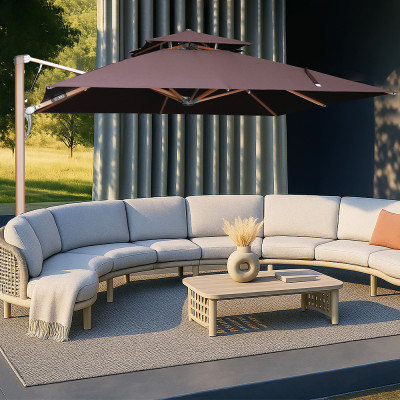
The primary advantage of a cantilever (or offset) umbrella is its design. The support pole is positioned to the side, allowing the canopy to be suspended over a seating or dining area without a center pole getting in the way. This creates an open, unobstructed space perfect for conversations and easy movement.
Key benefits for large spaces include:
- Expansive Coverage: Cantilever umbrellas come in large sizes, with canopies often reaching 10, 11, or even 13 feet in diameter, capable of shading large dining sets or entire sectional sofas.
- 360-Degree Rotation: Many high-quality cantilever models feature 360-degree rotation. This allows you to swing the canopy to cover different areas as the sun moves—for instance, from a dining table to a nearby lounge area—without moving the heavy base.
- Advanced Tilting: Beyond simple tilting, heavy-duty cantilever umbrellas often offer multiple tilt angles and vertical adjustments, giving you precise control over your shade.
- Enhanced Stability: Because of their large size and offset design, these umbrellas require extremely heavy and robust bases. This inherent need for a heavy-duty anchor makes them more stable in windier conditions compared to a market umbrella of a similar size.
For those looking to shade a significant area while maintaining an open and luxurious feel, a high-quality, heavy-duty cantilever umbrella is the superior choice. While more expensive than traditional market umbrellas, their versatility and expansive, unobstructed coverage provide unmatched value for large outdoor living spaces.
Deciphering Umbrella Types: Where Cheap vs Heavy Duty Patio Umbrella Options Diverge
Patio umbrellas come in a variety of styles, but the most significant split between cheap and heavy-duty options can be seen when comparing the two most common types: market umbrellas and cantilever umbrellas. Understanding their fundamental differences is key to choosing the right one for your patio.
Market Umbrellas: The Classic Choice
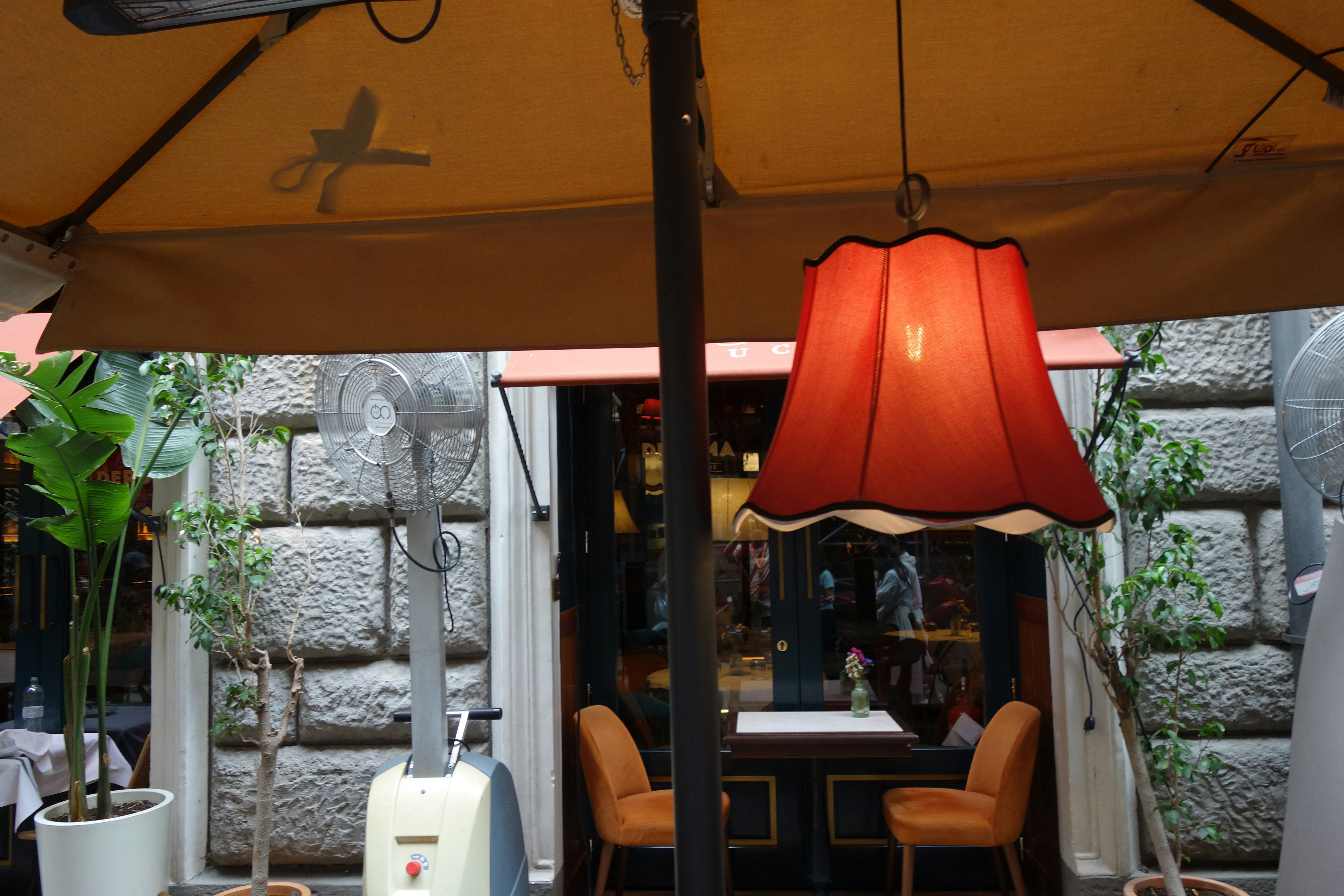
The market umbrella is the traditional design most people picture, with a straight center pole that can be placed through a hole in a patio table or used freestanding with a base.
- Cheap Options: Budget-friendly market umbrellas are widely available. They typically use a simple push-up or basic crank mechanism, a steel or thin aluminum pole, and a polyester canopy. While they provide adequate shade for occasional use in calm conditions, their construction materials are prone to rust, bending, and rapid color fading.
- Heavy-Duty Options: A heavy-duty market umbrella looks similar but is built for longevity. It will feature a thick-gauge, powder-coated aluminum pole for rust resistance, strong fiberglass ribs for flexibility in wind, and a premium solution-dyed acrylic canopy. The lift and tilt mechanisms are also more robust and engineered for smooth, long-term use.
Cantilever Umbrellas: Versatility and Robustness
Cantilever, or offset, umbrellas feature a side-mounted pole and a suspended canopy, which provides a large, open area of shade without any obstruction underneath. This makes them ideal for shading lounge furniture, large dining areas without a central hole, or poolside settings.
Due to their complex engineering and the forces they must withstand, cantilever umbrellas are almost exclusively found in the heavy-duty category.
- Key Features: Heavy-duty cantilever umbrellas boast advanced functionality. This includes 360-degree rotation to track the sun, multiple tilt positions for all-day shade, and robust construction to handle the leverage of the offset canopy. They require a significantly heavier base (often over 200 lbs) or a permanent mount for stability.
- Cost vs. Value: While significantly more expensive than even a heavy-duty market umbrella, a high-quality cantilever model like those from Foris Hortus offers unparalleled flexibility and coverage, making it a worthwhile investment for large, versatile outdoor spaces.
Specialized Umbrella Designs for Unique Needs
Beyond the two main types, there are specialty designs that cater to specific situations. These designs often prioritize function and durability, placing them more in the heavy-duty camp. For example, some umbrellas feature unique shapes like pagodas or extra-large rectangular canopies for covering long dining tables. Others may include built-in USB ports or commercial-grade components designed for restaurants and hotels, which are built to a higher standard of durability.
Half Umbrellas and Wall-Mounted Options
Perfect for small, constricted spaces like apartment balconies or narrow patios, half umbrellas are designed to sit flush against a wall. These space-saving designs provide targeted shade exactly where it's needed without the footprint of a full-sized umbrella. Wall-mounted umbrellas take this a step further by eliminating the pole and base entirely, freeing up valuable floor space. Both are clever, functional solutions that are typically built with durability in mind to suit their unique installation requirements.
Tilting and Solar Umbrellas
The ability to tilt the canopy is a crucial feature for maximizing shade as the sun moves. While basic push-button tilts are found on some cheaper umbrellas, more advanced and durable collar-tilt or auto-tilt mechanisms are hallmarks of higher-quality, heavy-duty models. These mechanisms are easier to use and built to withstand repeated adjustments.
Solar umbrellas add another layer of functionality, featuring LED lights built into the ribs and powered by a small solar panel on top of the finial. This is a feature found on both mid-range and high-end umbrellas, transforming the umbrella from a daytime shade provider into an evening ambiance creator. The quality of the solar panel, battery, and LED lights often improves with the overall quality of the umbrella.
Material Matters: The Durability Divide in a Cheap vs Heavy Duty Patio Umbrella
The materials used in a patio umbrella are the most telling indicators of its quality, durability, and price. In the cheap vs. heavy-duty patio umbrella comparison, the differences in canopy fabric and frame construction are stark. Investing in superior materials means a longer-lasting, better-performing product.
Canopy Fabrics: Sun Protection and Longevity
The canopy is your primary shield against the elements. Its ability to resist fading, repel water, and block UV radiation is directly tied to the type and quality of the fabric.
UV-Resistant and Solution-Dyed Acrylics
Widely considered the gold standard for outdoor textiles, solution-dyed acrylic fabrics like those from the brand Sunbrella are the hallmark of a heavy-duty umbrella.
- Manufacturing Process: Unlike cheaper fabrics that are dyed after the fibers are woven, solution-dyed acrylics have the color pigment mixed into the liquid acrylic solution before the fibers are created. This means the color is an integral part of the fiber, not just a surface coating. The difference is like a carrot (colored all the way through) versus a radish (colored only on the outside).
- Benefits: This process results in a fabric with exceptional resistance to fading from UV exposure. It also boasts superior resistance to mold and mildew, is water-resistant, and is easy to clean. These fabrics often come with a warranty of 5-10 years against fading, showcasing their long-term durability. They can block up to 98% of harmful UV rays, earning recommendations from The Skin Cancer Foundation.
Polyester and Olefin: Budget-Friendly Considerations
Cheaper umbrellas most commonly use polyester for their canopies, while mid-range options often feature olefin.
- Polyester: This is the most budget-friendly option. While often treated to be water-resistant, standard polyester is prone to fading quickly under direct sunlight and can become brittle over time. It’s a suitable choice for umbrellas that will be used infrequently or in shaded areas, but it lacks the long-term durability of higher-end materials.
- Olefin: Olefin (or polypropylene) is a strong mid-tier choice that offers better performance than standard polyester at a more accessible price point than acrylic. It is solution-dyed, giving it good colorfastness, and it is highly resistant to moisture, stains, and mildew. While durable, it may not feel as soft as acrylic and has a lower heat tolerance.
Here's a comparison table to summarize the key differences:
| Feature | Solution-Dyed Acrylic (Heavy-Duty) | Olefin (Mid-Range) | Standard Polyester (Cheap) |
|---|---|---|---|
| Fade Resistance | Excellent (Color is part of the fiber) | Good (Solution-dyed) | Poor (Surface-dyed) |
| UV Protection | Excellent (Up to 98% / UPF 50+) | Good | Fair to Poor |
| Mildew Resistance | Excellent | Excellent | Fair (Can be prone if not kept dry) |
| Durability | Very High | High | Low to Medium |
| Cost | High | Medium | Low |
| Lifespan | 8-10+ years | 3-5 years | 1-2 years |
Frame Construction: The Backbone of Your Umbrella
The frame is the skeleton of your patio umbrella, and its strength dictates how well it will stand up to use and abuse. Heavy-duty umbrellas prioritize robust materials that resist bending, breaking, and corrosion, while cheaper models often cut corners here, leading to a shorter lifespan.
Aluminum and Fiberglass: Strength and Flexibility
These two materials are the top choices for modern, heavy-duty umbrella frames, each offering distinct advantages.
Aluminum: Lightweight yet strong, aluminum is an ideal material for umbrella poles and frames. In heavy-duty models, look for thick-walled, powder-coated or anodized aluminum. The powder coating is an applied finish that adds a layer of protection against corrosion, making it perfect for humid or coastal environments where rust is a concern. Anodizing is an electrochemical process that hardens the aluminum surface, further enhancing its durability. While cheap umbrellas may also use aluminum, it is typically a much thinner gauge that can bend or dent easily.
Fiberglass: Primarily used for the ribs of an umbrella, fiberglass is prized for its remarkable flexibility. Unlike metal or wood, which can snap under pressure, fiberglass ribs are designed to bend and flex in strong winds, then return to their original shape. This makes them exceptionally wind-resistant and durable. Many high-end umbrellas combine a sturdy aluminum pole with flexible fiberglass ribs to get the best of both worlds.
Wood Frames: Aesthetics and Maintenance
Wood frames offer a classic, natural aesthetic that is beautiful in garden settings and pairs well with wooden patio furniture. However, they come with a trade-off in terms of performance and maintenance.
- Aesthetics and Material: High-quality wood frames are typically made from hardwoods like teak or eucalyptus, which have natural resistance to insects and rot. They provide a sophisticated look that many find appealing.
- Maintenance: Unlike aluminum or fiberglass, wood requires regular maintenance to preserve its look and integrity. It needs to be sealed or oiled annually to protect it from moisture and prevent it from weathering to a silvery-gray color.
- Durability: While sturdy, wood is not as flexible as fiberglass and can be prone to snapping in strong winds. It is also generally less durable than a heavy-gauge aluminum frame, especially in harsh weather conditions. For this reason, wood is often a choice for more sheltered, style-focused settings rather than high-wind, heavy-duty applications.

Stability and Functionality: Critical Factors for Any Patio Umbrella, Cheap or Heavy Duty
A top-of-the-line canopy and frame are useless if the umbrella constantly tips over or is difficult to operate. Stability and functionality are where the engineering of a heavy-duty umbrella truly shines, but even the cheapest umbrella can have its life extended with the right accessories and a little know-how.
Choosing the Right Umbrella Base for Wind Resistance
This is the most critical factor for safety and stability, and it is not the place to cut corners on cost. A cheap, lightweight base paired with a large umbrella is a recipe for disaster. An airborne umbrella can cause serious injury and property damage. The weight and design of the base must be appropriate for the umbrella's size, type, and your local wind conditions.
Weight Requirements for Different Umbrella Types
The required base weight increases dramatically with the size of the canopy and changes based on the umbrella's design.
Market Umbrellas: A general rule of thumb is to have at least 10 pounds of base weight for every foot of the canopy's diameter for a freestanding market umbrella. So, a 9-foot umbrella needs a base of at least 90 pounds. If the umbrella is supported through a sturdy table, you can sometimes use a slightly lighter base (e.g., 50-70 pounds for a 9-foot umbrella), as the table provides additional stability.
Cantilever Umbrellas: Due to their offset design, cantilever umbrellas act like a sail and are much more sensitive to wind. They require significantly heavier bases to counterbalance the canopy's leverage. An 11-foot cantilever umbrella may need a base weighing 220 pounds or more. These often use cross-bar bases that are weighed down with heavy paver stones or fillable plastic quadrants that can be loaded with sand or water (sand is heavier and recommended for better stability).
Here is a general guideline for minimum base weights:
| Umbrella Type | Canopy Size | Minimum Freestanding Base Weight |
|---|---|---|
| Market Umbrella | up to 7.5 ft | 40-50 lbs |
| Market Umbrella | 9 ft | 60-90 lbs |
| Market Umbrella | 11 ft | 90-110+ lbs |
| Cantilever Umbrella | 10 ft | 150-200 lbs |
| Cantilever Umbrella | 11-13 ft | 220-400+ lbs |
Note: These are minimums. In windy areas, always opt for a heavier base than recommended.
Mobile and Fixed Mounting Options
How you secure your base also impacts stability.
- Mobile Bases: Many residential bases are designed to be portable, some even featuring built-in wheels. These are convenient if you need to move your shade frequently. Fillable bases (plastic or resin filled with sand or water) are a popular mobile option because they are lightweight to move when empty.
- Fixed Mounting: For maximum stability, especially for large cantilever umbrellas or in commercial settings, a fixed mount is the best option. These bases bolt directly into a concrete patio or wooden deck, or can be installed in-ground with a concrete footing. This permanent solution offers the best possible resistance to wind.
Lift and Tilt Mechanisms for Ease of Use
How you open, close, and adjust your umbrella contributes significantly to your daily experience. Heavy-duty umbrellas invest in smoother, more durable mechanisms.
Lift Mechanisms:
- Push-up: The simplest system, found on cheap umbrellas. You manually push the canopy up until it locks into place.
- Pulley & Pin: A rope and pulley system helps lift heavier canopies, which is then secured with a pin. This is a durable, simple design often seen on market umbrellas.
- Crank Lift: The most common system on mid-range to high-end umbrellas. A handle is turned to easily raise and lower the canopy, requiring minimal effort. While convenient, the internal cable in a cheap crank system can wear out and break over time.
Tilt Mechanisms:
- Push-Button Tilt: A simple button on the pole allows the canopy to pivot. This is common on budget umbrellas, but the joint can be a weak point.
- Crank/Auto-Tilt: A more advanced system where continuing to turn the crank after the umbrella is fully open will cause it to tilt.
- Collar Tilt: Considered a premium feature, a collar on the main pole is twisted to adjust the tilt angle. This allows you to tilt the umbrella easily without reaching up high, and it's generally a more robust and user-friendly mechanism.
Maintenance and Longevity: Maximizing Your Investment, Whether Cheap vs Heavy Duty Patio Umbrella
Whether you opt for a budget-friendly model or a premium heavy-duty umbrella, proper maintenance is the key to maximizing its lifespan. A well-cared-for cheap umbrella can easily outlast a neglected expensive one. Following a few simple practices will protect your investment and ensure it looks and functions its best for years to come.
Regular Cleaning and Care
Regular cleaning prevents dirt, pollen, and bird droppings from embedding into the fabric, which can lead to staining and mildew growth.
- Routine Brushing: At least once a month, use a soft-bristle brush to remove loose dirt and debris from the canopy. This quick step prevents grime from setting in.
- Washing the Canopy: For a deeper clean, use a solution of mild soap (like dish soap or laundry detergent) and lukewarm water. Gently scrub the fabric with a soft-bristle brush in a circular motion. After scrubbing, let the solution sit for about 15 minutes before rinsing thoroughly with a hose to remove all soap residue. It is crucial to let the canopy air dry completely in the open position before closing it to prevent mold and a musty smell.
- Tackling Mold and Mildew: If you spot mold or mildew, a solution of white vinegar and water is an effective natural remedy. For stubborn spots, you can apply a paste of baking soda, which acts as a mild abrasive without damaging the fabric. For heavy-duty fabrics like Sunbrella, you can use a solution with bleach, but always check the manufacturer's cleaning instructions first.
Storage and Protection
Properly storing your umbrella during the off-season or in harsh weather is the single most effective way to extend its life.
- Use a Protective Cover: Investing in a high-quality, weather-resistant umbrella cover is highly recommended. A cover shields the canopy and frame from UV damage, rain, dirt, and wind when not in use. This simple step can add years to your umbrella's lifespan by reducing material degradation.
- Off-Season Storage: Before storing your umbrella for the winter, ensure it is completely clean and dry to prevent mold growth. Secure the canopy with its built-in ties, folding the panels neatly to prevent wrinkling. Store the umbrella in a dry, well-ventilated area like a garage or shed, and avoid placing heavy objects on top of it.
- Practice Good Habits: Always close your umbrella when it's not in use, especially during windy conditions. Most warranties do not cover wind damage, and leaving it open puts unnecessary stress on the frame and canopy.
Frequently Asked Questions (FAQ)
1. How much wind is too much for a patio umbrella?
Generally, it is recommended to close your patio umbrella when wind speeds approach or exceed 20 mph. Heavy-duty umbrellas with features like flexible fiberglass ribs, vented canopies, and securely weighted or mounted bases can withstand higher gusts, but it's always safest to close the umbrella in windy weather to prevent damage or accidents. Never leave an open umbrella unattended for long periods.
2. Can I leave my patio umbrella open in the rain?
While most patio umbrella canopies are water-resistant, it's not advisable to leave them open during heavy rain. The weight of the water can put stress on the ribs and frame. More importantly, you should never store a wet umbrella. Always allow the canopy to air dry completely before closing it to prevent the growth of mold and mildew, which can stain and damage the fabric.
3. What is the best material for a patio umbrella that won't fade?
Solution-dyed acrylic fabric, such as that made by the brand Sunbrella, is the industry gold standard for fade resistance. In the solution-dying process, color pigment is mixed into the acrylic fibers before they are spun into yarn. This means the color is locked in and runs all the way through the fiber, making it exceptionally resistant to fading from UV exposure. While more expensive, these fabrics can retain their vibrant color for over 10 years with proper care.
4. How do I stop my patio umbrella from falling over?
The key to preventing your umbrella from tipping over is using the correct base weight. An inadequate base is the most common cause of instability. A general rule for a freestanding market umbrella is to use 10 pounds of base weight for every foot of canopy diameter (e.g., a 90-pound base for a 9-foot umbrella). Cantilever umbrellas require much heavier bases, often 200 pounds or more, to counteract their offset design. When in doubt, always choose a heavier base, especially in windy locations. For maximum stability, consider a fixed mount that bolts to your deck or patio.
5. Is a heavy-duty patio umbrella worth the extra cost?
For most people, a heavy-duty umbrella is a worthwhile long-term investment. While a cheap umbrella may save you money upfront, it often needs to be replaced every one or two seasons due to fading fabric, a rusted frame, or a broken mechanism. A heavy-duty umbrella from a quality brand like Foris Hortus is built with superior materials—like a powder-coated aluminum frame, fiberglass ribs, and solution-dyed acrylic fabric—that are designed to last for many years. The higher initial cost is offset by greater durability, better performance, enhanced safety, and lower replacement costs over time.
Conclusion
Ultimately, the choice between a cheap vs heavy duty patio umbrella comes down to balancing your budget with your specific needs for durability, functionality, and aesthetic appeal. A budget-friendly market umbrella might be sufficient for a sheltered patio with infrequent use, but a heavy-duty model is a near necessity for anyone contending with strong winds, intense sun, or daily use. By considering your local climate, usage patterns, space requirements, and desired features, you can make an informed decision that enhances your outdoor living experience for years to come.
Investing in the right patio umbrella, whether it's a cost-effective market model or a high-performance cantilever umbrella from a trusted brand like Foris Hortus, ensures you create a comfortable and protected outdoor oasis. We hope this guide has equipped you with the knowledge to select the perfect shade solution for your home, one that will provide lasting value and countless hours of enjoyment.